




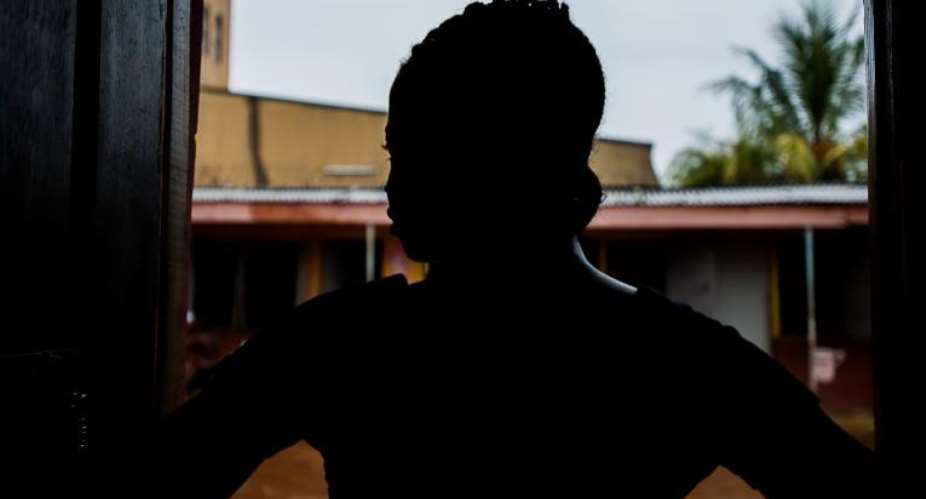
“Female genital mutilation prevents promiscuity,” parroted Ifenyiwa, a local Nigerian community leader fiercely advocating the brutal decades-long practice.
“A woman who does not undergo female genital mutilation will keep on chasing men,” chimed in Sade, a female believer of the widespread traditional practice that partially or even completely removes the external female genitalia for non-medical reasons.
Already puzzled by these thoughts, what would drive me into greater alarm was about to be said.
‘’Female genital mutilation prevents a woman from scratching and itchiness’’, added Mariam, a teen.
In commemoration of the International Day of Zero Tolerance For Female Genital Mutilation, I was part of an advocacy project that sought to raise awareness in rural communities, where the practice prevail, about its dangers and how it violates their bodies.Young poorly informed girls like Mariam and her peers were primarily my target. I needed them to understand they had a choice.
FGM can be as violating as narrowing the vaginal wall and sewing it close to serve as a covering seal, to introducing corrosives into the outer reproductive organ. While at least, 200million girls and women alive today and living in 30 countries have undergone this life-scarring practice, what is more chilling is the fact that the exact figure of violated girls is unknown.
Pleasantly, the situation is not hopeless as it might sound to some. While there has been a general decline in the prevalence of the practice over the last three decades, not all countries have made progress and the pace of decline has been uneven.
Could this be a result of poorly targeted advocacy and awareness creation programs?
The answer is yes. From years of educating women and young girls about their sexual and reproductive health rights, I’ve noticed one common factor; female genital mutilation is a part of what unites these women as a community – culture. Like inhabitants of a besieged territory, poorly informed women like Sade and Mariam have helplessly surrendered to the hands of their captor – cultural norms.
In hopes of changing this narrative, advocacy campaigns have been targeted at policy makers to institute FGM as a punishable offence under the law. And this has worked, at least to an extent. For example, FGM is a crime in all EU member states and now in over 30 African countries such as Nigeria, Ghana, Burkina Faso, Uganda, etc. Oddly, some of these countries still record a high prevalence of FGM.
While efforts at protecting vulnerable girls and women by the law have proved helpful, they are sadly not enough. Awareness campaigns have to be specially created and targeted at gently but effectively reshaping cultural norms and values. Whilst it is true culture forms the basic roots of our identity, it must be established that for evolution to occur, culture, like all forms of life, is subject to change.
Another major factor I have noticed responsible for a misguided view on FGM in the society is the trust in low quality health care systems. For a healthsystem to be functional, it has to be capable of passing trusted and non-compromising information to the public. However, majority of the healthcare systems led by traditional agents and some trained medical professionals have guided many of these vulnerable women into thinking ‘’FGM is safer when carried out by a health professional’’.
Lucy, a middle aged woman, seemed to think ‘’maternal mortality rates have reduced because of the practise of FGM.’’ But you cannot blame her. That is what the health care system in her community has led her to believe.
Women like Mary Oloiparuni who have gone through a harrowing experience given birth to 5 children as a result of FGM are proof women like Lucy have the wrong health views. Targeting and mobilising health professionals to actively engage in the campaign of eliminating female genital cutting will go a long way in creating a cataclysmic change in rural communities across the world.
By redirecting solutions to the ignored problems and testing new methods, we can slowly begin to see a change and hope that more unprotected girls are not subjected to a life of pain and violation.
Claire Mom is a Nigerian journalist and an advocate for sexual and reproductive health and rights. She is notable for speaking strongly against sexual and gender based violence and a champion for gender equality.
Email: [email protected]
Twitter: speakclairely_


 Police arrest 64 suspects, recover firearms in special operation at Achimota Mil...
 Madina MP receives medical attention after GIMPA collapse
 Bolgatanga: Man found dead by roadside in Sumbrungu as police investigate
 Ghana concludes cocoa freight negotiations for 2026/27 season
 Blakk Rasta accuses Gushegu NPP MP Alhassan Tampuli of funding Ghana Jollof atta...
 €225m Cocaine Shipment: Court to rule on bail application of six accused in 3.9-...
 BoG pilots cedi-based payment system for Ghana-China trade
 2026 BECE: Ten schools score zero percent in Adaklu as girls outperformed boys
 ECG unions to stage nationwide protest over proposed private sector participatio...
 'Sceptics, naysayers, alarmists should be aware US ready to work with Ghana on r...


