




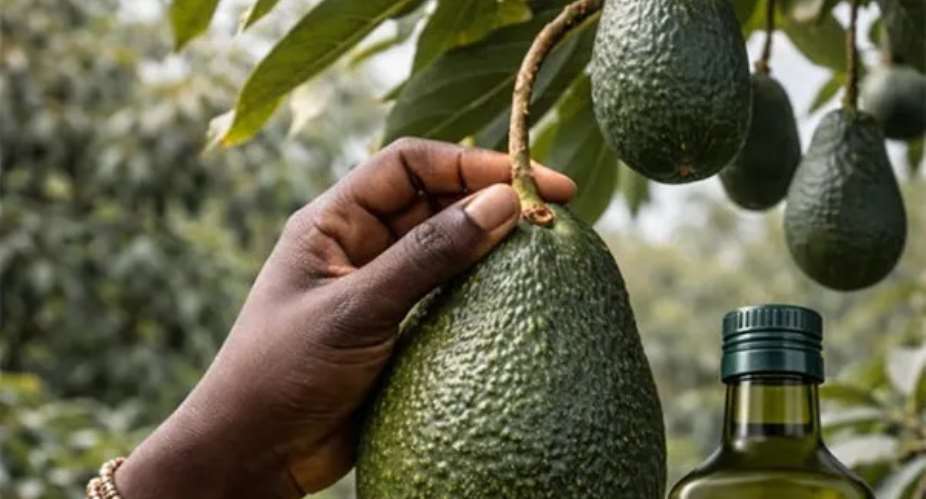
Hypertension is often called the "silent killer" for good reason. It rarely announces itself with obvious symptoms, yet it quietly damages the heart, brain, kidneys, and blood vessels over years. In Ghana, as across much of Africa, high blood pressure is a growing public health concern, and many people turn to traditional remedies alongside or instead of conventional medication.
One remedy that has attracted attention — both in Ghanaian communities and in scientific laboratories — is the avocado leaf. Specifically, boiling avocado leaves and drinking the water has been used traditionally to manage high blood pressure. But does it actually work? And what does the science say?
The Traditional Use
The avocado tree, Persea americana, is native to Central America but now grows widely across tropical and subtropical regions, including Ghana. While most people know the fruit for its creamy flesh, the leaves have a long history in traditional medicine. Across Africa, Central America, and parts of Asia, avocado leaf preparations have been used for stomach ailments, respiratory conditions, diabetes, and — most relevant here — hypertension.
This traditional use is not random. It represents generations of observation about what seems to help. But traditional use alone does not prove effectiveness. For that, we need science.
What the Laboratory Shows
A significant study published in the Cardiovascular Journal of Africa in 2007 examined the cardiovascular effects of avocado leaf extract in animal models. The findings were notable.
The researchers tested the extract on isolated blood vessels and on living rats. They found that the extract caused relaxation of the aorta — the main artery leaving the heart — in a dose-dependent manner. More extract meant more relaxation.
Crucially, when they blocked the production of nitric oxide — a molecule the body naturally produces to relax blood vessels — the relaxing effect disappeared. This indicated that avocado leaf works through the same pathway the body already uses to regulate blood pressure.
When given to living rats, the extract produced a dose-related reduction in both blood pressure and heart rate.
Subsequent research has identified specific compounds in avocado leaves that may be responsible. Flavonoids — particularly quercetin — are present in significant quantities. Quercetin has been shown in some studies to inhibit angiotensin-converting enzyme (ACE), the same enzyme targeted by common blood pressure medications like captopril and lisinopril. One study found quercetin could inhibit ACE by approximately 60 percent.
The leaves also contain potassium and magnesium, minerals that play roles in blood pressure regulation, and they appear to have a diuretic effect — helping the body flush excess fluid and sodium, which reduces pressure inside blood vessels.
Human Studies: Small But Consistent
Laboratory findings are one thing. What happens in actual people?
Several small clinical studies, mostly from Indonesia where avocado leaf tea is a common traditional remedy, have examined this question.
One case study followed two elderly patients with hypertension who drank avocado leaf decoction once daily for seven days. Both saw their blood pressure drop to normal ranges — one to 130/80 mmHg, the other to 120/80 mmHg.
Another study compared avocado leaf tea to avocado pulp juice in elderly patients. The leaf tea produced a greater average drop in blood pressure — about 15 millimetres of mercury, versus 11 for the juice.
A more recent study found that both regular avocado leaf extract and a nanoparticle formulation were effective at reducing systolic and diastolic blood pressure. The extract also increased urine output, supporting the diuretic mechanism.
These results are consistent with the animal and laboratory findings. However, it is important to be honest about the limitations. These studies are small — some with only two or four participants. They are short-term, usually lasting seven days to a few weeks. They are not the large, randomised, placebo-controlled trials that would provide definitive proof.
What About the Seed?
Some online sources also promote boiling avocado seeds for blood pressure. Here, caution is warranted.
Preliminary research does suggest avocado seed has some antihypertensive potential. However, a 2025 toxicity study found that avocado seed oil has an LD50 of approximately 1,478 mg/kg in rats — classifying it as moderately toxic. At higher doses, it caused liver and kidney damage, increased inflammatory markers, and even cardiac damage in animals.
The leaves appear much safer based on traditional use and current evidence. The seed requires considerably more research before regular consumption could be recommended.
Safety and Contraindications
Even with leaves, there are important cautions.
Avocado leaf tea is not recommended for pregnant or breastfeeding women, children and adolescents, or people with kidney problems, as the diuretic effect can strain the kidneys. There is also potential for interaction with blood pressure medications and anticoagulants.
Side effects from excessive consumption can include stomach upset, diarrhoea, nausea, and allergic reactions in sensitive individuals.
And the most important point: herbal does not mean harmless. "Natural" is not a synonym for "safe." Everything has a dose, and everything has interactions.
The Bottom Line
The science on avocado leaves is promising but preliminary.
There is solid mechanistic evidence: the extract relaxes blood vessels, inhibits ACE, acts as a diuretic, and contains antioxidant compounds that support cardiovascular health.
There is consistent — though small — clinical evidence that drinking avocado leaf decoction can lower blood pressure in hypertensive patients, sometimes bringing it into normal range.
But we do not have large, rigorous trials. We do not have long-term safety data. We do not have standardised dosing.
This is a fascinating example of traditional knowledge pointing scientists toward something real. It deserves more research. But it is not a replacement for evidence-based medical care.
If you have high blood pressure, continue taking your prescribed medication. If you are curious about avocado leaf tea as a complementary approach, discuss it with your doctor first. Go in with open eyes and realistic expectations.

 Ahafo Ano South West MP involved in road accident
 Constitutional Review alone will not solve Ghana’s problems – Kwesi Pratt Jnr.
 East Legon Football Academy applauds NPA Boss for supporting youth football
 Gov't didn't show NPP enough respect in constitutional review process – Martin K...
 September 18: Cedi sells at GHS12.15 on forex market, GHS11.53 on BoG interbank
 Lawyer challenges two-week remand of Salomey over connection to wanted 'Ghana Jo...
 Minority calls for NSA boss Ampofo Ankrah, others to be dismissed over alleged 2...
 ‘You gave us GH¢60,000 to run 66 offices nationwide and expect us to function?’ ...
 Russia seizes assets of Swiss food giant Nestle and three French firms
 Russia votes in parliamentary election as war in Ukraine drags on



Comments
Good job