




One of the most fascinating discoveries for many African practitioners encountering India's traditional medical system is that Ayurveda is not restricted to herbs, diet, massage, yoga and lifestyle medicine. Within India's highly developed Ayurveda educational and regulatory system exists something that may initially surprise many Africans: Ayurvedic surgery.
Yes, surgery forms part of Ayurveda. More importantly, Ayurvedic surgery in India is not merely a historical reference to the ancient surgical achievements of Sushruta. It has been incorporated into contemporary postgraduate education, professional regulation and clinical practice through defined surgical specialties.
For Africa, where discussions surrounding traditional, complementary and alternative medicine often revolve around herbs, spirituality, nutrition and regulation of practitioners, the Indian experience presents an important question: Can indigenous and traditional systems of medicine evolve into structured medical professions with defined advanced scopes of clinical practice? India demonstrates that they can.
Surgery Has Deep Roots in Ayurveda
The relationship between Ayurveda and surgery is ancient. One of the most celebrated figures in the history of Indian medicine is Sushruta, traditionally associated with the Sushruta Samhita. The text contains extensive discussions of surgical instruments, wounds, fractures, dislocations, surgical techniques and anatomical knowledge.
For this reason, Sushruta occupies an important position in the history of surgery. However, what makes the Indian experience particularly interesting today is that the surgical heritage of Ayurveda has not simply been confined to museums and ancient medical texts. India has developed postgraduate education through which appropriately qualified Ayurveda physicians may undertake advanced training in recognized surgical disciplines.
Two particularly important specialties are Shalya Tantra and Shalakya Tantra.
Understanding Shalya Tantra
Shalya Tantra represents the principal surgical discipline within Ayurveda. Contemporary postgraduate training under India's Ayurveda regulatory framework goes considerably beyond simply studying traditional surgical writings. Students encounter classical Ayurvedic surgical concepts alongside modern subjects relevant to safe surgical practice.
These include surgical anatomy, pathology, surgical instruments, sterilisation, infection control, wound management, diagnostic investigations, perioperative care, management of haemorrhage, emergency care, anaesthesia-related principles and medico-legal responsibilities.
This demonstrates an essential principle of professional development: traditional medicine does not necessarily have to reject modern biomedical science in order to preserve its identity. A traditional medical profession can retain its philosophy while adopting contemporary scientific knowledge and patient-safety standards.
Shalakya Tantra
Shalakya Tantra is principally concerned with diseases affecting structures above the clavicle and therefore encompasses areas involving the eyes, ears, nose, throat, oral cavity, teeth, head and neck.
India has developed postgraduate Ayurveda education around these fields, creating practitioners whose training is considerably more specialized than that of the general Ayurveda graduate. The existence of Ayurvedic surgery should therefore not be interpreted to mean that every Ayurveda practitioner automatically becomes a surgeon. Advanced clinical privileges must follow advanced education, competency and professional authorization.
The Famous 58 Surgical Procedures
A major development occurred in 2020 when India's regulatory framework concerning postgraduate Ayurveda education generated international attention over specified surgical procedures.
The Government of India subsequently clarified that postgraduate scholars in Shalya and Shalakya are practically trained in 58 specified surgical procedures cumulatively, enabling appropriately trained graduates to independently perform the specified procedures following completion of their postgraduate education.
The clarification was equally important for what it did not authorize. It did not create an unrestricted right for Ayurveda practitioners to perform every form of modern surgery. Therefore, the statement that 'Ayurvedic doctors can perform surgery' requires qualification. The more accurate position is that India recognizes defined surgical education and clinical practice within particular Ayurveda postgraduate specialties and within the applicable regulatory scope.
Piles and Kshara Sutra: A Fascinating Example
One of the best-known examples of Ayurvedic surgical practice concerns anorectal disorders. Ayurveda has developed approaches to conditions such as haemorrhoids, commonly called piles, fistula-in-ano and related anorectal disorders.
Of particular interest is Kshara Sutra therapy. Kshara Sutra involves the use of a specially prepared medicated thread in the management of selected anorectal conditions, particularly fistula-in-ano. Kshara-based procedures also feature in the Ayurvedic management of haemorrhoidal disease.
India's contemporary AYUSH health system recognizes Shalya and related procedures within formal institutional structures. In 2026, Ministry of AYUSH insurance benchmark documentation included Shalya and Shalakya procedure codes and specifically identified Kshar Sutra Surgery for piles (Arsh Chedan). This illustrates the extent to which India has institutionalized its indigenous systems of medicine.
Ayurveda Has Become More Than a Wellness System
For many Africans, Ayurveda is commonly associated with herbal products, massage oils, detoxification, yoga and wellness tourism. That perception seriously underestimates the Indian system.
India has constructed an extensive institutional framework around Ayurveda and the wider AYUSH sector. There are universities and colleges providing Ayurveda medical education, postgraduate specialization, teaching hospitals, clinical departments, research institutions, regulatory structures and professional registration.
This represents an important evolution from traditional knowledge into an organized healthcare profession. Africa should pay attention to this development.
The Lesson Is Not That African Naturopaths Should Start Performing Surgery
The lesson from India is not that naturopaths or traditional medicine practitioners in Africa should immediately begin undertaking surgical procedures. That would be dangerous and legally irresponsible.
Surgery is a high-risk clinical activity. Any expansion of scope into invasive procedures requires appropriate legislation, accredited education, supervised clinical training, competency assessment, hospital infrastructure, infection-control systems, emergency support, anaesthesia arrangements, professional indemnity and clear referral protocols.
Africa must therefore avoid the temptation to copy clinical privileges without first building the institutions that make those privileges safe. The real lesson from India concerns professional architecture.
What African Naturopathy Can Learn
African naturopathy is currently at an important stage of its development. Across the continent, naturopathy operates alongside indigenous African medicine, herbal medicine, nutritional therapies and other complementary healthcare systems. However, education, competency standards, professional titles and scopes of practice remain inconsistent in many jurisdictions.
The Indian experience provides several lessons. First, education must determine scope of practice. A practitioner who has completed basic professional education should not automatically possess the same clinical privileges as someone who has completed postgraduate specialty education.
Second, Africa must develop competency-based clinical specialization. The future of African naturopathy may eventually involve different levels of practice: General Naturopath -> Advanced Clinical Naturopath -> Postgraduate Clinical Specialist.
Such specialties could initially develop in comparatively lower-risk areas such as clinical nutrition, lifestyle medicine, naturopathic physical medicine, hydrotherapy, botanical medicine, integrative oncology support, pain management, women's health and public health.
Third, professional development must occur alongside legal development. Educational institutions cannot independently confer clinical privileges that national law does not recognize. This is where health law becomes inseparable from professional education.
Regulation Must Come Before Expanded Clinical Privileges
India's experience demonstrates another crucial principle. The development of traditional medicine requires collaboration among educators, clinicians, regulators, researchers, governments and legislators.
If Africa wishes to professionalize naturopathy and other traditional and complementary medical systems, governments must eventually define who may practise, minimum educational standards, protected professional titles, prohibited activities, referral obligations and advanced scopes of practice.
This would protect both practitioners and patients. A practitioner should know exactly where his or her legal scope begins and where it ends. Likewise, patients should know the education and competency associated with the professional title used by their healthcare provider.
India Offers Africa a Comparative Health-Law Model
Perhaps the greatest significance of Ayurvedic surgery for Africa is therefore not the surgery itself. It is what the existence of Ayurvedic surgery tells us about institution building.
India demonstrates that indigenous medical knowledge can move through several developmental stages: Traditional knowledge -> formal education -> competency standards -> professional registration -> clinical specialization -> teaching hospitals -> research -> regulated advanced practice.
That pathway deserves serious study by African policymakers. African traditional medicine possesses enormous intellectual and therapeutic heritage. Yet heritage alone cannot create a modern healthcare profession. Institutions must be built around that heritage. Educational standards must be established. Research must be conducted. Clinical competencies must be defined. Professional ethics must be enforced. And legislation must clearly determine the boundaries of practice.
The Future of African Naturopathy
African naturopathy should therefore not attempt to become a replica of Indian Ayurveda or Western naturopathic medicine. Africa must develop its own model.
Such a model should respect African indigenous medical knowledge while incorporating evidence-informed naturopathic principles, modern biomedical sciences, competency-based education, clinical training, research, ethics and health-law regulation.
India provides evidence that traditional medicine does not have to remain on the margins of healthcare forever. With political commitment, educational investment, research, legislation and strong institutions, traditional medical systems can become organized professions with clearly defined clinical responsibilities.
The existence of legally structured Ayurvedic surgical education should therefore challenge African policymakers, universities and traditional medicine leaders to think beyond the narrow question of whether traditional medicine 'works.' The larger questions are: How should it be educated? How should it be regulated? What should practitioners be permitted to do? What additional competencies should be required for advanced practice? And how can traditional medical knowledge be developed without compromising patient safety?
These are ultimately questions of education, healthcare policy and law.
Conclusion
Ayurvedic surgery represents one of the most fascinating examples of how an ancient medical tradition can interact with contemporary healthcare regulation.
India has not simply preserved Ayurveda as cultural heritage. It has developed educational institutions, postgraduate specialties, regulatory structures and clinical pathways around it.
Africa should study this experience carefully. The objective should not be to copy India's surgical privileges or to turn ordinary naturopaths into surgeons. The objective should be to understand the institutional pathway that made advanced Ayurvedic practice possible.
For the emerging African naturopathic profession, that may be the most important lesson of all: A profession advances not merely by expanding what its practitioners claim they can do, but by building the education, evidence, regulation and institutions necessary to justify what society permits them to do.
Author's Profile
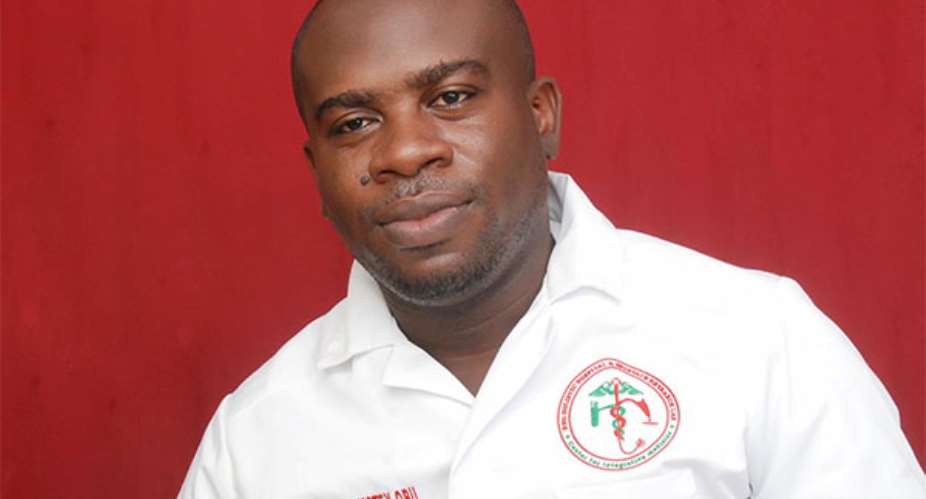
Prof. Raphael Nyarkotey Obu is a Ghanaian naturopath, lawyer, researcher and advocate for the professional development of naturopathy and traditional, complementary and integrative medicine in Africa. He is President of the Nyarkotey College of Holistic Medicine and Founding President of the African Naturopathic Federation (ANF). His academic and policy interests include naturopathic medicine, traditional and complementary medicine regulation, health law, professional education and the development of an African model of naturopathic healthcare.
Selected References and Regulatory Sources
• National Commission for Indian System of Medicine (NCISM). Postgraduate Ayurveda curricula and regulations, including Shalya Tantra and Shalakya Tantra.
• Government of India, Press Information Bureau. Clarification concerning postgraduate Ayurveda surgical training and the specified surgical procedures, 2020.
• Ministry of AYUSH, Government of India. AYUSH insurance benchmark documentation, 2026, including Shalya and Shalakya procedure codes and Kshar Sutra Surgery for piles (Arsh Chedan).
• National Commission for Indian System of Medicine Act, 2020 (India), including provisions relating to registration and the right to practise Indian systems of medicine.


 1,568 new lawyers must use law to advance justice — Chief Justice
 GH¢800,000 worth of goods lost in Kia Rhino truck fire at Amanfrom
 I never said Ghana has more nurses than it needs — Akandoh
 I have tried reaching Boakye Agyarko after NPP chairmanship race, but to no avai...
 Ghana’s Corporate Illusion: Why We Celebrate Professional Titles More Than Natio...
 Sam George, Armah-Kofi Buah, Phyllis Naa Koryoo and OPK among 1,568 lawyers call...
 Visa scandal: 'Ampofo Ankrah’s suspension not enough; Kofi Adams must also step ...
 'Let integrity, discipline guide your conduct' — Samson Lardi tells new lawyers
 Labour Minister optimistic teachers will suspend strike by close of day
 Dr Ato Forson urges MMDCEs to eliminate waste in public spending


