




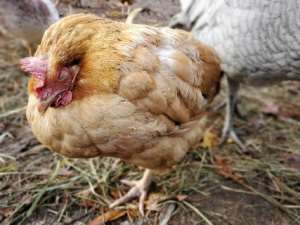
Poultry farmers in Ghana are facing significant economic losses from microscopic Eimeria species, parasites that cause coccidiosis and threaten poultry health, egg production, and carcass quality.
The poultry industry remains an important contributor to Ghana’s food security, employment, and national GDP, with prominent Ghanaian businessman Ibrahim Mahama and the Government of Ghana, through the Akokɔ Nkitikiti initiative, investing heavily in the sector.
However, local poultry entrepreneurs are suffering severe profit losses from silent, microscopic parasites known as Eimeria species.
Eimeria, a genus of apicomplexan parasites, is identified as the primary cause of coccidiosis, one of the major enteric diseases affecting the global poultry industry.
In poultry, seven major Eimeria species (Eimeria acervulina, Eimeria mitis, Eimeria maxima, Eimeria brunetti, Eimeria necatrix, Eimeria praecox, and Eimeria tenella) are known to colonize different sections of the intestinal tract, with infection occurring when birds ingest sporulated oocysts from contaminated litter or feed.
Once transmitted, the parasites damage the intestinal mucosal lining, impairing nutrient absorption and resulting in severe diarrhoea and, eventually, death.
This consequently reduces poultry populations, lowers egg production, increases carcass condemnation at slaughterhouses, and causes substantial financial losses to farmers.
Globally, Eimeria infections cost the poultry industry more than $13 billion, highlighting the economic importance of controlling the parasite.
In my study analyzing 200 poultry carcasses at the Ho Veterinary Laboratory, the prevalence rate was found to be 37.6% in broilers from local poultry farms within the Volta Region.
This prevalence rate suggests a considerable occurrence of coccidiosis among local poultry farms in the region and poses a potential threat to farmers’ investments and productivity.
Based on this finding, poultry farmers are recommended to practise proactive sanitation and rotate anticoccidial drugs as part of efforts to prevent drug resistance and improve disease control.
Effective control of coccidiosis could help poultry farmers safeguard their investments, improve food security, and reduce economic losses associated with Eimeria infections.

 Legal vacation trials: ‘Where is the constitutional violation?’ – Prof Azar quiz...
 Don’t allow religious tensions to destroy Ghana’s peace – IGP
 FAGE sets sights on $10bn export revenue by 2030 after hitting $5bn in 2025
 Oppong Nkrumah sues Chief Justice over ‘selective justice’ in legal vacation tri...
 Ablakwa leads 13-member committee tasked to shape Mahama’s agenda as 2027 AU cha...
 Retired Fire Officer granted GH¢350,000 bail over alleged recruitment scam
 Adansi North health workers threaten strike over alleged encroachment on facilit...
 Five-year presidential term is a no-no; Akufo-Addo would've still been president...
 Bolgatanga-Bawku-Pulmakom road contractor returns to site as govt targets 2027 c...

