




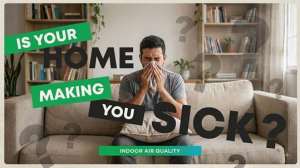
When we hear the words air pollution, we often imagine smoke from cars, factories, or burning rubbish. But what if some of the pollution we breathe comes from our own homes?
Indoor air can contain smoke, dust, mould, carbon monoxide, and chemicals released from household products. Cooking — especially with charcoal, firewood, or other polluting fuels in poorly ventilated spaces — can produce tiny particles that enter deep into the lungs.
The problem is not always visible. A room may look clean while still containing pollutants. Smoke from cooking, tobacco, and burning materials can all affect indoor air quality.
According to the World Health Organization, around 2.1 billion people worldwide still cook using polluting fuels and technologies. Household air pollution contributed to an estimated 2.9 million deaths in 2021, with health effects including respiratory infections, heart disease, stroke, chronic obstructive pulmonary disease, and lung cancer.
Simple steps can help. Improving ventilation when cooking, reducing indoor smoke, keeping rooms dry, and — most importantly — addressing mould or dampness can reduce exposure. Using cleaner cooking technologies where possible is also important.
We often worry about the pollution outside our homes, but the air inside deserves attention too.
Sometimes, protecting our health starts with looking at what we are breathing every day.

 Judiciary must earn public trust, not demand it — Asiedu Nketiah
 Any sod-cutting ceremony at Upper East Airport site this weekend will be 419 — G...
 Mahama must investigate GoldBod over alleged US$1.7bn loss — Abena Osei-Asare
 Attorney General opposes Wontumi’s bail application pending appeal in 20-year se...
 'I will continue to sit until Chief Justice revokes warrant' - High Court judge ...
 August 11: Cedi sells at GHS12.45 on forex market, GHS11.78 on BoG interbank
 Hopeson Adorye eats humble pie, retracts claim linking Ekow Assafuah to Ghana To...
 Legal vacation does not mean lawyers can halt court proceedings – Deputy Attorne...
 Forensic audit reveals how Ghana’s Embassy in the U.S. extorted $19.3 million fr...
 EVIDENCE: How Ghana’s Washington Embassy staff shared money extorted from visa a...

