




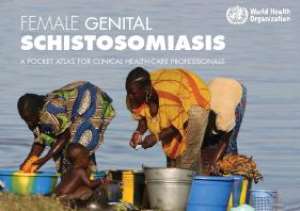
There is a particular health problem that can remain hidden for years — Female Genital Schistosomiasis is one of them.
Female Genital Schistosomiasis (FGS) is a condition affecting women in Ghana, especially those living near rivers and other freshwater sources. It is caused by Schistosoma haematobium and can affect the cervix, vagina, and other reproductive organs.
FGS can be difficult to recognize because its symptoms are not always unique. Women may experience vaginal discharge, itching, pelvic pain, painful sex, or bleeding after sex. These symptoms can easily be mistaken for sexually transmitted infections or other reproductive health issues.
The problem becomes more serious because FGS can alter the appearance of the cervix. During examination, healthcare workers may observe sandy patches, small bumps, or unusual blood vessels. Some of these changes resemble cervical abnormalities, making diagnosis challenging.
This is why women with suspected FGS may also benefit from cervical cancer screening. Human Papillomavirus (HPV) is the main cause of cervical cancer, and FGS can contribute to long‑term inflammation and damage to reproductive tissues.
One useful diagnostic method is liquid‑based cytology. In simple terms, cells are collected from the cervix and placed in a special liquid before being examined under a microscope. This allows laboratory professionals to identify abnormal cells and classify them using the Bethesda System.
Research in Ghana’s Volta Region has highlighted the importance of paying closer attention to FGS. A previous study found many women with visual signs of FGS and recommended complementary methods such as cervical cytology to improve diagnosis and strengthen cervical cancer screening.
Ghana already has programmes for controlling schistosomiasis and preventing cervical cancer. However, these services are often handled separately. Integrating them could help healthcare workers identify both conditions earlier, especially among women living in communities with limited access to specialized healthcare.
FGS may be a hidden disease, but it does not have to remain hidden. Ghana needs greater awareness, improved diagnostic approaches, and stronger reproductive health services.
Paying closer attention to FGS could help women receive the right care earlier and reduce its impact on their lives.

 Judiciary must earn public trust, not demand it — Asiedu Nketiah
 Any sod-cutting ceremony at Upper East Airport site this weekend will be 419 — G...
 Mahama must investigate GoldBod over alleged US$1.7bn loss — Abena Osei-Asare
 Attorney General opposes Wontumi’s bail application pending appeal in 20-year se...
 'I will continue to sit until Chief Justice revokes warrant' - High Court judge ...
 August 11: Cedi sells at GHS12.45 on forex market, GHS11.78 on BoG interbank
 Hopeson Adorye eats humble pie, retracts claim linking Ekow Assafuah to Ghana To...
 Legal vacation does not mean lawyers can halt court proceedings – Deputy Attorne...
 Forensic audit reveals how Ghana’s Embassy in the U.S. extorted $19.3 million fr...
 EVIDENCE: How Ghana’s Washington Embassy staff shared money extorted from visa a...


Comments
Active vaginitis