




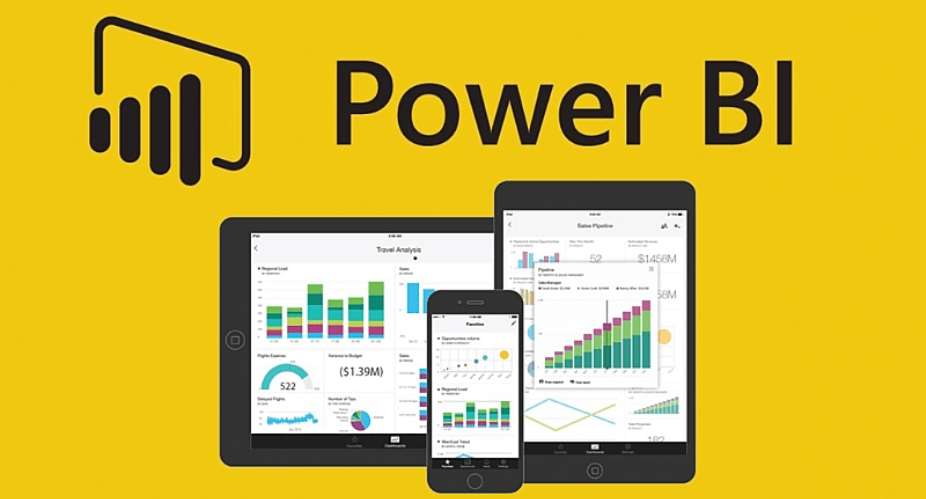
The way businesses use data has changed dramatically over the last decade. Every department—from finance and sales to healthcare and education—now relies on accurate data to make faster and smarter decisions. However, having access to large amounts of information is not enough. The real advantage comes from turning that information into meaningful insights, and this is where Microsoft Power BI has made a significant impact.
Power BI is a business intelligence and data visualization platform that allows users to collect data from multiple sources, clean it, analyze trends, and create interactive dashboards. Instead of spending hours preparing spreadsheets or static reports, professionals can build visual reports that update automatically as new data becomes available.
One of the reasons Power BI has gained widespread adoption is its accessibility. Users do not need to be experienced programmers to create useful dashboards. With a basic understanding of data and business processes, professionals can quickly learn how to import datasets, build visualizations, and generate reports that help managers make informed decisions.
Organizations across industries are increasingly looking for employees who understand data analytics. Financial analysts use Power BI to monitor budgets and profitability. Sales teams track customer performance and revenue trends. Human resource departments analyze employee data to improve workforce planning. Supply chain professionals monitor inventory, while healthcare organizations use dashboards to improve operational efficiency.
Another major advantage of Power BI course is its ability to connect with different data sources. Excel spreadsheets, SQL databases, cloud applications, and many business systems can all be integrated into a single reporting environment. This reduces manual work while improving reporting accuracy.
For individuals planning to advance their careers, learning Power BI certification provides practical value beyond technical knowledge. It helps professionals develop analytical thinking, improve reporting skills, and communicate business performance through clear visualizations. These abilities are becoming increasingly valuable as organizations continue their digital transformation initiatives.
Learning Power BI typically begins with understanding data preparation, creating charts and dashboards, writing DAX formulas for calculations, and publishing reports securely for collaboration. Consistent practice with real business datasets helps learners gain confidence and develop solutions that can be applied directly in the workplace.
As organizations continue investing in data-driven decision-making, business intelligence skills are expected to remain highly relevant. Whether someone works in finance, operations, marketing, logistics, or management, understanding how to transform raw data into actionable insights is becoming an important professional capability rather than a specialized technical skill.

 Ahafo Ano South West MP involved in road accident
 Constitutional Review alone will not solve Ghana’s problems – Kwesi Pratt Jnr.
 East Legon Football Academy applauds NPA Boss for supporting youth football
 Gov't didn't show NPP enough respect in constitutional review process – Martin K...
 September 18: Cedi sells at GHS12.15 on forex market, GHS11.53 on BoG interbank
 Lawyer challenges two-week remand of Salomey over connection to wanted 'Ghana Jo...
 Minority calls for NSA boss Ampofo Ankrah, others to be dismissed over alleged 2...
 ‘You gave us GH¢60,000 to run 66 offices nationwide and expect us to function?’ ...
 Russia seizes assets of Swiss food giant Nestle and three French firms
 Russia votes in parliamentary election as war in Ukraine drags on


