




A painful question is confronting Africa: How can a country that was rescued by the support, sacrifices and solidarity of other African nations during its darkest days now allow some of its own citizens to turn against fellow Africans?
The recent killings of Nigerian nationals in South Africa have reopened one of the continent’s most uncomfortable debates the rise of xenophobia, or what many critics describe as Afrophobia, where Africans attack other Africans because of nationality. Nigeria’s government has condemned the deaths of two citizens Musa Yunana Joe and Emeka Charles Iroegbu and demanded investigations into the circumstances surrounding their deaths.
But beyond the anger, beyond the diplomatic statements, and beyond the social media outrage, Africa must ask deeper questions:
What has happened to the dream of African unity?
How did the continent that fought colonialism together arrive at a point where Africans are being hunted by other Africans?
Who Were the Victims? The Human Stories Behind the Headlines
According to Nigeria’s Ministry of Foreign Affairs, one of the victims was Musa Yunana Joe, popularly known as “Big Joe,” a Nigerian businessman who was reportedly killed outside his shop in Witbank (eMalahleni), Mpumalanga, on June 28, 2026. Nigerian authorities said he was attacked by unidentified criminals during a period of heightened anti-foreigner tensions.
The second victim was identified by Nigerian authorities as Emeka Charles Iroegbu. Nigeria alleged that he died after an encounter involving law enforcement officers in Pretoria. South African authorities have disputed the connection between his death and anti-migrant protests, saying investigations are ongoing and that the circumstances require evidence-based conclusions.
These are not just names in a political argument.
They were human beings.
They had families.
They had dreams.
They had reasons for leaving Nigeria and building lives in another African country.
The question Africa must ask is:
When did an African passport become a reason for another African to lose compassion?
The Great Contradiction: A Nation Asking Africa for Business While Africa Questions Its Safety
South Africa remains one of Africa’s largest economies and has long promoted itself as a gateway for investment on the continent.
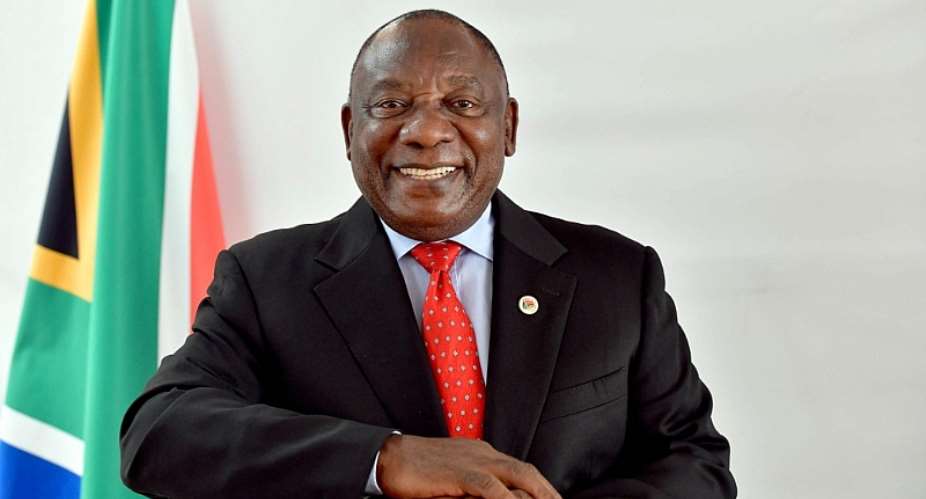
President Cyril Ramaphosa has repeatedly called for stronger African economic cooperation, trade and investment.
But here lies the uncomfortable contradiction:
How can South Africa convince African countries to invest, trade and cooperate when some African citizens living there fear for their lives because of their nationality?
A business relationship requires trust.
Investors need stability.
Communities need security.
Diplomacy needs respect.
If Nigerians, Ghanaians, Zimbabweans, Malawians, Mozambicans and other Africans feel targeted, then South Africa faces a serious image problem across the continent. Recent violence has already pushed some governments to demand action and assist citizens seeking safety.
The difficult question is:
Can South Africa ask Africans to open their markets while failing to convince Africans that their people are safe inside South Africa?
But Who Is Responsible? Citizens, Government, or Political Leaders?
A serious discussion must avoid simplistic answers.
South Africa has genuine challenges:
Extremely high unemployment.
Deep inequality.
Crime concerns.
Pressure on public services.
Many ordinary South Africans feel abandoned and frustrated.
But the critical question is:
Who created these problems?
Did Nigerian traders create South Africa’s unemployment crisis?
Did Ghanaian workers create corruption?
Did Zimbabwean migrants design economic policies?
Did Mozambican workers create inequality?
Blaming migrants for structural failures is a political shortcut that avoids confronting deeper problems.
History shows that desperate societies often look for someone weaker to blame.
The question becomes:
Are foreign Africans being used as convenient scapegoats for failures created by decades of economic and political decisions?
The Forgotten History: Africa Stood With South Africa
During apartheid, many African countries supported the struggle against racial oppression in South Africa.
Countries offered diplomatic support.
They hosted exiled activists.
They sacrificed economically despite their own struggles.
The anti-apartheid struggle was not only a South African struggle it was an African struggle.
So the painful question is:
If Africans stood with South Africa when South Africans were suffering, why are some South Africans now turning against Africans who seek opportunities there?
The Leadership Question: Where Is the Moral Voice?
Governments have a responsibility beyond controlling borders.
They must protect lives.
They must enforce laws.
They must prevent citizens from taking justice into their own hands.
A country has every right to manage immigration.
A country has every right to fight illegal migration.
But there is a clear difference between:
enforcing immigration laws
and
allowing hatred against foreigners.
The world watched South Africa’s painful history of apartheid a system built on racial separation and the idea that some people were less deserving of rights.
The question many Africans are asking is:
Has South Africa forgotten the lessons of its own history?
The Bigger African Question: Is Pan-Africanism Dying?
The African Union and generations of leaders have promoted the idea that African nations must unite.
But unity cannot survive on speeches alone.
It must exist in everyday life.
It must exist in markets.
It must exist in neighbourhoods.
It must exist between ordinary people.
The continent must ask:
What happens to Africa’s future if Africans begin seeing each other as enemies instead of brothers and sisters?
A Moment for Serious Reflection
The solution is not retaliation.
The solution is not Nigerians attacking South Africans.
The solution is not Ghanaians rejecting South Africans.
The solution is justice, accountability, stronger leadership and honest conversations.
South Africa must confront xenophobia.
Other African countries must also address migration challenges responsibly.
And Africans everywhere must reject the dangerous idea that another African’s suffering is acceptable because they were born on the other side of a border.
Because at the end of the day, the hardest question remains:
If Africa cannot protect Africans from Africans, how can Africa convince the world that it is ready to unite?
By:
Patrick Belebang Yagsori
+233240292413
[email protected]

 Police arrest alleged notorious land guard wanted over multiple criminal cases
 Alleged $8 million romance scam suspect Abu Trica extradited to United States
 Mahama announces maize processing factory for Sissala under Agro-Industrialisati...
 Mahama announces procurement process for new Wa Airport
 Former NAFCO CEO released by EOCO after airport re-arrest
 Bagbin refers constitutional amendment bill to committee following Council of St...
 'Ghana has been whether very apt or lucky to avoid terror attacks but threat rem...
 Regional Tribunal Bill will uphold human rights — A-G assures Ghanaians
 High Court injuncts Sunyani East NPP constituency election
 July 9: Cedi sells at GHS12.20 on forex market, GHS11.45 on BoG interbank

