




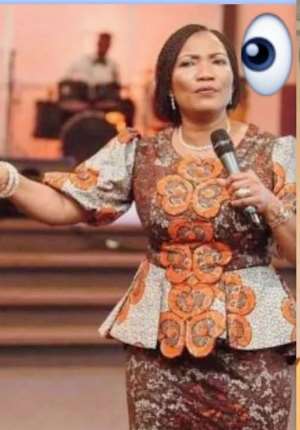
Few relationship conversations ignite as much emotion as the question of who is responsible for what in marriage. The recent remarks by Funke Adejumo have reopened a debate that many couples, churches, families, and societies have quietly avoided for generations.
Her words were simple yet provocative:
"Don't kill yourself trying to please a woman... If God cannot satisfy us, who are you to think you can?"
She also challenged women to become financially independent, contribute to the family, and even surprise their husbands with expensive gifts instead of believing that everything must always come from the man.
The reaction was immediate. Thousands applauded her honesty. Others accused her of attacking women or excusing irresponsible men.
But beneath the outrage lies a deeper question that society has refused to answer honestly.
Who Told Women That Men Exist to Take Care of Them?
Was it culture?
Was it tradition?
Was it social media?
Was it our parents?
Or was it God?
Many people confidently quote, "A man must provide."
But where exactly does the Bible or any major holy book say that a woman's responsibility is simply to receive while the man endlessly gives?
That question deserves careful examination rather than assumptions.
What Do the Holy Books Actually Teach?
In the Bible, The Holy Bible teaches that husbands should love their wives sacrificially (Ephesians 5:25), and it also teaches wives to respect their husbands (Ephesians 5:33). It presents marriage as a relationship of mutual commitment, not a one-way transaction.
The Holy Bible also describes the "virtuous woman" in Proverbs 31 as someone who works, trades, manages property, supports her household, and contributes economically. She is not portrayed as idle or entirely dependent on her husband.
Likewise, The Qur'an assigns financial responsibility to husbands while also emphasizing kindness, cooperation, justice, and mutual rights and obligations within marriage. It repeatedly encourages compassion and consultation between spouses rather than exploitation by either side.
Neither scripture teaches that a husband should destroy his physical health, mental well-being, or financial future trying to meet limitless expectations.
The Question Nobody Wants to Ask
If the husband is expected to provide...
Who provides for the provider?
When the man is depressed...
Who notices?
When he is emotionally exhausted...
Who comforts him?
When he develops hypertension because of financial pressure...
Who carries his burden?
When he loses his job...
Does society embrace him with the same compassion it often expects him to show others?
Or does it simply call him a failure?
Is Marriage Becoming an Employment Contract?
Increasingly, some discussions about marriage sound less like conversations about partnership and more like job descriptions.
The husband must provide.
Protect.
Pay the bills.
Buy the house.
Buy the car.
Pay school fees.
Fund vacations.
Finance birthdays.
Finance family members.
Never complain.
Never cry.
Never become weak.
Never fail.
If he cannot do these things, some immediately conclude that he is "not a real man."
But if marriage is reduced to financial performance, then an uncomfortable question emerges:
Is the husband being loved or merely valued for what he can provide?
Is This an African Mindset?
Many assume this expectation exists only in Africa.
The evidence suggests otherwise.
Traditional gender roles have existed across many societies, though they vary by culture and are changing over time. In many countries today, dual-income households have become common, and couples increasingly share financial and domestic responsibilities. Yet expectations that men should be primary providers remain influential in many communities.
This is not solely an African issue.
It is a global conversation about changing economic realities and evolving expectations within marriage.
What Are Women Saying?
Many women argue that expecting men to provide does not make women selfish.
They point to pregnancy, childbirth, breastfeeding, and caregiving as major contributions that cannot be measured in money alone.
Others argue that women often sacrifice careers, endure unequal domestic workloads, or support families in less visible ways.
These are important perspectives and deserve recognition.
Many women also agreed with Funke Adejumo, saying that financial independence reduces pressure on husbands and strengthens marriages by making both partners contributors rather than one carrying the entire burden.
What Are Men Saying?
Many men responded with relief.
They said they finally heard a prominent woman acknowledge the pressures many husbands silently endure.
Others described the emotional burden of believing they must always be strong, successful, and financially available regardless of personal struggles.
Some men, however, also admitted that provision should never become an excuse for neglecting emotional presence, faithfulness, or family involvement.
The Hard Questions Society Must Answer
Instead of asking only what a man should provide, perhaps we should also ask:
If a man must sacrifice everything for his family, who protects his health and peace?
Why do many people celebrate a woman's financial independence but still expect a man to carry nearly all financial responsibility?
If both spouses earn incomes, should household responsibilities also be shared fairly?
Why is a husband often praised for expensive gifts to his wife, while gifts from wives to husbands receive far less attention?
If love depends mainly on financial capacity, what happens when illness, unemployment, or economic hardship strikes?
Are we preparing young women for partnership or teaching them to seek lifelong providers?
Are we preparing young men for marriage—or training them to believe their value depends only on what they can earn?
If both spouses are created in God's image, why should one person's needs always take priority over the other's?
What Is the Role of a Wife?
This question should never be answered with stereotypes.
A wife is not merely someone who cooks.
Nor is a husband merely someone who pays bills.
Marriage ideally brings companionship, emotional support, encouragement, shared responsibility, mutual respect, intimacy, accountability, and teamwork.
Each spouse should make the other's life better not heavier.
If either partner sees the other only as an ATM, a domestic worker, or a servant, the relationship risks becoming transactional rather than relational.
A Challenge for Both Men and Women
Funke Adejumo's comments should not be interpreted as saying men should stop providing or that women should stop appreciating provision.
Rather, they challenge both sexes to reject unhealthy extremes.
Men should be responsible—but not destroyed by responsibility.
Women should be supported—but not become permanently dependent where they have the ability to contribute.
Healthy marriages are built not on exploitation but on partnership.
Final Thought
Perhaps the real question is not whether a man should provide.
Perhaps the real question is this:
If both husband and wife are partners before God, why do we often measure one spouse by sacrifice and the other by expectation?
A marriage where one person continually gives while the other continually receives will eventually create exhaustion, resentment, or both.
The strongest marriages are rarely those where one person carries everything.
They are the ones where both partners carry each other.
By:
Patrick Belebang Yagsori
+233240292413
[email protected]

 Police arrest alleged notorious land guard wanted over multiple criminal cases
 Alleged $8 million romance scam suspect Abu Trica extradited to United States
 Mahama announces maize processing factory for Sissala under Agro-Industrialisati...
 Mahama announces procurement process for new Wa Airport
 Former NAFCO CEO released by EOCO after airport re-arrest
 Bagbin refers constitutional amendment bill to committee following Council of St...
 'Ghana has been whether very apt or lucky to avoid terror attacks but threat rem...
 Regional Tribunal Bill will uphold human rights — A-G assures Ghanaians
 High Court injuncts Sunyani East NPP constituency election
 July 9: Cedi sells at GHS12.20 on forex market, GHS11.45 on BoG interbank

