




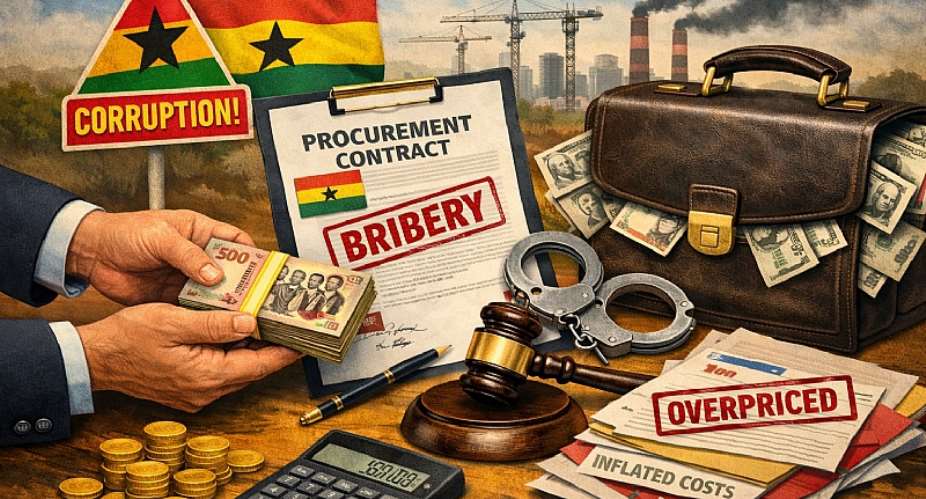
Corruption and procurement challenges remain major problems affecting healthcare administration in Ghana. Over the years, concerns about financial mismanagement, procurement irregularities, favoritism, and lack of accountability have raised serious questions about the efficiency and integrity of Ghana’s healthcare system. These challenges continue to affect healthcare delivery, patient safety, and public confidence in health institutions.
Healthcare procurement involves the acquisition of medicines, medical equipment, logistics, infrastructure, and other essential services needed for healthcare delivery. In every healthcare system, procurement plays an important role because the quality of healthcare depends largely on the availability of the right resources at the right time. However, corruption within procurement systems weakens healthcare institutions and negatively affects service delivery.
The 1992 Constitution of Ghana places strong emphasis on accountability, transparency, and protection of public resources. Article 35(8) specifically states that “the State shall take steps to eradicate corrupt practices and the abuse of power” (1992 Constitution of Ghana). This constitutional provision demonstrates that corruption is not only a moral problem but also a violation of national principles and governance standards.
Similarly, Article 41(f) of the Constitution imposes a civic responsibility on every citizen to “protect and preserve public property and expose and combat misuse and waste of public funds and property.” This means healthcare administrators, procurement officers, and public officials have constitutional obligations to ensure transparency and proper use of healthcare resources.
Despite these constitutional provisions, corruption in healthcare procurement continues to exist in several forms. One common challenge is inflated contract pricing. In some cases, medicines, medical supplies, and equipment are procured at prices far above market value. Such practices waste limited healthcare resources and reduce the ability of hospitals to provide quality healthcare services.
Another challenge is sole sourcing and political interference in procurement processes. Procurement contracts are sometimes awarded based on political influence, personal relationships, or favoritism instead of competence and value for money. This often results in delays, poor-quality supplies, and financial losses to the state. According to the Public Procurement Act, 2003 (Act 663), public procurement processes must be transparent, competitive, and fair. However, weak enforcement and institutional interference continue to undermine these legal requirements.
The Auditor-General’s Reports in Ghana have repeatedly highlighted procurement irregularities in public institutions, including health facilities. These reports often reveal unauthorized payments, procurement without approval, breach of procurement procedures, and uncompetitive contract awards. Such findings indicate weaknesses in internal controls and accountability systems within healthcare administration.
Corruption in healthcare procurement has serious effects on healthcare delivery. In many public hospitals, shortages of medicines, medical equipment, and logistics force patients to purchase items privately at high costs. This situation places financial pressure on ordinary citizens, especially low-income families who depend heavily on public healthcare services.
Furthermore, corruption reduces public trust in healthcare institutions. Citizens expect public health institutions to prioritize patient welfare and efficient service delivery. However, when corruption becomes common within procurement systems, public confidence in healthcare leadership decreases significantly.
The issue also raises ethical concerns. Healthcare institutions exist to save lives and improve public health. Therefore, corruption that denies patients access to medicines or quality healthcare services becomes a humanitarian issue. In some situations, delays in procurement or supply shortages
By Emmanuel Twum Barimah
Senior Administrator (Ghana Health Service)
BA, MBA in Health Services Management
Faculty of Law, Pentecost University
References
- The 1992 Constitution of the Republic of Ghana.
- Article 35(8) – Eradication of corruption and abuse of power.
- Article 41(f) – Duty of citizens to protect public property and combat misuse of public funds.
- Article 36(1) – Promotion of efficient and accountable economic systems.
- Public Procurement Act, 2003 (Act 663), Republic of Ghana.
- Public Procurement (Amendment) Act, 2016 (Act 914), Republic of Ghana.
- Public Financial Management Act, 2016 (Act 921), Republic of Ghana.
- Ghana Health Service Annual Reports and Financial Statements.
- Ministry of Health Ghana, Health Sector Medium Term Development Plans.
- World Health Organization (2020). Health Systems Governance and Accountability Report.
- Transparency International. Corruption Perceptions Index Reports.
- Auditor-General of Ghana. Reports on the Public Accounts of Ghana: Public Boards, Corporations and Other Statutory Institutions.
- Agyepong, I. A., Kodua, A., Adjei, S., & Adam, T. (2012). “When ‘solutions of yesterday become problems of today’: crisis-ridden decision making in a complex adaptive system (CAS) — the additional duty hours allowance in Ghana.” Health Policy and Planning.
- Ohemeng, F. L. K. & Ayee, J. R. A. (2016). “The Challenges of Public Sector Procurement Reform in Ghana.” International Journal of Public Administration.
- Seddoh, A. & Akor, S. A. (2012). “Policy Initiatives for Healthcare Financing and Governance in Ghana.” Health Economics Review.
 August 6: Cedi sells at GHS12.35 on forex market, GHS11.75 on BoG interbank
 Students are being influenced by social media and hard drugs – Deputy Education ...
 'You've done worse before so what's the demo for?' — Solomon Owusu question's NP...
 Government holds national inter-faith memorial service to mark one year since Au...
 NDC sets October 20 to open nominations for national executive elections
 Police intercept 866 parcels of suspected cocaine hidden in Gari at Tema Port; a...
 GES condemns assault on Obuasi SHTS headmaster, vows sanctions against students
 Ghana spent over GH¢52bn on diesel and petrol imports in 2025 as fuel dependence...
 I don’t feel safe because I talk; I feel that my mouth will put me into trouble ...
 NPP supporters gather at Supreme Court for 'Democracy Under Attack' protest

