




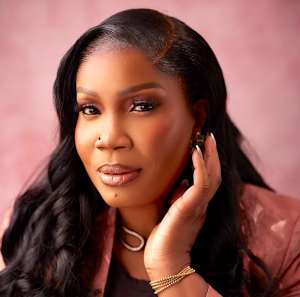
Nollywood filmmaker and producer Biodun Stephen has expressed concern over the deteriorating quality of online conversations. She noted that people no longer listen to one another before reacting.
In a lengthy post shared on her Instagram page on Saturday, she questioned when society stopped engaging with what people actually say and started attacking the person behind the words instead.
Stephen observed that a simple point shared by someone can quickly spiral into insults, character assassination, and false attributions within minutes. She attributed this trend to a global culture created by social media, where people respond not to the actual message but to their pre-existing opinions about the speaker.
According to her, factors such as dislike, perceived privilege, or irritation at someone's success often cloud judgment, turning discussions into personal attacks. She also pointed out that social media rewards outrage, making the harshest interpretation travel the fastest while nuance is ignored.
Stephen further called for a shift in how people engage online, urging them to disagree without becoming cruel and to hear others' experiences without immediately invalidating them.
She advised that before rushing to comment, people should ask themselves what the person actually said, rather than what they think they meant. She also emphasised that better conversations are possible if people listen to understand before responding to attack.
She wrote:
"I sometimes read the comments underneath interviews and genuinely wonder: When did we stop listening to one another? Someone shares an experience. They explain their reality. They make a point that may even be quite simple. And somehow, within minutes, the conversation has become something entirely different. The person is being insulted. Their character is being questioned. Words they never said are being attributed to them. People are angry about a meaning they themselves have attached to the conversation."
"And I often wonder: Is this a Nigerian thing? I don't think it is. Social media seems to have created a global culture where we increasingly respond not to what people actually say, but to what we have already decided about the person saying it. Perhaps we don't like them. Perhaps we think they are privileged. Perhaps something about their success irritates us. Whatever it is, we bring it into the conversation, and suddenly we are no longer discussing an idea. We are attacking a person. And because social media rewards outrage, the harshest interpretation often travels the fastest. Nuance is boring. Anger gets engagement."
"But surely we can disagree without becoming cruel. Surely we can hear someone's experience without immediately trying to invalidate it. And surely it should still be possible to say, 'I don't agree with you,' without adding an insult. Maybe before we rush into the comment section, we should ask one very simple question: What did this person actually say? Not what I think they meant. Not what I already believe about them. What did they actually say? Perhaps we would have much better conversations if we listened to understand before responding to attack."

 How IGP Yohuno led Police team to rescue victim, arrest four kidnappers in Assin...
 Akufo-Addo would have used Accra-Kumasi expressway for galamsey – Mahdi Gibrill
 Nigeria's Dangote refinery launches continent's biggest IPO
 Accra-Kumasi Expressway to cut travel time to 2hours, drive 120km per hour — Mah...
 'Our own money $2billion ready, we have not gone to borrow money from anywhere' ...
 Founder’s Day September 21 declared public holiday
 Council of State was not qualified to determine prima facie case against Torkorn...
 'Grounds for removal of Chief Justice and justice of superior court shallow, eph...
 Don't be a Bar that flips on principles but a Bar that is consistent — AG tells ...
 Prostate cancer may show no symptoms until advanced stage – Urologist warns


