




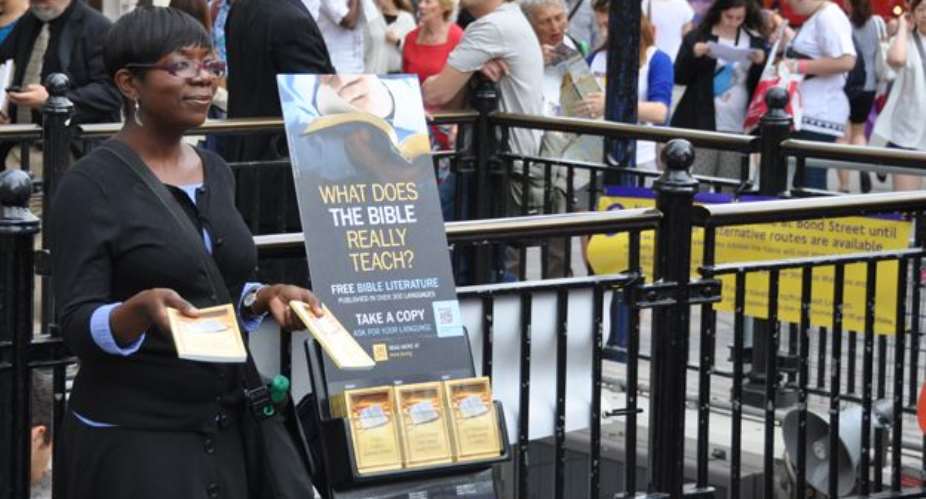
We were supposed to evangelize to the outside world. They made me the leader of my group and handed me some documents to help guide us on our way.
It was fun.
The first person we met was a friend who works at the barbershop. According to him, he was going somewhere and wouldn't have the time to listen to our message.
But we urged him to listen to us since my colleague and I knew him. This played a vital role in our attempt to reach out to him: the relationship we had. As we continued our evangelism, I noticed something strange. Most people thought we were Jehovah’s Witnesses. In fact, in one house they had to lock the doors until they were sure of our absence. This worried me. Why did they assume we were Jehovah’s Witnesses and why did they have to hide from us if we were? It wasn't so much of how they saw us that worried me, but how they acted upon it. Both the message and its carriers were ignored because of where they thought we belong.

 Gabonese President Brice Oligui Nguema to visit Ghana
 Chaos mar NDC branch elections in Assin Central
 Court issues bench warrant for arrest of man accused of threatening EOCO staff
 Farmer arrested for shooting man dead attempting steal yam from farm at Abongo N...
 Oti High Court adjourns NPP Krachi East Organiser election dispute to October 9
 Gov't earmarks GH¢50 million for UMaT Kenyasi campus development – Education Min...
 IGP, Mahama urged to honour man who chased, captured a member of Tema robbery ga...
 Ga Traditional Council calls for halt to planned Chamba Chief outdooring in Madi...
 Several people are injured at Berlin's LGBTQ+ march after a car drives into the ...
 Indian education minister resigns after mass protests over exam paper leaks


Comments
What a foolish write up.