




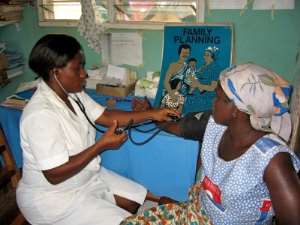
Primary care and primary health care are very similar terms which are often employed interchangeably, but which are also used to denote quite different concepts. Much time and energy is spent discussing which term is the appropriate one for a particular application. There is a growing recognition internationally that the two terms discuss two quite distinct entities. Recent Canadian uses of the two terms are, for the most part, consistent with the international uses. Primary care the shorter term describes a narrow concept of ‘family doctor-type’ services delivered to individuals. Primary health care is a broader term which derives from core principles articulated by the World Health Organization (WHO) and which describes an approach to health policy and service provision that includes both services delivered to individual (primary care services) and population-level ‘public health-type’ functions.
A Transdisciplinary Understanding of Primary Health Care (PHC) acknowledges the role of health care providers from diverse disciplines, within a philosophy and framework of PHC that is guided by the principles of access, equity, essentiality, appropriate technology, multisectoral collaboration, and community participation and empowerment (WHO, 1978). A PHC philosophy recognizes that health and health services occur within particular physical environments and their historical, socio-political, economic, and cultural contexts that shape the social determinants of health for individuals, families, groups, communities, regions, or countries. Each discipline contributes to health and health services delivery within a PHC model, both in a unique sense, and through collaborative interdisciplinary practice. Indeed, as constructed to address numerous principles and contexts, the components of PHC can vary tremendously. As Calman and Rodger (2002) note, primary health care cannot exist as a “cookie-cutter response” to health issues. Moreover, a consensus process engaged in by Haggerty et al. (2007) resulted in 25 operational definitions of primary care attributes, thereby suggesting that the task of conceptualizing PHC is not an easy one.
Conceptual Definition of Primary Health Care:
Primary Health Care (PHC) is a conceptual model which refers to both processes and beliefs about the ways in which health care is structured. PHC encompasses primary care, disease prevention, health promotion, population health, and community development within a holistic framework, with the aim of providing essential community-focused health care (Shoultz & Hatcher, 1997; World Health Organization [WHO], 1978). The cornerstones of PHC are access, equity, essentiality, appropriate technology, multisectoral collaboration, and community participation and empowerment (WHO).
Primary Care is a constituent of PHC: “While primary care is distinct from PHC, the provision of essential primary care is an integral component of an inclusive PHC strategy” (Tarlier, Johnson & Whyte, 2003, p. 180). The 1978 WHO statement on PHC supports a vision of essential and accessible primary care that meets the personal health needs of individuals and families (Institute of Medicine, 1994), as an integral strategy within a comprehensive framework of primary health care. The Institute of Medicine describes PHC as: the provision of integrated, accessible health care services by clinicians who are accountable for addressing a large majority of personal health care needs, developing a sustained partnership with patients, and practicing in the context of family and community. This definition builds on earlier definitions by the IOM and others. It also recognizes the greater complexity of health care delivery in an era of rapid and profound changes--marked by the development of increasingly integrated health care systems--and the greater interdependence of health care professionals in the provision of health services.
Despite numerous documents oriented toward defining primary care, Hogg et al. (2007) conclude that it “is in a state of evolution.” New definitions of primary care draw upon interdisciplinary perspectives (e.g., Hogg et al., 2007), but there appears to be some consensus that primary care is the first level of contact of individuals and families with the national health system, bringing health care as close as possible to where people live and work. Primary care constitutes the first element of a continuing health care process that may also include the provision of timely and appropriate secondary and tertiary levels of care.
Health PHC is rooted in contemporary conceptualizations of health as a bio-psycho-social phenomenon and not simply the absence of disease (WHO, 1978). A PHC orientation to health services delivery recognizes individual, family, community and population experiences of health and illness, as well as the ways in which health and health care are situated within specific social, historical and political contexts. This orientation to PHC is situated within shifting paradigms of health and illness, particularly in Canada, as illustrated by Thomas-MacLean and Poudrier: “new strategies for understanding the broader and contextual factors associated with power and community in health and illness have emerged. In a strategy geared toward self-determination in the First Nations, the National Aboriginal Health Organization (NAHO) has developed the Regional Longitudinal Health Survey (RHS).” The experiences of marginalized peoples have contributed to more robust conceptualizations of health. Thus, efforts to improve health should draw upon the knowledge of each of the health professions, as well as knowledge situated in cognate disciplines and the various other stakeholders in healthcare, thereby creating a dynamic dialogue that is reflective of the vitality of interdisciplinary efforts.
The philosophical underpinnings of PHC direct attention to both the art and science of patient centred primary care, while recognizing that the relationship between health and health care is not always reflective of a linear progression through various stages of illness and treatment. Working within a PHC model, primary care provider roles are differentiated from conventional medical model provider roles by the “notion of working with rather than caring for” (CNA, 1998), implying a shift in thinking that WHO described as giving professional health workers “a new orientation” (1978). A PHC orientation to the provision of primary care recognizes the value of ‘looking upstream’, ‘seeing the bigger picture’, and realizing that “band aid solutions don’t work, we need to get to the root of the problems” (Tarlier, Johnson & Whyte, 2003, p. 182). In fact, as Shoultz et al. (1998) state, a PHC orientation can provide new challenges and opportunities for teaching, as well as research.
Primary Health Care Research: A PHC orientation to health services research strives to understand the influence of the socioeconomic, physical, biologic and cultural determinants of health within the relevant broader political, socio-historical and economic contexts. PHC research articulates an interdisciplinary (and ultimately, a transdisciplinary) understanding of the consequences of a variety of physiological, psychological and social factors upon the lives of individuals, communities and cultures. Research that occurs within a transdisciplinary understanding of PHC strives to overcome dualistic notions of mind-body, art-science and subjective-objective knowledge, in order to move toward more holistic care that better reflect the lives and experiences of health care practitioners and stakeholders. This means that engaging in PHC research may constitute a form of social action in that social, economic and political determinants of health become part of interdisciplinary discourse and critical reflection, and are thus embedded in research. The end result of PHC health services research may therefore suggest strategies to improve health and health services delivery that could implicate social change.
Written by:
Caitoe, Ebenezer (Mr)
A physician Assistant student
University of Cape Coast
Email. [email protected]
 GJA Applauds Ghana’s Sharp Rise in Global Press Freedom Rankings
 US Embassy Cautions Against Censorship in Fight Against Misinformation
 Interior Minister Blames Weak Enforcement by Assemblies After Avenor Building Co...
 Gov’t Warns Against Rising Misinformation, Calls for Stronger Journalistic Stand...
 Ramaphosa Warns Against Vigilante Crackdowns on Foreign Nationals
 Global InfoAnalytics Boss Rejects Claims Polls Are Destabilising NDC
 Bawumia to Propose Policy Alternative as Cocoa Sector Tensions Deepen
 ECG Announces Scheduled Outages and Technical Fault Affecting Multiple Regions o...
 Investigation committee uncover GH¢19.5m loss at Bolgatanga Technical University...
 Afenyo-Markin calls for protection of journalists, warns against suppression of ...


