




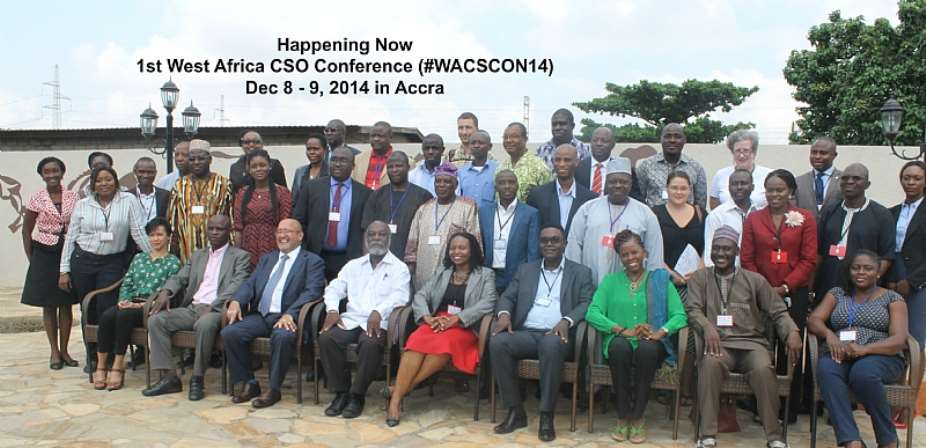
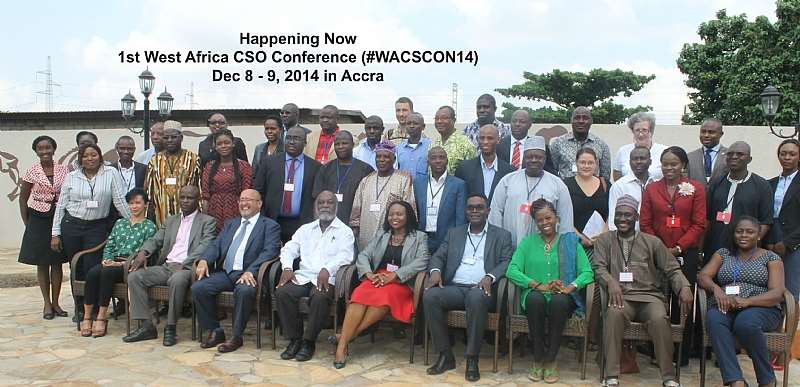
Accra, Ghana from 8-9 December 2014
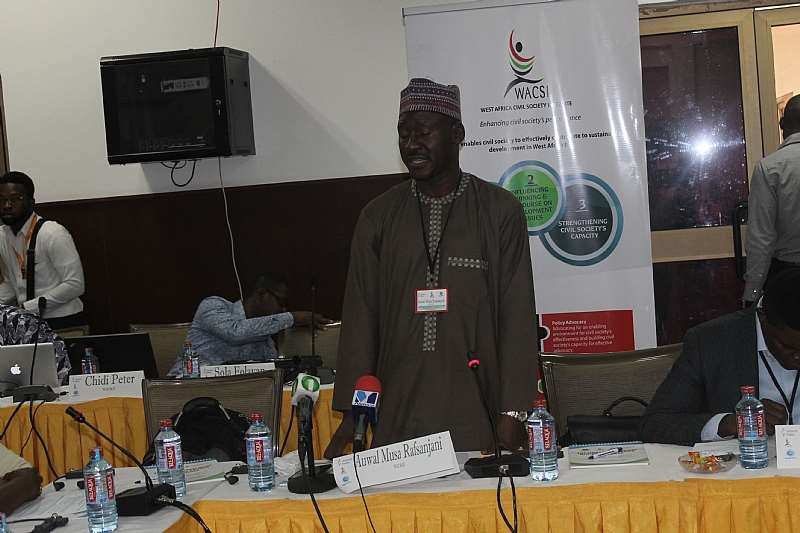
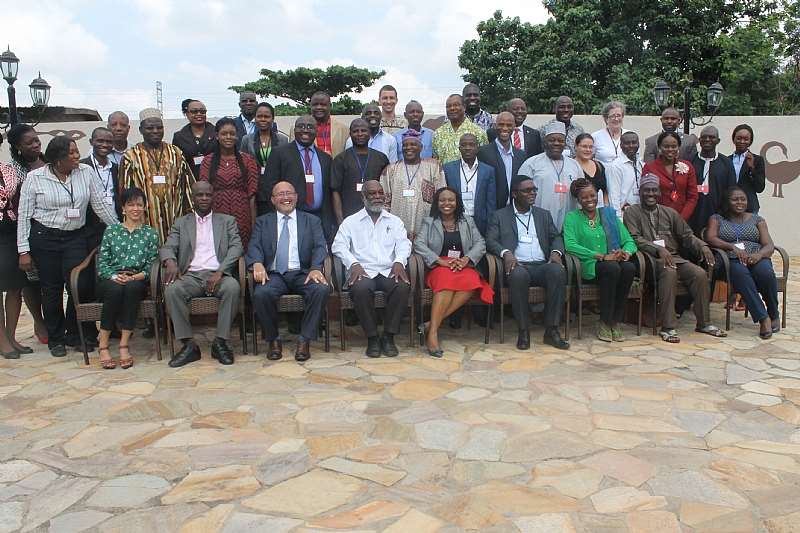
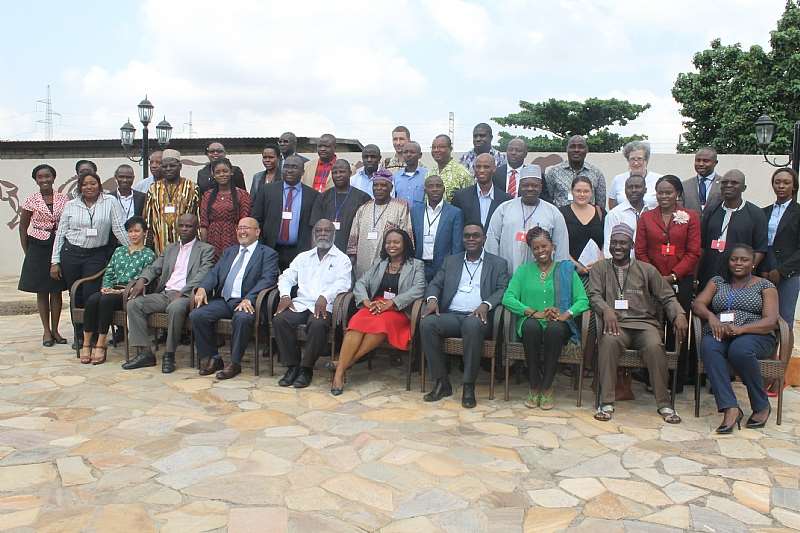
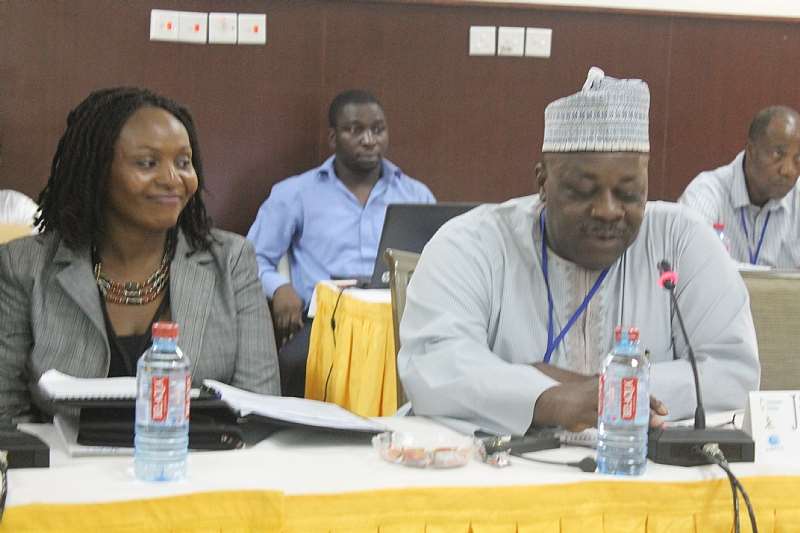
Over 50 civil society delegates representing the 15 ECOWAS countries and attending the 1st Annual West Africa Civil Society Conference in Accra, Ghana from 8-9 December 2014, have deliberated on the above theme. The two-day conference provided the participants with the opportunity: 1) to prioritise a regional post-2015 Millennium Development Goals (MDGs) agenda; and 2) to strengthen West African civil society's engagement with ECOWAS towards achieving its people-driven vision (ECOWAS Vision 20/20). Plenary and group discussions focused on the following specific areas:
1. Ensure access to quality education
2. Strengthen democratic governance
3. Promote peace and security
4. Improve agricultural development and food security
5. Effectively manage and govern natural resources
6. Promote youth development
7. Promote regional integration
The conference also tasked delegates to identify key pillars that can significantly improve the development of the region, which can only be achieved if all stakeholders (government, private sector and civil society) work together to achieve results in.
In order to input into forthcoming governments' negotiation processes on the post-2015 MDG/SDG development agenda and influence its outcomes, delegates are to engage negotiation teams at the national level with the aim of influencing government and ECOWAS decisions. West African civil society organisations will also strive to participate in the forthcoming global conference on Financing for Development, which will be hosted by the UNECA in Addis Ababa in the second half of 2015.
At the end of the 2 days conference, the delegates came up with 7 key priority areas that CSOs should continue to engage with the post 2015 MDG/SDG agenda for West African people.
Post-2015 MDG/SDG Agenda: Civil Society should:
1. Lead the popularisation and sensitisation of community citizens on (grassroots populations' inclusion and participation) the implementation of the ECOWAS vision
2. Conduct comprehensive assessment on the impact of the 2000-2015 MDGs and use their findings to engage in post-2015 MDG/SDG (2016-2030) process;
3. Actively engage with their governments at the national level to influence the post 2015 MDG/SDGs agenda before the inter-governmental negotiation stage at the United Nations level;
4. Identify specific areas of engagement within the new MDG/SDGs that will significantly improve the livelihoods of community citizens;
5. Strategise effectively to harness indigenous resources to support the implementation of the MDG/SDGs at both national and regional levels;
6. Identify which of the new 17 MDG/SDGs can be realistically achieved within the next 15 years, identify CSOs groups working on each of the teams and strengthen their capacity to effectively engage the prioritised goals;
7. Represent, promote, and advocate the views and interests of community citizens in post-2015 discussions and negotiations;
National Governments should;
1. Pursue negotiations that primarily shape the regional and global development agenda,
2. Negotiate with each other in order to mobilise adequate financial and other resources to facilitate the implementation of the Post-2015 agenda;
3. Allocate resources to civil society to support their roles in the implementation of the SDGs at the national level;
4. Create spaces for civil society to be represented on national delegations that participate in global and other negotiations on the post-2015 development agenda.
ECOWAS vision 2020: CSOs should engage in the following identified areas:
1. Human Development: including access to quality education, vocational skills training and Promoting education and health
2. Democratic governance: including transparency and accountability, women's political participation and representation, credible and transparent elections and promoting the rule of law
3. Peace and security: including countering violence, drug trafficking, reform of the security sector and conflict prevention
4. Natural resource management: including transparent and accountable management and equitable distribution of resources
5. Youth development: tackling youth unemployment and deepening political participation
6. Free movement of persons and goods: addressing the challenges on borders and roads between member countries
7. Agriculture: including food security and nutrition
National Governments should;
1. Represent the interest and aspirations of their citizens in the implementation of its people-driven vision;
2. Create enabling conditions for civil society organisations to play effective roles in the implementation of the vision 2020 agenda at the national level;
3. Expedite action on the implementation of the Vision 2020.
ECOWAS should
1. Educate and sensitise community citizens on the various aspects of Vision 2020;
2. Harmonise the ECOWAS vision 2020 with the post-2015 development agenda to optimise synergies in implementation;
3. Redefine and strengthen its relationship with WACSOF as the recognised regional civil society platform for interface between citizens and ECOWAS commission;
4. Accelerate the provision of holistic support i.e. medical, social, financial and economic to the badly hit Ebola areas in Liberia, Sierra Leone and Guinea, in order to enhance the rebuilding of the affected communities;
5. Enhance response to other communicable diseases and improve healthcare delivery.
Joint Recommendations: All stakeholders including development partners and private sector should;
1. Support WACSOF with requisite capacity needed to function and effectively manage its institutional, operational and sustainability structures in the following areas: communication, resource mobilization, technical competency, strategic partnerships, capacity in policy analysis and advocacy;
2. Strengthen ECOWAS' resource capacity (human, technical and financial) to monitor, coordinate and evaluate the implementation of Vision 2020 and its impact across the region;
On behalf of 2014 conference delegates
……………………………….
Nana A. Afadzinu
Executive Director
West Africa Civil Society Institute (WACSI)
……………………………………..
Auwal Musa (Rafsanjani)
Acting General Secretary
West Africa Civil Society Forum (WACSOF)
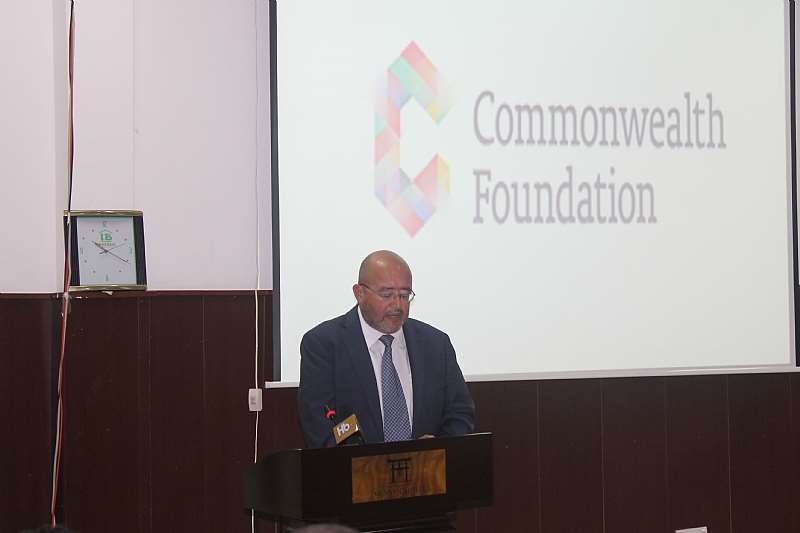
WACSI and WACSOF acknowledge and appreciate the support provided by the Commonwealth Foundation towards the 1st Annual West Africa Civil Society Conference.
 Roads Ministry needs 1,000 additional staff — Governs Agbodza
 Stop tweeting and brief Parliament on South Africa situation — Patrick Boamah to...
 Roads Minister reassigns Bogoso–Prestea road project to new contractor over dela...
 Government must be held accountable for Black Stars’ poor state — Enam Hadzide
 Any SMS or platform offering discounted DVLA fines is fraudulent — DVLA cautions...
 Gov't resources GBC to acquire Free-to-Air broadcast rights for 2026 FIFA World ...
 Flooding crisis: 'Current NDC gov't the laziest and weakest since 1992' — Miracl...
 President Mahama’s approval rate remains positive at 58.9% — IEA survey shows
 'Take note of Sedina Tamakloe's extradition and come home' — Kwame Jantuah to Of...
 Nigerian evacuees set to arrive in Lagos Thursday amid South Africa xenophobic a...


