




Imagine receiving a phone call from Google warning that someone is attempting to break into your account. The caller knows your name, sounds professional and even sends what appears to be an authentic verification message.
There is just one problem: the person on the other end may be a criminal preparing to steal your digital identity.
This is the disturbing reality of a rapidly evolving wave of cyber fraud targeting Google users and ordinary internet consumers. Investigative findings highlighted in Jeff Rossen's reporting reveal how scammers are moving beyond conventional phishing emails to exploit Google Calendar, Gmail, Google Meet and increasingly sophisticated artificial intelligence.
The emerging threat is particularly alarming because criminals are exploiting platforms millions of people uses every day.
The Google trap: When familiar invitations become dangerous
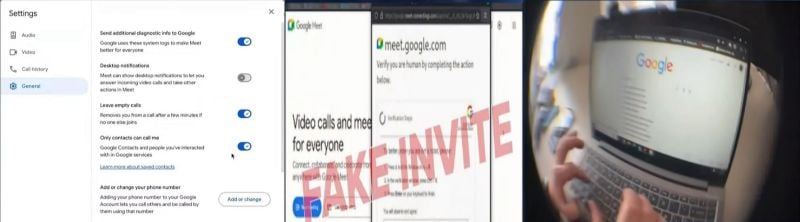
Cybersecurity experts have identified a series of scams involving fraudulent Google Calendar invitations and fake Google Meet links.
Victims may receive unexpected meeting invitations that automatically appear on their calendars. Curious users, believing the invitations are legitimate, click embedded links that can lead to malicious websites or malware downloads.
Once malicious software gains access to a device, criminals may potentially steal personal information, monitor activity and compromise sensitive accounts.
Google Calendar's default invitation settings have also raised security concerns.
One recommended precaution is changing the invitation setting from accepting invitations from everyone to accepting them only from known senders.
Users should also review Google Meet's security settings and enable the option restricting calls to contacts, where available.
These relatively simple adjustments could reduce exposure to unsolicited invitations and unwanted contact.
When artificial intelligence becomes the scammer's accomplice
Perhaps even more troubling is the emergence of AI-assisted phishing.
Reports have warned that attackers can embed hidden instructions in emails designed to manipulate AI-powered tools, including Gemini, into producing misleading security warnings.
Such messages may appear to come from a trusted digital assistant, urging users to click suspicious links or contact fraudulent support numbers.
The danger is that people increasingly trust AI-generated summaries and recommendations without questioning their origins.
The lesson is straightforward: an AI-generated warning should never replace independent verification through Google's official security channels.
Fake Google support: The verification-code deception
Another particularly sophisticated operation involves criminals impersonating Google support representatives.
In one account featured in Rossen's reporting, a woman received a call from someone claiming that a Google support ticket had been opened to reset her account credentials.
The caller promised to send a verification code to confirm her identity.
But verification codes are security keys. Sharing them with an unsolicited caller can hand criminals the opportunity to take control of an account.
The woman became suspicious when the caller directed her to a convincing imitation of Google's login page.
Her hesitation may have prevented a serious compromise.
Cybersecurity advice is clear: never disclose passwords or verification codes to someone who contacts you unexpectedly. Instead, independently locate the company's official website or telephone number and verify the situation.
Your voice can now be weaponised
Artificial intelligence has introduced another frightening dimension: voice cloning.
Rossen demonstrated how commercially available AI technology could reproduce his voice using a short audio sample gathered from social media.
The generated voice was convincing enough to fool his own wife during a telephone conversation.
For criminals, the implications are significant.
A scammer could impersonate a parent, child, relative or employer and demand emergency payments, sensitive information or financial assistance.
Families should establish a private verification code word, agreed upon in person and never stored on potentially compromised devices.
The findings: Digital trust is becoming a security vulnerability
The investigation also highlights fraudulent digital party invitations circulating through platforms such as Evite and Paperless Post. These messages may contain malicious links designed to steal login credentials or install harmful software.
Consumers should verify the sender and inspect website addresses before opening unfamiliar invitations.
The broader finding is unmistakable: cybercrime is evolving from crude deception into sophisticated manipulation of technology, identity and human trust.
Protecting yourself now requires more than a strong password. It demands scepticism, stronger account settings, independent verification and conversations with family members about emerging threats.
In an age when a machine can imitate your voice, a fake invitation can look genuine and a criminal can pretend to be your technology provider, the most important security feature may be your ability to stop, question and verify before you click.
With file sources from Jeff Rossen


 2.8million households adopt food coping strategies – GSS
 Half of Ghanaian households spend over 75% of expenditure on food – GSS
 Lands Minister Buah sues two Ellembelle residents for GH¢2m over alleged defamat...
 Traditional Council tells CWSA to hand over Asesewa water system by December 1
 How IGP special team helped Police arrest two suspects over viral Asaokore robbe...
 28 Krachi East assembly members file vote of no confidence to remove MCE
 Lawyer challenges Haruna Iddrisu's two-year BECE ban at Accra High Court
 Oti Region NADMO staff raise concerns over alleged selective payment of salary a...
 Mahama announces plans to open Ghana embassy in Barbados in 2027
 Customers' deposits have not been compromised — BoG allays fears after banks cyb...


