




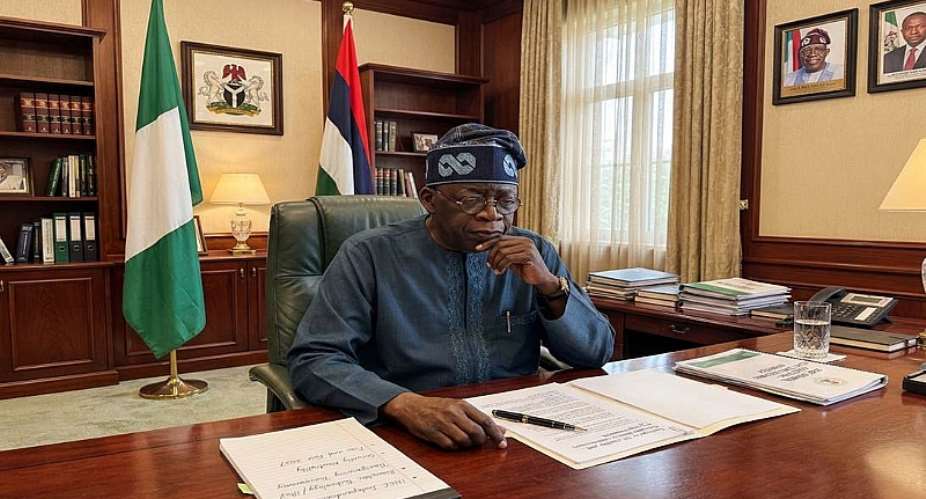
As Nigeria approaches another defining moment in its democratic journey, President Bola Ahmed Tinubu has an opportunity to accomplish a feat that could outlive his political ambition, his party's fortune and the many controversies that accompany the exercise of power. That opportunity is to ensure that the 2027 general elections are free, fair, credible and reflective of the genuine wishes of the Nigerian people.
For a Nigerian President, there will be no greater demonstration of confidence in the democratic process than to allow the people to freely determine who governs them, even when the outcome may or may not favour the incumbent or his political party. It is the willingness to submit political power to the judgement of the electorate, without manipulation, without intimidation and without institutional interference that distinguishes a democratically elected leader from one who merely manipulates and usurps election results as a route to political engagement.
Given the values Nigerians have come to place on democratic values, Tinubu's most cherished legacy will probably not be the number or length of roads he constructed, the projects he commissioned, the economic reforms he introduced or the political alliances he forged during his tenure. These could be important, considering that governments should be judged by their achievements. But history is likely to remember him more favourably if he presides over an election in which Nigerians are vote freely without hindrance, their votes count, opposition parties compete without fear, and the winner emerges through a process that commands the confidence of the people.
Nigeria's democracy is still evolving. It has survived military rule, political upheavals, disputed elections, institutional weaknesses and the persistent temptation among political leaders to regard political power as an entitlement rather than a mandate to serve the needs of Nigerians. Every election presents an opportunity to strengthen this democratic experiment or weaken it further. The 2027 elections will be particularly consequential because they will test not only the strength of political parties to be impartial and committed to the national spirit but also the maturity of the Presidency, the independence of electoral institutions and the resilience of the Nigerian state.
Already there is growing concern among Nigerians about the political atmosphere preceding the elections. The apparent attraction of politicians to the ruling party, the weakening or fragmentation of opposition platforms, the perception that political space is increasingly being narrowed, and the growing desperation to secure political advantage have raised questions about the future of competitive democracy.
It is understandable that every ruling party wishes to consolidate its political strength, expand its influence and win elections. There is nothing inherently wrong with political ambition. But ambition becomes dangerous when it seeks to eliminate competition, intimidate opponents or manipulate the institutions that are supposed to guarantee fairness. Democracy is not designed to provide a permanent monopoly of political power to one political party. It is a system in which political parties compete, citizens make choices, governments are held accountable and those who lose are afforded the opportunity to try again. In that perception, opposition parties cannot be an enemy of the government. They cannot be the enemy of Nigeria. They remain an essential component of democratic governance. An opposition that is free to question government policies, expose weaknesses, demand accountability and offer alternative programmes serves the interests of the entire country, including those who support the ruling party.
The importance of opposition politics cannot be easily overlooked in any genuine democratic dispensation. Without a credible opposition, a government would easily become insulated from criticism, complacent in its decisions and less responsive to the needs of ordinary citizens. The absence of meaningful political competition can encourage arrogance, corruption, impunity and the abuse of public office. When those in political power no longer fear losing an election, the incentive to listen to the electorate diminishes.
A strong opposition does not mean that the government is weak. On the contrary, a confident government would welcome scrutiny, debate and criticism. The strength of a democracy is not measured by how successfully the ruling party silences its critics, but by how confidently it allows opposing voices to be heard. The danger of stifling the opposition is that it could drive political frustration beyond the boundaries of conventional democratic engagement. When people feel that their votes no longer matter, that political participation has become meaningless, or that the electoral process is designed to perpetuate a particular group in power, they may begin to lose faith in peaceful and constitutional methods of seeking change.
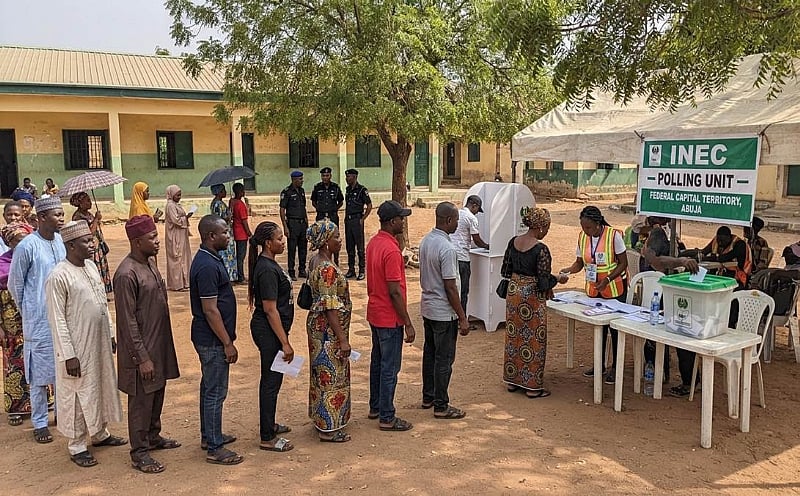
Such disillusionment can be exploited by desperate politicians, opportunistic groups and forces that have little interest in the survival of democracy. It can fuel street protests, civil disobedience, political violence, regional resentment and a dangerous sense of alienation from the Nigerian state. A government could convince itself it has successfully subdued its opponents, only to discover that it has inadvertently created a deeper crisis of legitimacy.
President Tinubu should therefore resist the temptation to interpret political dominance as national acceptance. The current mass movement of politicians into the ruling party, by itself, is not proof of public approval. Political defections may be motivated by ideology, convenience, personal ambition, the pursuit of political survival or access to power. The electorate is a different constituency, and its judgement cannot be substituted by the number of political officeholders who align themselves with the government.
Nigeria's political history offers sufficient warnings about the dangers of excessive concentration of power. The country's democratic development has been interrupted before by military intervention. It would be reckless to assume that the possibility of military adventurism has permanently disappeared simply because Nigerians have enjoyed a relatively sustained period of civilian rule since 1999. The military should remain firmly within its constitutional responsibilities, and politicians must not create circumstances that would ultimately invite or encourage military involvement in civilian political disputes. Military intervention, whether through an outright coup or through an expanding role in political decision-making under the pretext of restoring order, would be a grave setback to Nigeria's democratic evolution.
A military takeover is not a solution to bad governance, electoral malpractice, political intolerance or economic hardship. Military rule would deprive citizens of their constitutional rights, disrupt democratic institutions and expose the country to another period of uncertainty. Nigeria has paid a heavy price for military interventions in the past. It should not allow political recklessness, institutional manipulation or the inability of leaders to tolerate opposition to create conditions that could endanger its fledgling democracy. The possibility of a military intervention may be remote, but responsible leadership requires that every danger be addressed before it becomes a crisis. A stitch in time saves nine. Tinubu does not have to wait for widespread unrest, threats to national security or a breakdown of confidence in government before taking steps to protect the integrity of the electoral process. Preventive action is infinitely better than crisis management.
The president must define his direction for the country beyond the immediate calculations of winning the next election. What kind of Nigeria does he want to leave behind? A country where political power is concentrated in the hands of a dominant party, where opponents are treated as enemies and where institutions struggle to assert their independence? Or a country where democratic competition is respected, public institutions are strengthened, political leaders are accountable and citizens have confidence that their votes can bring about change? The answer to that question will determine how his presidency is ultimately judged. Tinubu has the authority, influence and responsibility to set the tone for the 2027 elections. He can make it clear to members of his party, government officials, security agencies and political allies that the electoral process must not be compromised for the sake of political advantage. He can publicly affirm that the opposition has a legitimate place in Nigeria's democracy and that no political party should be permitted to intimidate voters, manipulate institutions or use public resources unfairly to secure victory.
He can also demonstrate confidence in INEC by allowing it to operate independently and by ensuring that the institutions responsible for electoral justice are free from political pressure. The credibility of an election does not depend solely on the declaration of results. It depends on the entire process: voter registration, political campaigns, access to the media, security, voting, collation, transmission of results, transparency and the timely resolution of disputes. The President should appreciate that a credible election can strengthen his political standing even if his party wins. Victory obtained through a process widely accepted as fair carries greater legitimacy than victory surrounded by suspicion and controversy.
It gives the winner the moral authority to govern, makes it easier for citizens to accept difficult policies and reduces the likelihood of prolonged political conflict. Yes. It is not all about grabbing power. Political office is a responsibility to serve, not a prize to be seized at all costs. The desperation to control government can blind politicians to the consequences of their actions. They may win the immediate political battle but lose the country in the process. The ambition to dominate every political space is not worth the destruction of national confidence, the erosion of democratic institutions or the instability that could threaten the future of millions of Nigerians.
Tinubu, as a politician who has experienced the struggle for political power and the complexities of opposition politics, should understand the value of allowing competing interests to coexist. Democracy requires tolerance. It requires the humility to recognise that today's ruling party may become tomorrow's opposition, and that political fortunes can change. No party, no matter how powerful, should consider itself indispensable to the survival of Nigeria. The 2027 elections should not be reduced to a contest between Tinubu and his opponents, or between the APC and other political parties. They should be an opportunity for Nigerians to freely express their aspirations, frustrations, hopes and expectations. The government should not fear the verdict of the people. If it has performed well, it should present its record and allow voters to decide. If voters choose another party, the decision should be respected as an expression of the democratic will.
Nigeria's young people, in particular, deserve a democracy that gives them reason to believe in their future. Many are struggling with unemployment, economic hardship, insecurity and diminishing opportunities. They should not be made to feel that political participation is futile, that their votes are inconsequential or that the future of their country has been predetermined by elite political arrangements. A credible election can renew their faith in civic engagement and encourage them to participate constructively in national development. The media, civil society, religious leaders, traditional institutions and the international community also have responsibilities. They must promote peaceful participation, expose electoral abuses, encourage dialogue and insist on accountability.
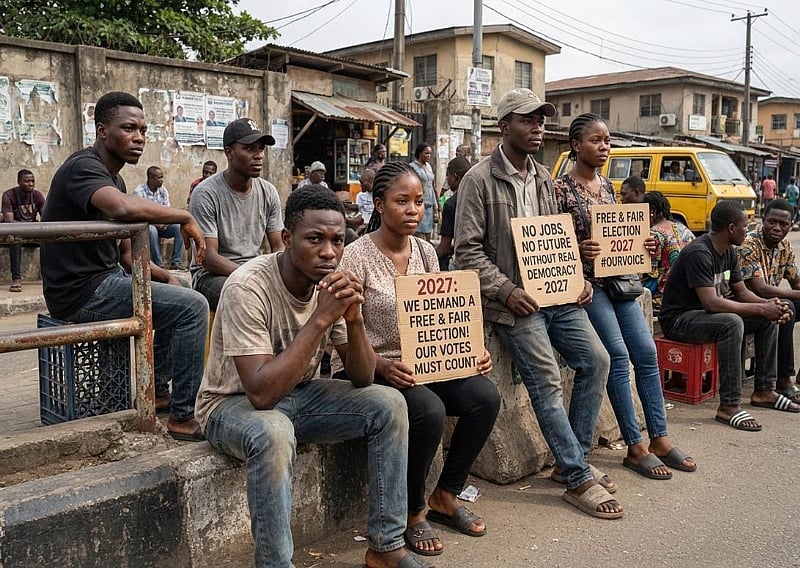
But the greatest responsibility rests with the political leadership, especially the President, whose words and actions can either calm the political atmosphere or intensify tensions. Tinubu has an opportunity to rise above partisan considerations and demonstrate that he is not merely the leader of the APC but the President of Nigeria. His duty is to protect the constitutional rights of all Nigerians, including those who oppose him, those who criticize his government and those who may vote against his party.
A free and fair election in 2027 would be a powerful statement that Nigeria is moving away from politics of exclusion, intimidation, tribalism and desperation towards a more mature democratic culture. It would assure Nigerians that political power is not a permanent fixture, that their voices matter and that the country's future remains in their hands. The President should not underestimate the significance of this moment. Infrastructure can be rebuilt, economic policies revised and political fortunes restored. But once a nation loses confidence in its democratic institutions, rebuilding that confidence can take generations.
The 2027 elections offer Tinubu an opportunity to write a different chapter in Nigeria's political history. He should seize it, not by trying to seize every political advantage, but by protecting the democratic process and allowing the people to make their choice freely. A free, fair and credible election may well be the most cherished legacy he can leave Nigerians. It would be a legacy that transcends party loyalty, regional interests and personal ambition. It would affirm that Nigeria belongs to all its citizens, not to those who happen to occupy political office. And it would be a timely stitch that could save the country from the far more costly consequences of democratic failure.


 Customers' deposits have not been compromised — BoG allays fears after banks cyb...
 BoG reduces mobile money and bank transaction limits amid rising cyber attacks
 Ghana Armed Forces recruitment stampede victim Sandra Baafi Boateng dies
 Over 3,500 Ghanaians Petition Vice President Over Alleged Sexual Abuse in School...
 Ghana Still Facing Power Supply Challenges Despite Progress, Energy Ministry Adm...
 Women’s Development Bank HQ Is State Property, Not NPP Asset — Ama Pratt
 Ghana, Côte d'Ivoire to Construct 57 New Boundary Pillars Along Shared Border
 GRDA Rejects Sovereign Guarantees for Private Railway Investors
 Ghana to Open Diplomatic Mission in Barbados as Bilateral Ties Deepen
 Rihanna Hails Mahama's UN Address During Warm Encounter in Barbados


