




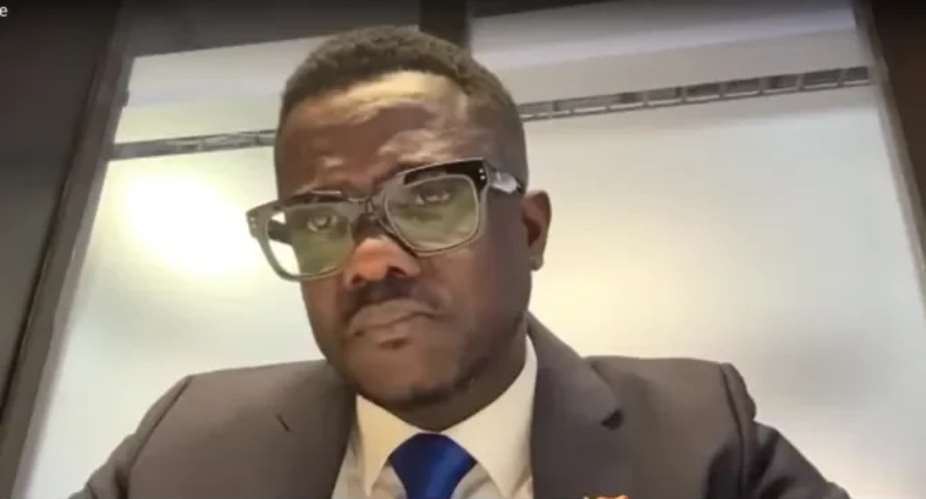
The Ghana Railway Development Authority (GRDA) has ruled out sovereign guarantees for private investors seeking to develop and operate sections of the country's railway network, insisting that investors must finance projects independently and recover their investments through efficient operations.
Chief Executive Officer of the Authority, Dr Frederick Appoh, said government support would instead focus on guaranteeing the availability of cargo and passenger traffic to ensure the commercial viability of railway projects.
Speaking in an interview with Samuel Ackom on Citi FM's News Digest on Saturday, November 28, Dr Appoh revealed that the Authority had received significant interest from both local and international investors following its call for expressions of interest in the Eastern, Western and Central railway corridors.
According to him, the proposed public-private partnerships are designed to enable investors to finance, construct and operate railway infrastructure without creating additional financial liabilities for the government.
“We are not offering any sovereign guarantee. For that matter, I will not even support anybody who is seeking a sovereign guarantee,” Dr Appoh said.
“Anybody who is submitting proposals asking for sovereign guarantees, I am rejecting them as we speak. The moment you ask for a mineral resource guarantee or sovereign guarantee, to me, it says one thing: you are not serious about the build, operate, transfer that we are trying to implement.”
He stressed that prospective investors must demonstrate both the financial capacity and operational expertise to make the projects commercially successful.
“If you are a private investor and you are going to commit your money and you are not prepared to operate it efficiently to recoup your investment, then there is no need for you to come,” he added.
Government to Guarantee Demand, Not Debt
Dr Appoh explained that government assurances would be limited to supporting market demand by ensuring adequate freight and passenger traffic on the railway lines.
“So we are guaranteeing market demand, which is about the demand and the traffic and the cargo on the line,” he said.
The GRDA's call for expressions of interest seeks to attract local and international investors to develop the country's railway network through public-private partnership arrangements.
Western Corridor Seen as Most Viable
Dr Appoh identified the Western Railway Corridor as the most commercially attractive project, citing its potential to transport manganese, bauxite and iron ore from multiple mining sites to the Takoradi Port.
He disclosed that the first phase of the Western Railway Line, stretching from the existing rail section at kilometre 42.6 to Nyinahin, will be financed under the government's New Economy Programme.
Subsequent phases are expected to extend the line from Nyinahin to Hamile, while another section will link the Dunkwa branch line through Boankra to Obuasi and connect with the Central Corridor at the Boankra Inland Logistics Terminal.
The Central Corridor is expected to connect Tema Port through Nsawam and the Accra-Kumasi alignment to Boankra and other parts of the country.
Meanwhile, the Eastern Corridor, which forms part of the planned Ghana-Burkina Faso railway connection, already has approximately 100 kilometres of railway track completed up to Mpakadan.
Rail Expansion Key to Reducing Pressure on Roads
Dr Appoh said the Authority was encouraged by the strong response to the expressions of interest, noting that several prospective investors have requested additional information on the projects.
He emphasized that private sector participation would be crucial to expanding the national railway network and reducing pressure on Ghana's road infrastructure.
To demonstrate the growing potential of rail freight transport, he disclosed that, with support from the Ghana Ports and Harbours Authority (GPHA), the GRDA had transported 6,526 containers on the Tema-Mpakadan railway line as of October 2026.
“These containers will be moving. But without the rail, where would they be moving? On the road,” he said.
According to Dr Appoh, shifting heavy freight and mining-related cargo onto rail lines would help reduce road congestion, lower accident risks and slow the deterioration of roads caused by heavy-duty trucks.

 Ghana Still Facing Power Supply Challenges Despite Progress, Energy Ministry Adm...
 Women’s Development Bank HQ Is State Property, Not NPP Asset — Ama Pratt
 Ghana, Côte d'Ivoire to Construct 57 New Boundary Pillars Along Shared Border
 GRDA Rejects Sovereign Guarantees for Private Railway Investors
 Over 3,500 Ghanaians Petition Vice President Over Alleged Sexual Abuse in School...
 Ghana to Open Diplomatic Mission in Barbados as Bilateral Ties Deepen
 Rihanna Hails Mahama's UN Address During Warm Encounter in Barbados
 More people are using AI to follow the news, but can they trust what it tells th...
 Israeli strike on Gaza kills two medics from Doctors Without Borders
 Europe must unite or face ‘disappearing', warns former Bank of France chief


