




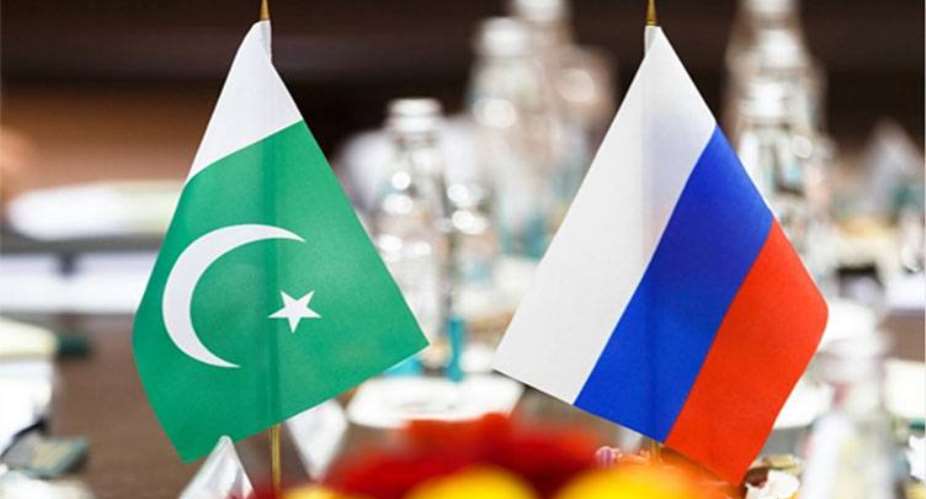
Pakistan and Russia have set an ambitious target of increasing bilateral trade to $5 billion by 2030. Yet according to Pakistan’s official figures, bilateral trade stood at approximately $243.4 million in Pakistan’s financial year 2025. The new target represents more than a twentyfold increase over that baseline, highlighting the considerable distance between diplomatic aspirations and commercial realities.
The 11th Pakistan–Russia Intergovernmental Commission, which concluded in Moscow on November 25, 2026, represents an important step toward narrowing this gap. The signing of the IGC Protocol and the Programme for Economic Cooperation 2026–2030 established a framework for expanding cooperation across energy, trade, investment, industry, agriculture, technology and regional connectivity.
Beyond these immediate developments, the relationship reflects a broader transformation in Eurasian geopolitics. Russia is seeking to diversify its economic partnerships across Asia, while Pakistan is exploring opportunities to expand its engagement with emerging regional economic networks.
However, transforming strategic convergence into a durable economic partnership will require more than diplomatic commitments. Financial mechanisms, commercial feasibility, regional security and the competing interests of major powers will ultimately determine its significance.
From Historical Rivalry to Strategic Convergence
Pakistan–Russia relations have undergone a substantial transformation since the Cold War. Pakistan’s alignment with the United States and the Soviet Union’s longstanding partnership with India limited bilateral cooperation, while the Soviet intervention in Afghanistan in 1979 reinforced mutual suspicion.
Nevertheless, cooperation was not entirely absent. Soviet assistance in establishing Pakistan Steel Mills demonstrated that economic engagement could continue despite political differences.
The end of the Cold War gradually created opportunities for a more pragmatic relationship. The 2014 bilateral defence cooperation agreement, subsequent joint military exercises and Pakistan’s membership in the Shanghai Cooperation Organisation (SCO) expanded institutional engagement and opportunities for regional security cooperation.
Today, economic interests increasingly shape bilateral relations. For Pakistan, stronger ties with Russia offer opportunities to diversify energy supplies, expand market access and establish commercial connections with Eurasian economies. For Russia, Pakistan represents a potential South Asian partner with access to regional markets and maritime routes through the Arabian Sea.
This rapprochement does not, however, imply a fundamental realignment of traditional partnerships. Russia maintains its longstanding strategic relationship with India, while Pakistan preserves significant economic and diplomatic relations with China, the United States and other international partners.
The emerging relationship therefore reflects strategic diversification rather than exclusive alignment.
Economic Cooperation and the Limits of Diplomatic Convergence
Economic cooperation remains the principal test of Pakistan–Russia relations. Although diplomatic engagement has expanded, bilateral trade and investment have yet to establish a sufficiently strong foundation for a comprehensive economic partnership.
Energy represents one of the most promising opportunities. Pakistan faces persistent challenges involving energy affordability, supply security and infrastructure modernization, while Russia possesses considerable expertise in petroleum production, refining and energy engineering.
The November 25 Intergovernmental Commission identified oil and gas exploration, liquefied natural gas supplies, gas distribution and energy efficiency as areas for further cooperation. Pakistan also agreed to share investment opportunities in its onshore and offshore basins with Russian companies.
Nevertheless, translating these commitments into commercially viable projects will require workable financing arrangements, competitive pricing and reliable payment mechanisms.
Industrial cooperation represents another opportunity. The proposed revival of Pakistan Steel Mills could renew a historically significant dimension of bilateral relations. Successful modernization, however, would require credible financing, commercially viable restructuring and sustained institutional coordination.
Agriculture is also gaining importance. Russian Energy Minister Sergei Tsivilev noted during the November 25 meeting that bilateral trade had grown in 2026 following two years of decline, with agricultural products accounting for a significant share. Cooperation in agricultural technologies, livestock breeding, veterinary products and food processing could further diversify trade.
Digital technologies offer opportunities beyond traditional industries. In November 2026, Pakistani and Russian representatives discussed strengthening technology-sector cooperation through direct business partnerships, joint ventures and investment. Software development, cybersecurity and emerging technologies could become additional areas of economic engagement.
Yet significant structural barriers remain. Western sanctions affecting Russian financial institutions, difficulties in international payment settlements, transportation costs, regulatory differences and limited private-sector engagement continue to constrain commercial expansion.
Pakistan’s ambassador to Russia also highlighted banking constraints, visa facilitation and direct connectivity as practical priorities in October 2026.
Political willingness cannot substitute for functioning financial and logistical arrangements. Even commercially attractive projects require reliable payment mechanisms, investment protection and predictable regulatory conditions.
Reaching the $5 billion trade target will consequently require substantial diversification of bilateral commerce rather than dependence on a limited number of commodity transactions.
Eurasian Connectivity and Regional Economic Integration
The wider geopolitical significance of Pakistan–Russia relations lies in their potential contribution to Eurasian connectivity.
Pakistan’s geographical position provides access to the Arabian Sea and potential commercial routes connecting South Asia with Central Asia and the Middle East. Russia’s extensive transport networks, meanwhile, offer opportunities to strengthen economic connections across Eurasia.
The International North–South Transport Corridor (INSTC) provides a framework for exploring these possibilities. Potential connections between Eurasian transport networks and Pakistani ports could diversify trading routes and improve market access.
A significant outcome of the November 25 meeting was the agreement to pursue the early launch of a pilot cargo train connecting Pakistan and Russia.
The initiative provides a practical test of regional connectivity ambitions. Its commercial viability will depend on transit arrangements, customs coordination, transportation costs and sufficient cargo demand. Successful implementation could demonstrate whether proposed Eurasian corridors can evolve into sustainable trade routes.
Another important development concerns Pakistan’s potential engagement with the Eurasian Economic Union (EAEU). At the Moscow meeting, both sides welcomed the completion of a joint feasibility study for a proposed free trade agreement between Pakistan and the EAEU.
Although this does not constitute a formal trade agreement, it represents progress toward institutionalizing Pakistan’s economic engagement with Eurasian markets. A future preferential arrangement could improve market access for agricultural products, industrial goods and selected manufacturing sectors.
Nevertheless, geographical advantages alone cannot guarantee successful connectivity. Infrastructure investment, customs harmonization, transit agreements and sustainable commercial demand will determine whether these initiatives achieve their intended economic objectives.
Regional Security and Strategic Balancing
Afghanistan presents a particularly significant challenge to regional economic integration. Its location makes it a potential connection between Central and South Asia, but militancy, political uncertainty and border-security problems continue to undermine trade and investment.
Pakistan’s security concerns center on cross-border militancy involving Tehreek-e-Taliban Pakistan (TTP), while Russia remains particularly concerned about Islamic State Khorasan Province (ISKP) and threats to Central Asian stability.
Although these concerns create opportunities for counterterrorism coordination through bilateral engagement and the SCO, Islamabad and Moscow do not necessarily share identical approaches toward Afghanistan.
Russia’s formal recognition of the Taliban government in July 2025 illustrates Moscow’s pragmatic approach to regional engagement. Pakistan, meanwhile, continues to confront security tensions with the Afghan authorities.
Managing these differences will be important for advancing economic projects that depend on regional stability.
Similarly, Russia’s longstanding relationship with India will continue to shape its South Asian policy. Moscow’s expanding engagement with Islamabad is unlikely to replace its established strategic partnership with New Delhi. Instead, a diversified regional approach allows Russia to pursue economic opportunities with both countries.
For Pakistan, stronger cooperation with Russia should complement rather than replace existing international partnerships. The objective should be to expand economic opportunities and strategic flexibility without becoming unnecessarily entangled in major-power competition.
Beyond Diplomatic Commitments
The 11th Pakistan–Russia Intergovernmental Commission has established a framework for transforming an evolving diplomatic relationship into a more substantive economic partnership. Yet the ambitious $5 billion trade target will require more than political commitments.
Functioning financial mechanisms, commercially viable investments, reliable transport corridors and sustained private-sector engagement will determine whether bilateral ambitions translate into measurable economic outcomes.
Pakistan and Russia have moved beyond historical mistrust toward a relationship increasingly shaped by shared economic and strategic interests. The real test of their partnership, however, will not be the frequency of diplomatic exchanges or the number of agreements signed, but their ability to convert geopolitical convergence into sustainable economic cooperation.
Advocate Nadeem Afzal is a Pakistan-based lawyer and human rights activist who regularly writes on international politics, human rights and contemporary global issues.

 Bank of Ghana's New Heritage Notes: A National Embarrassment That Demands Accoun...
 Consumer Protection Agency CEO Kofi Kapito dies
 Mahama, Mottley reclaim King Cuffee's Legacy with historic monument unveiling
 Kenyan starvation cult leader guilty of 123 manslaughter deaths
 December 4 declared public holiday for 2026 Farmers’ Day celebration
 GRA flags 29 shops at A&C and Marina malls over tax infractions
 Cashew farmers demand suspension of export ban until local processors can absorb...
 Upper West Regional Police only invited me, not arrest — Nadowli-Kaleo NPP chair...
 Osahen Afenyo-Markin questions EOCO unlawful transfers of funds in frozen accoun...
 Paris court orders Depardieu to stand trial over alleged 2018 rape of actress


