




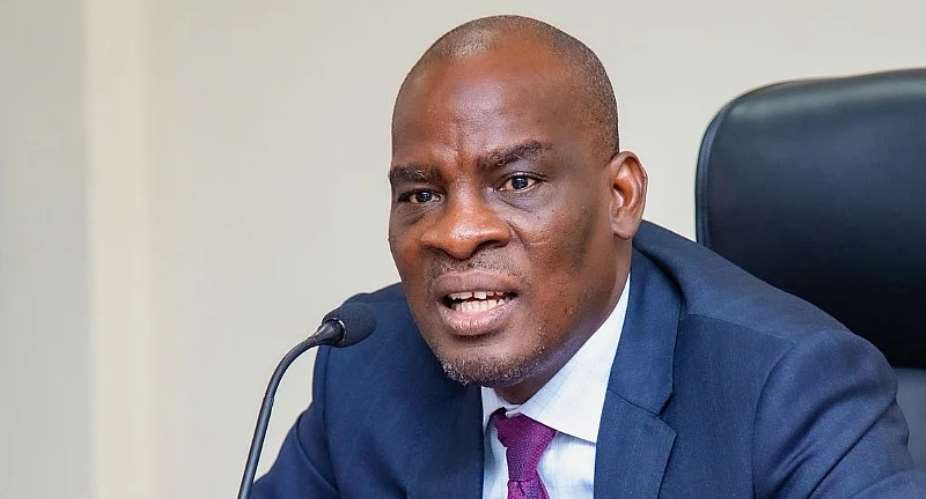
The vilification of the Minister for Education, Hon. Haruna Iddrisu, is unfortunate. Instead of encouraging him to address a serious challenge confronting our educational system, we have resorted to unproductive political discourse.
Haruna Iddrisu got the diagnosis right, but his prescription was excessive. Nevertheless, the underlying message was intended to deter unpatriotic parents whose actions, in some instances, corrupt school heads and undermine the integrity of the academic progression of their children, irrespective of their intellectual ability, through questionable means.
Previously, it took approximately seventeen years of formal education before one qualified for university admission: six years of primary education, four years of middle school, five years of secondary education, and two years of sixth-form education.
Recognising that some children were exceptionally gifted, the educational system provided the Common Entrance Examination as an alternative route for academically outstanding pupils. Children from Middle school Forms One to Four could, subject to the prescribed requirements, take the examination and advance academically on merit.
The introduction of the Junior Secondary School (JSS) system subsequently reduced the period required to qualify for university admission to approximately twelve years: six years of primary education, three years of junior secondary education, and three years of senior secondary education.
The practice of advancing exceptionally gifted children to higher classes did not begin today. Time immemorial, academically exceptional pupils have been allowed to skip a class or even multiple levels, at the discretion of school heads, based on their demonstrated intellectual ability and academic performance.
Lawyer Tsatsu Tsikata's accelerated academic progression is an example of exceptional brilliance and merit. His achievement was not the product of parents manipulating the educational system by transferring him from one school to another to artificially accelerate his academic advancement.
Today, however, some parents knowingly circumvent the established educational process, sometimes with the complicity of school heads. Where children are not exceptionally gifted to justify accelerated progression, such practices constitute an abuse of the educational system. Parents who instigate these irregularities and school heads who facilitate them must be held accountable. The children, are often innocent victims of their parents' ambitions, should not bear the brunt of the sanctions.
Parents who corrupt the educational system have done a grave disservice to the state. Their conduct undermines the values of honesty, integrity, fairness and hard work. When children are taught, directly or indirectly, that shortcuts, manipulation and corruption are acceptable pathways to success, we should not be surprised when these attitudes become entrenched in society. This is how our moral values gradually deteriorate.
Unfortunately, successive governments often appear to buckle under excessive criticism, allowing political opponents to weaponise negative publicity to frustrate well-intentioned policy initiatives. The vilification of Haruna Iddrisu may be another attempt to make the Minister uncomfortable and discourage him from pursuing solutions to a problem that requires urgent attention.
While the Minister's approach may require reconsideration, we must not allow the controversy surrounding the sanctions to overshadow the underlying problem. The educational system must protect the interests of children while ensuring that parents and school heads who manipulate the system are held responsible.
Let us stop playing politics with this serious matter. Our future leaders are being exposed to a culture of shortcuts, dishonesty and entitlement. Such practices threaten the development of a competent, disciplined and skilled workforce capable of building the Ghana we aspire to.
We must defend the integrity of our educational system before the pursuit of shortcuts becomes the norm rather than the exception.
Mike Kalley
Sociopolitical Analyst.


 Kenyan starvation cult leader guilty of 123 manslaughter deaths
 December 4 declared public holiday for 2026 Farmers’ Day celebration
 GRA flags 29 shops at A&C and Marina malls over tax infractions
 Stop using media to pressure NACOC if cocaine case not going your way in court –...
 Cashew farmers demand suspension of export ban until local processors can absorb...
 Upper West Regional Police only invited me, not arrest — Nadowli-Kaleo NPP chair...
 Osahen Afenyo-Markin questions EOCO unlawful transfers of funds in frozen accoun...
 Paris court orders Depardieu to stand trial over alleged 2018 rape of actress
 Mahama arrives in Barbados for five-day state visit
 Galamsey threatens food security, public health and national security – Zanetor


