




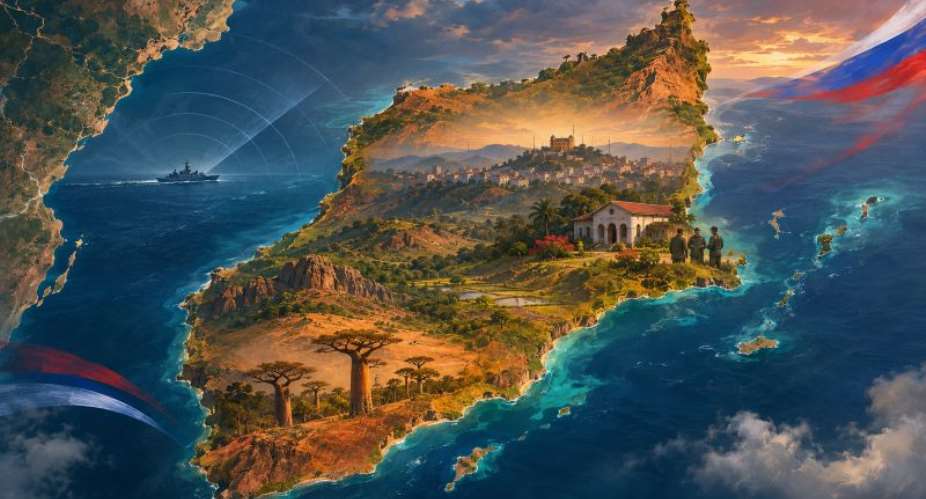
In the year since President Michaël Randrianirina came to power, Russia has rapidly expanded its presence in Madagascar. Around 40 Africa Corps personnel arrived on the island in December 2025 to help protect the president and train Malagasy troops. By autumn, their numbers had reportedly grown to about 140, according toLe Monde. The capital now has a “Russian House” that hosts cultural events and language classes. On 3 November, a third group of 14 bodyguards trained by the Russian military completed its course. On 20 November, Russia handed over 230 mobile medical diagnostic systems to the country.
The United States has warned Madagascar about the risks of closer military ties with Moscow. On 10 November, General John Brennan, AFRICOM’s deputy commander, said Washington did not want Russia’s “Sahel model” to spread to the island. He described the approach as ineffective and warned that it could weaken the sovereignty of partner states. Brennan also acknowledged that countries were free to choose their own partners. In response, a representative of the Malagasy presidency said that Madagascar determines its own foreign policy. The statement did not signal a break with Moscow; the government was asserting its right to choose its partners.
On 24 November, parliament removed its speaker, Siteny Randrianasoloniaiko, who was seen as one of the leading advocates of closer ties with Russia. Lawmakers accused him of making unilateral decisions and breaching parliamentary rules. The move also came amid a struggle for political influence: Randrianasoloniaiko could have become a rival to the president. His removal may be read as a signal to Washington that Randrianirina is willing to curb the influence of the politician most closely associated with Moscow. But this remains an interpretation, not an established motive. AsLe Monde notes, the speaker’s departure alone is unlikely to change Madagascar’s policy toward Moscow: the president is now managing relations with Russia himself.
For now, Madagascar is trying to maintain ties with both Russia and the United States. Moscow provides military assistance, trains bodyguards and supplies equipment, while Washington is offering cooperation on maritime security. This balancing act may continue as long as both partners accept it, but Antananarivo will eventually have to define the limits of its cooperation with each side. The president must also ensure that the forces responsible for his security do not become an independent centre of power. There is no evidence that his bodyguards are planning a coup. But in Mali, Burkina Faso and Niger, military officers from within the state security apparatus have removed leaders and taken power. This is not a direct parallel with Madagascar, but it is a warning: a leader who relies on the security forces cannot take their loyalty for granted.

 Kenyan starvation cult leader guilty of 123 manslaughter deaths
 December 4 declared public holiday for 2026 Farmers’ Day celebration
 GRA flags 29 shops at A&C and Marina malls over tax infractions
 Stop using media to pressure NACOC if cocaine case not going your way in court –...
 Cashew farmers demand suspension of export ban until local processors can absorb...
 Upper West Regional Police only invited me, not arrest — Nadowli-Kaleo NPP chair...
 Osahen Afenyo-Markin questions EOCO unlawful transfers of funds in frozen accoun...
 Paris court orders Depardieu to stand trial over alleged 2018 rape of actress
 Mahama arrives in Barbados for five-day state visit
 Galamsey threatens food security, public health and national security – Zanetor


