




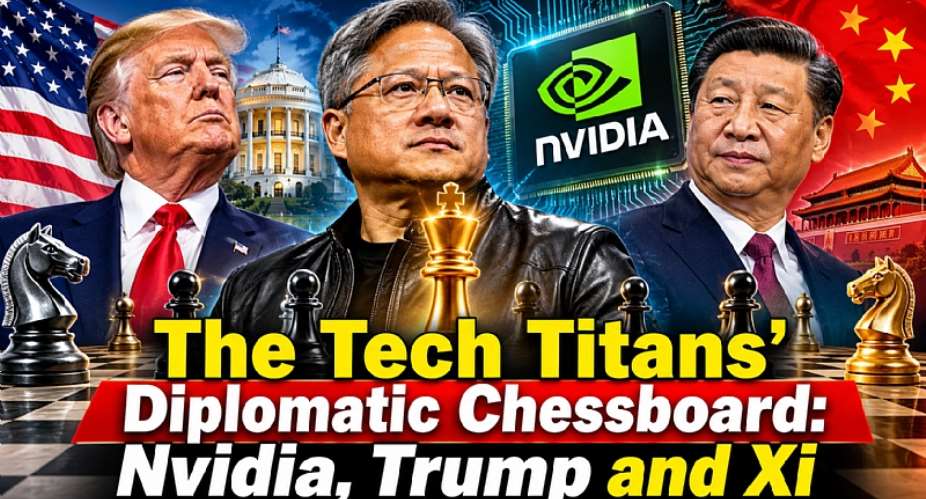
The world is a wonderland, and the American system increasingly appears to reward the acceptance of guilt more than the consequences of an alleged incident. The controversy surrounding Nvidia CEO Jensen Huang and his reinstatement, following his reported departure, raises questions about the relationship between corporate accountability, political influence and technological power. The intervention of Donald Trump and the involvement of influential technology executives suggest that the stakes extend beyond ordinary business interests. Washington may be concerned about the possibility of losing access to advanced AI chips and the intellectual resources behind them.
Sex Sells, Fellas!
Bill Clinton’s alleged relationship with Monica Lewinsky became a defining political controversy. Clinton acknowledged that he had been unfaithful, and the scandal ultimately failed to end his political career. His supporters continued to stand by him, demonstrating how personal controversy can sometimes be overshadowed by political loyalty and public acceptance.
The Nvidia controversy offers another perspective on this relationship between reputation and power. Trump reportedly described Huang as a “nice guy” when the incident emerged. The subsequent developments, including the reported pressure surrounding Huang’s position and his eventual return, suggest that the White House recognised the consequences of losing a leading technological mind.
Elon Musk and other influential figures reportedly became involved in efforts to secure Huang’s return. Political intervention appeared to change the direction of the controversy, while the Singaporean company Megaspeed reportedly faced blacklisting over its alleged connections to the incident.
Trump’s remarks and the reported market reaction raise another question: can controversy become an instrument for strengthening corporate value? Nvidia’s shares reportedly surged by approximately 31 per cent following the news of Huang’s return. The market appeared to welcome his reinstatement, while the company’s headquarters celebrated the return of its chief executive. Huang apologised to employees for the ordeal and expressed his determination to become a better CEO.
The Tech Teach the Tablet?
OpenAI CEO Sam Altman also experienced a dramatic corporate reversal when he was dismissed and reinstated within days. These developments demonstrate how deeply technology companies depend on the individuals who lead them.
Huang reportedly receives daily briefings from numerous departments, including engineering teams. Replacing such an individual would require more than appointing another executive; it would mean replacing years of institutional knowledge, strategic vision and relationships.
Altman, Musk, Zuckerberg and Huang have become deeply embedded in their respective technological ecosystems. Their influence extends beyond corporate boardrooms into political decision-making and international diplomacy. Even company boards may struggle to replace leaders whose influence has become inseparable from their organisations.
When technology executives participate in international visits and diplomatic meetings, they are not merely accompanying political leaders. Their presence reflects the growing importance of technological power in foreign policy. The geopolitical chessboard of the future may increasingly be directed by these technology giants, whose commercial decisions can influence diplomatic relationships and national strategies.
Isn’t National Defence Compromised?
Not necessarily, but the possibility deserves serious attention. The Trump administration has maintained that technology companies must comply with national policies and applicable laws. The reported blacklisting of Megaspeed demonstrates that Washington retains mechanisms to restrict access to sensitive technologies.
However, national security requires more than political assurances. Defence institutions must possess the intellectual capacity to identify irregularities, investigate technological vulnerabilities and assess the consequences of corporate decisions. If national defence becomes dependent on a handful of private companies and their executives, the government must ensure that commercial interests never override strategic security.
Shenzhen Summit Theory?
One possible theory is that the Nvidia controversy and the associated chip arrangements were connected to the Shenzhen summit. Could the reported developments have been part of a broader understanding between Trump and Xi Jinping, with the announcement and execution of the deal intended to signal cooperation?
Under this interpretation, Washington’s technological concessions might have been linked to expectations of Chinese restraint towards Iran. China could have been encouraged to use its influence to persuade Tehran to consider a diplomatic settlement, potentially easing Iran’s economic and diplomatic isolation. Russia, meanwhile, might also have benefited from the resulting strategic adjustments.
This remains a geopolitical hypothesis rather than an established fact. Yet the possibility illustrates how a commercial decision involving AI chips could carry implications far beyond the technology market.
If Putin responds to Trump’s policies with further military escalation, the diplomatic balance could deteriorate rapidly. The relationship between technological concessions, economic pressure and regional security therefore deserves closer scrutiny.
The Nvidia controversy ultimately highlights a fundamental transformation: AI chips are no longer merely commercial products. They are instruments of economic power, national defence and diplomatic influence. When technology executives become indispensable to political leaders, the boundary between corporate authority and statecraft begins to blur. The question is no longer simply who controls the technology, but who ultimately controls the decisions that shape its geopolitical future.


 Bank of Ghana's New Heritage Notes: A National Embarrassment That Demands Accoun...
 Consumer Protection Agency CEO Kofi Kapito dies
 Mahama, Mottley reclaim King Cuffee's Legacy with historic monument unveiling
 Kenyan starvation cult leader guilty of 123 manslaughter deaths
 December 4 declared public holiday for 2026 Farmers’ Day celebration
 GRA flags 29 shops at A&C and Marina malls over tax infractions
 Cashew farmers demand suspension of export ban until local processors can absorb...
 Upper West Regional Police only invited me, not arrest — Nadowli-Kaleo NPP chair...
 Osahen Afenyo-Markin questions EOCO unlawful transfers of funds in frozen accoun...
 Paris court orders Depardieu to stand trial over alleged 2018 rape of actress


