




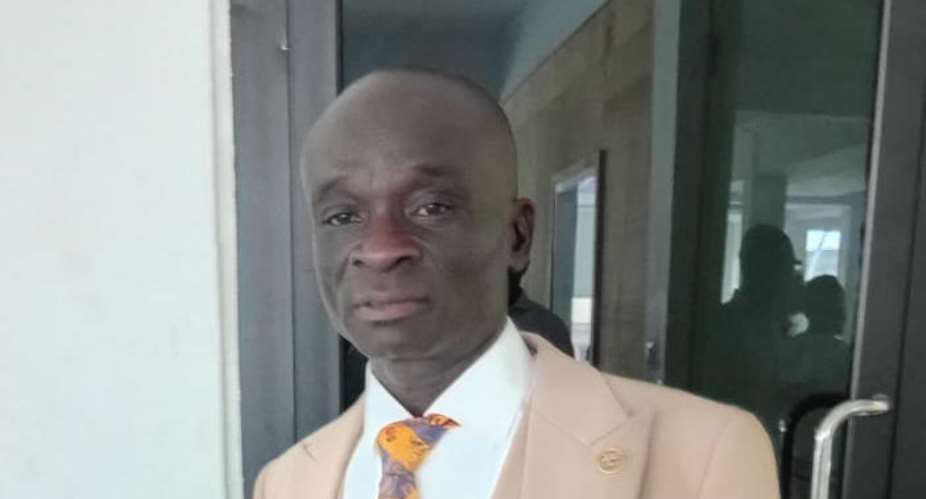
Ghana must replace blanket restrictions on new doctoral programmes with targeted regulation, research funding and stronger supervision standards if it wants to protect the quality of PhD education without stifling academic innovation, Professor Joseph Kwasi Agyemang has proposed.
The accounting scholar, widely recognized as the first person globally to obtain three unique PhDs in Accounting, says the Ghana Tertiary Education Commission’s (GTEC) nationwide freeze on approvals for new doctoral programmes should be a temporary intervention, not a substitute for comprehensive reform.
He argues that a risk-based regulatory framework would allow the commission to identify and sanction institutions with inadequate supervisory capacity, weak research infrastructure or questionable doctoral outcomes while permitting qualified universities to expand programmes that meet established standards.
Agyemang’s recommendations come amid GTEC’s nationwide audit of doctoral programmes, an exercise intended to assess accreditation compliance, enrolment patterns, supervisory ratios, faculty qualifications, research facilities, graduation rates and thesis examination procedures.
Though he considers the audit necessary to safeguard the credibility of Ghanaian doctoral qualifications, he believes the commission should avoid applying restrictions uniformly to institutions with vastly different levels of academic capacity.
Move Away from Blanket Restrictions
Agyemang recommends that GTEC adopt a risk-based approach to doctoral programme oversight, using annual institutional reporting and targeted inspections to identify departments requiring corrective action.
Under his proposed framework, universities exhibiting warning signs, including sudden enrolment increases, inadequate supervision or persistently poor completion rates, would face more intensive scrutiny.
Institutions should also be required to operate capacity-linked admission quotas determined by the number of qualified supervisors, available research facilities and the resources needed to support doctoral candidates.
He further advocates independent external thesis examinations, enforceable publication and research benchmarks where appropriate, and structured remediation programmes for students enrolled in doctoral departments that fall short of regulatory standards.
Such measures, he argues, would enable GTEC to enforce quality assurance more effectively without unnecessarily restricting access to doctoral education nationwide.
Agyemang believes this approach would be more proportionate than preventing all universities from introducing new PhD programmes during the audit period.
Strengthen Supervision and Inter-University Collaboration
The professor also proposes a system of formal supervisor accreditation, professional development and enforceable workload limits to improve the quality of doctoral supervision.
He says universities should establish inter-institutional supervisory consortia, drawing on expertise from Ghanaian academics abroad and researchers across different universities to expand the pool of qualified supervisors.
Such partnerships, he argues, could help institutions overcome supervisory shortages, improve doctoral research standards and strengthen collaboration across disciplines.
He also wants GTEC to consider fast-tracking the approval of well-prepared doctoral programmes in strategically important fields, particularly science, technology, engineering, mathematics and public health.
The proposals, he says, would allow Ghanaian universities to respond more quickly to emerging research priorities while ensuring that expansion is supported by qualified faculty and adequate infrastructure.
Funding Is the Missing Pillar
Agyemang maintains that regulatory reform alone will not resolve the underlying weaknesses in Ghana's doctoral education system without sustained public investment.
He calls for the establishment or effective operationalization of a dedicated National Research Fund, alongside targeted GETFund support for research laboratories, doctoral scholarships, fieldwork and academic development.
He argues that universities must be weaned off excessive reliance on postgraduate tuition revenue, which could create incentives for institutions to enrol doctoral candidates beyond their supervisory and research capacities.
Expanding doctoral stipends, laboratory funding and early-career academic fellowships, he says, would help universities recruit, train and retain researchers while strengthening the country's long-term research ecosystem.
The professor also advocates programmes to support newly graduated PhD holders into academic careers, helping universities address faculty shortages and prepare for the retirement of senior scholars.
He believes investment in doctoral research must be treated as a strategic national priority rather than an administrative responsibility left largely to individual universities.
Quality Assurance Must Not Suffocate Innovation
Agyemang argues that Ghana can draw lessons from international higher education systems that combine rigorous doctoral accreditation with sustained research financing, institutional accountability and targeted academic development.
He points to approaches adopted in countries including the United Kingdom, Australia, Brazil and Malaysia, where regulatory oversight, research funding and institutional capacity-building form part of broader efforts to strengthen postgraduate education.
For Ghana, he says, the objective should not simply be to restrict the number of doctoral programmes but to ensure that every programme operates with the resources, supervision, research infrastructure and academic standards required to produce credible scholarship.
He warns that prolonged regulatory uncertainty could discourage academic innovation, push prospective researchers overseas and weaken the country’s ability to develop expertise in emerging fields.
Agyemang therefore believes GTEC’s audit should culminate in a differentiated regulatory framework that rewards compliant institutions, corrects deficiencies in struggling programmes and encourages universities to invest in research excellence.
He argues that Ghana’s ambition to build a competitive knowledge economy will depend not only on protecting the integrity of its PhD qualifications but also on expanding the capacity to produce researchers capable of solving the country's most pressing scientific, economic and development challenges.

 Tullow Oil, govt reach agreement to settle $387m tax disputes
 Prof. Agyemang Calls for Targeted PhD Regulation, Research Funding
 Tenants Union opposes proposal to increase rent advance limit from six to 12 mon...
 Mahama urges Germany, EU to sustain support for Sahel states amid terrorism thre...
 Ablakwa gives domestic worker assaulted by boss in Iraq GH¢50,000; considers rec...
 Mahama urges Oti chiefs to identify lands for agriculture under US$10bn New Econ...
 Remove your 'bomb' SRC President, that 'unfit' boy is in bed with university man...
 Power Has Moved North. What Next?
 Five ministers to face 41 parliamentary questions as House races to pass 2027 bu...


