




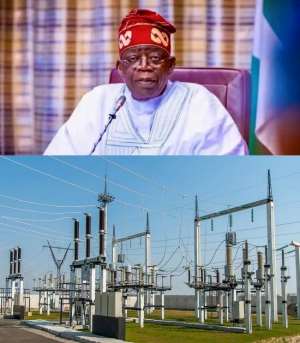
There are political promises that disappear into the archives of campaign rhetoric, and there are those that refuse to go away because millions of citizens are reminded of them every day by the harsh realities of their existence. President Bola Tinubu’s 2023 pledge to deliver steady electricity or forfeit his second-term ambition belongs to the latter category. Three years into his administration, that promise remains an important yardstick against which his government’s performance in the power sector will inevitably be measured.
Interestingly, the pledge has resurfaced at a time when the administration is already looking towards the 2027 general elections, with its newly unveiled 2027–2031 manifesto setting an ambitious target of generating 10,000 megawatts of electricity. While the proposed target may sound reassuring to Nigerians who have endured decades of unreliable electricity supply, it also raises an uncomfortable question: what happened to the promise made in 2023, and why should Nigerians be persuaded that another electricity target will produce a different outcome?
This is not necessarily to suggest that nothing has happened in the power sector under Tinubu. Indeed, his administration can point to the Electricity Act 2023, which introduced a framework for decentralizing electricity regulation and allowing states to establish and regulate their own electricity markets. The reforms have opened opportunities for subnational governments to explore alternative approaches to electricity generation, transmission and distribution.
Such structural changes deserve recognition because Nigeria's electricity crisis cannot be resolved merely through presidential pronouncements or campaign promises. It requires deliberate institutional reforms, substantial investments, improved infrastructure, effective regulation and sustained political commitment.
However, acknowledging these interventions should not become an excuse for overlooking the experiences of ordinary Nigerians who continue to struggle with erratic electricity supply. For households, small businesses, manufacturers and service providers, electricity is not an abstract policy issue to be discussed at political rallies. It is an essential component of daily existence and economic survival.
Indeed, the contradiction between government promises and the electricity realities confronting citizens is becoming increasingly difficult to ignore. Businesses that depend on electricity are compelled to spend additional money on petrol and diesel generators. Small-scale entrepreneurs must factor alternative power costs into their operating expenses, while households are forced to make difficult choices between purchasing fuel for generators and meeting other essential needs.
For manufacturers, the consequences are even more troubling. Unreliable electricity increases production costs, undermines competitiveness and makes business planning unnecessarily difficult. In an economy already grappling with inflation, high operating costs and dwindling purchasing power, the burden of providing private electricity supply is hardly insignificant.
This is why the administration's proposed 10,000MW target must be subjected to serious scrutiny rather than celebrated prematurely. Nigerians have heard electricity targets before. What they need now is not another impressive figure presented in a manifesto, but a credible explanation of how the government intends to translate that figure into dependable electricity in homes, offices, factories and commercial establishments.
More importantly, electricity generation should not be confused with electricity availability. Even if the country succeeds in generating 10,000MW, the achievement will mean little if the transmission infrastructure cannot evacuate the electricity efficiently or distribution companies cannot deliver it reliably to consumers.
The Nigerian electricity value chain has several interconnected weaknesses. Generation is affected by gas supply challenges, infrastructure limitations and financial constraints. Transmission infrastructure must contend with capacity limitations and recurring grid disturbances, while distribution companies face operational and investment challenges that affect the quality of electricity delivered to consumers.
Consequently, any serious attempt to reform the sector must address these problems simultaneously. Increasing generation capacity without corresponding improvements in transmission and distribution would amount to treating one part of a complicated problem while leaving other critical parts unattended.
This is where the administration must demonstrate that its 10,000MW ambition is more than another political declaration. Nigerians deserve measurable milestones, clearly defined implementation timelines and transparent periodic reports on progress. They also deserve to know how much investment is being committed, what infrastructure projects are being prioritized and what mechanisms are being put in place to ensure that electricity generated actually reaches consumers.
Besides, the Electricity Act 2023 and the emergence of state electricity markets should be seen as opportunities to deepen competition, encourage private investment and improve service delivery. However, decentralization must not become another layer of bureaucracy. State governments must demonstrate the capacity to regulate their electricity markets effectively, protect consumers and ensure that operators deliver services commensurate with the tariffs charged.
It is equally important that electricity reforms do not become an avenue for transferring the burden of inefficiency to consumers. Nigerians are already confronted with rising living costs. Any adjustment in electricity tariffs must therefore be accompanied by corresponding improvements in service quality. Consumers should not continually pay more for electricity they barely receive.
Perhaps the most significant issue arising from Tinubu's 2023 pledge is the question of political accountability. When a presidential candidate makes a public commitment and attaches his second-term ambition to its fulfilment, such a commitment should not be treated as an ordinary campaign statement that can conveniently be forgotten after winning an election.
The president may have several arguments to advance concerning the inherited challenges in the electricity sector, the complexity of the reforms required and the time needed for structural interventions to produce results. These are legitimate considerations. However, they cannot permanently shield his administration from public scrutiny, particularly when electricity supply remains one of the most pressing concerns of citizens.
Indeed, the forthcoming 2027 election will provide Nigerians with another opportunity to assess the administration's performance. Electricity will undoubtedly feature prominently in that assessment, not merely because of the 10,000MW target in the new manifesto, but because of the president's own earlier declaration.
It would therefore be politically convenient for the administration to focus attention on what it intends to achieve between 2027 and 2031. But Nigerians are entitled to ask what it has achieved between 2023 and 2026. After all, the credibility of a future promise is largely influenced by the government's record of honouring previous commitments.
There is also a need to appreciate that steady electricity is not simply about meeting a numerical generation target. It is about whether a mother can preserve food in her refrigerator without worrying about prolonged outages, whether a student can read at night without depending on a rechargeable lamp, whether a barber can operate his business without spending a substantial portion of his earnings on petrol, and whether manufacturers can operate without constantly switching between public electricity and expensive generators.
These are the everyday realities that should inform the measurement of success in the power sector.
Ultimately, Tinubu's 10,000MW ambition should not be dismissed simply because previous administrations failed to resolve Nigeria's electricity crisis. Neither should it be accepted uncritically because it appears in a new manifesto. What matters is the government's ability to demonstrate tangible progress, backed by transparent figures and improvements that consumers can actually experience.
For a country with enormous economic potential, persistent electricity shortages represent more than an infrastructure problem. They are an impediment to productivity, industrial development, employment generation and improved living standards.
The president must therefore understand that Nigerians are increasingly weary of electricity promises that sound impressive during political seasons but become distant aspirations once elections are concluded.
Tinubu's 2023 electricity vow has returned to the political conversation for a reason. It is a reminder that public office comes with obligations, and that campaign promises must eventually confront the test of performance.
As the administration looks towards 2027, the question is no longer simply whether it can promise 10,000MW. The more important question is whether Nigerians can finally enjoy steady electricity as another campaign season has arrived.
After all, a manifesto can promise megawatts, but only reliable electricity can convince consumers that the promise has been fulfilled.


 Musah Superior Dismisses Government’s $10bn Economic Plan as Unrealistic
 Zaato Accuses Ablakwa, NDC of Politicising Akufo-Addo’s Chartered Flights
 Akufo-Addo Never Sought Approval for New Presidential Jet, Says Dr Zaato
 Beyuo Defends Acquisition of New Presidential Jet
 Auditors Should Help Shape GIFMIS Relaunch, Says Seth Terkper
 Rent Commissioner Seeks Police Protection After UG Hostel Confrontation
 Zenith University College law students gain practical knowledge in copyright, mu...
 NAP Graduates to Receive Start-Up Kits, Tools, and Monthly Stipends
 'Unacceptable': EU chief condemns alleged Russian plot to kill US-Ukrainian citi...
 Nkrumah used secret walking stick signals to direct cameraman Chris Hesse – Docu...


