




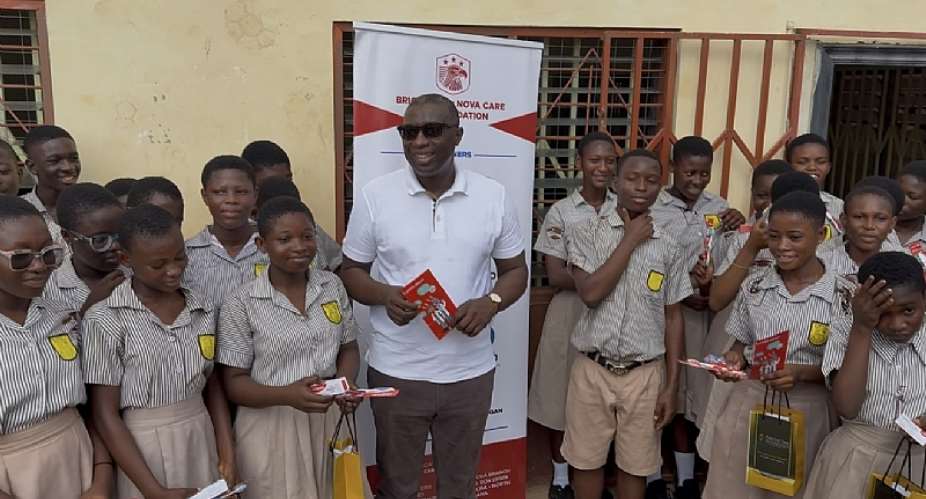
BrightSeed Nova Care GH Foundation takes essential, people-centred healthcare directly to the community through a comprehensive outreach initiative promoting access, prevention, early detection and health awareness.
Access to quality healthcare remains one of the defining challenges facing many communities, particularly where the cost of services, transportation difficulties, and limited access to specialized medical attention can prevent individuals from seeking timely care. Against this backdrop, community-based health interventions continue to demonstrate their importance in bridging healthcare gaps and making essential services more accessible to the people who need them most.
Recent health outreach activities in Okaikwei Central Constituency, offer a compelling illustration of how targeted community interventions can improve access to healthcare, increase awareness, and support the early identification of medical conditions.
In Okaikwei Central, the outreach recorded 1,560 reported service impacts, reflecting the delivery of dental and oral healthcare, eye screening, general medical consultations, and medication services. The figures comprised 935 dental and oral healthcare services, 220 eye screenings, and 405 medical and medication services.
Healthcare services delivered in Okaikwei Central.
Beyond the numbers, the intervention demonstrated the practical value of integrating multiple healthcare services into a single community outreach initiative. Rather than requiring residents to navigate separate healthcare facilities for different medical needs, the program created an opportunity for individuals to access a range of services within one coordinated intervention.
This approach is particularly significant for households facing financial and logistical barriers to healthcare. Transportation costs, consultation fees, time away from work, and other competing responsibilities can discourage people from seeking medical attention. By bringing different services directly to the community, the outreach helped reduce some of these barriers while creating an avenue for residents to address aspects of their health that might otherwise have been neglected.
Beyond Screening: Uncovering the Eye Health Needs of the Community
The importance of accessible healthcare was further highlighted by an eye screening exercise conducted in Lapaz, Okaikwei Central Constituency, on 19 October 2026.
According to the report prepared by the eye team, 220 patients were screened, with 634 cases of various eye conditions identified. The higher number of recorded cases reflects the fact that some individuals presented with multiple eye conditions, underscoring the importance of comprehensive eye examinations in identifying a broader range of visual health concerns.
Refractive errors, comprising myopia and hyperopia, emerged as the most frequently recorded condition, accounting for 180 cases. These conditions can affect an individual's ability to see clearly at different distances and, when left uncorrected, may interfere with education, productivity, mobility, and everyday activities.
Allergic conjunctivitis was another prominent finding, accounting for 152 cases. Presbyopia followed with 130 cases, reflecting the need for appropriate vision assessment and corrective support, particularly among individuals experiencing age-related difficulties with near vision.
Dry eye disease was recorded in 108 cases, while cataracts, both mature and immature, accounted for 37 cases. The team also documented 14 cases of corneal scarring, four cases of glaucoma, four cases of bacterial conjunctivitis, three cases of macular holes, and two cases of hypertensive retinopathy.
No cases were recorded for arcus senilis, toxoplasmosis, or diabetic retinopathy during the screening exercise.
Summary of Eye Conditions and Cases Identified in Lapaz
A breakdown of the 634 recorded cases across 13 eye-condition categories.
| No. | Condition (Abbreviation) | Number of Cases |
| 1 | Cataract (CAT) | 37 |
| 2 | Refractive Error (RE) | 180 |
| 3 | Glaucoma (GLC) | 4 |
| 4 | Dry Eye Disease (DED) | 108 |
| 5 | Arcus Senilis (AS) | 0 |
| 6 | Toxoplasmosis (TOX) | 0 |
| 7 | Macular Hole (MH) | 3 |
| 8 | Corneal Scar (CS) | 14 |
| 9 | Bacterial Conjunctivitis (BC) | 4 |
| 10 | Hypertensive Retinopathy (HR) | 2 |
| 11 | Diabetic Retinopathy (DR) | 0 |
| 12 | Presbyopia (PRE) | 130 |
| 13 | Allergic Conjunctivitis (AC) | 152 |
| TOTAL | 634 | |
These findings underscore an important reality: eye health challenges are not limited to severe visual impairment. Common conditions such as refractive errors, presbyopia, dry eye disease, and allergic conjunctivitis can significantly affect quality of life. Nevertheless, they may remain unattended when individuals lack access to routine eye examinations.
The identification of four glaucoma cases is particularly noteworthy. Glaucoma can progress without obvious early symptoms and may cause irreversible vision loss if not detected and managed appropriately. Similarly, cataracts can gradually compromise vision and affect independence, especially when treatment is delayed.
The screening therefore served a purpose beyond identifying existing conditions. It also highlighted the importance of routine eye examinations, appropriate referrals, and timely intervention.
The Case for Preventive and Community-Based Healthcare
Taken together, the Okaikwei Central activities illustrate why preventive healthcare, and community outreach should remain important components of broader healthcare delivery efforts.
The value of such initiatives lies not only in the number of people screened or services delivered but also in the opportunities they create for early detection, health education, and timely connection to appropriate medical care.
For many people, the first step towards addressing a health concern is simply having an opportunity to be examined. A resident experiencing blurred vision may discover an underlying refractive error. Someone who has been ignoring persistent eye irritation may receive an assessment that points to an identifiable condition. Another individual may learn of a potentially serious eye condition that requires further investigation and specialist attention.
These encounters can become important turning points in an individual's healthcare journey.
The Okaikwei Central intervention also demonstrates the benefits of addressing health needs holistically. Dental health, vision care, and general medical services are interconnected aspects of overall wellbeing. Providing access to these services through one coordinated outreach initiative reinforces the understanding that community health requires more than isolated medical interventions.
Turning Healthcare Access into Meaningful Community Impact
While the reported figures provide a useful measure of the activities undertaken, the deeper significance of these interventions lies in their potential to influence health-seeking behavior and encourage communities to prioritize preventive care.
For the individuals reached, the outreach provided an opportunity to engage with healthcare professionals, identify possible health concerns, and receive guidance on appropriate next steps. For the wider community, it reinforced the importance of making healthcare accessible, responsive, and centered on people's everyday realities.
It is equally important that screening outcomes translate into appropriate follow-up care. Individuals identified with conditions requiring further assessment, treatment, corrective lenses, or specialist intervention need clear referral pathways and continued guidance to ensure that the benefits of the outreach extend beyond the screening exercise itself.
Ultimately, the experiences in Lapaz demonstrate that improving community health is not solely about expanding the availability of healthcare facilities. It is also about finding practical ways to take essential services to people, remove barriers to access, and create opportunities for early intervention.
When healthcare moves closer to communities, the benefits extend beyond the consultation room. Families become better informed, individuals are encouraged to seek medical attention, and previously overlooked health concerns are more likely to be identified.
The message from these outreach activities is clear: accessible healthcare is not simply about treating illness; it is about creating opportunities for people to protect their health, recognize risks early, and live healthier lives.
Acknowledgement
BrightSeed Nova Care GH Foundation extends its heartfelt gratitude to Hon. Patrick Yaw Boamah, Member of Parliament for the Okaikwei Central Constituency, and his dedicated team for their invaluable partnership and support in the successful delivery of the Foundation’s 2026 Healthcare Outreach. Their commitment was instrumental in bringing essential healthcare services closer to the people, particularly underserved communities. The Foundation also sincerely appreciates the local nurses, community representatives, volunteers, and all stakeholders whose time, expertise, and resources contributed to making the outreach a success.
Together, we are building healthier and stronger communities.


 Musah Superior Dismisses Government’s $10bn Economic Plan as Unrealistic
 Zaato Accuses Ablakwa, NDC of Politicising Akufo-Addo’s Chartered Flights
 Akufo-Addo Never Sought Approval for New Presidential Jet, Says Dr Zaato
 Beyuo Defends Acquisition of New Presidential Jet
 Auditors Should Help Shape GIFMIS Relaunch, Says Seth Terkper
 Rent Commissioner Seeks Police Protection After UG Hostel Confrontation
 Zenith University College law students gain practical knowledge in copyright, mu...
 NAP Graduates to Receive Start-Up Kits, Tools, and Monthly Stipends
 'Unacceptable': EU chief condemns alleged Russian plot to kill US-Ukrainian citi...
 Nkrumah used secret walking stick signals to direct cameraman Chris Hesse – Docu...


