




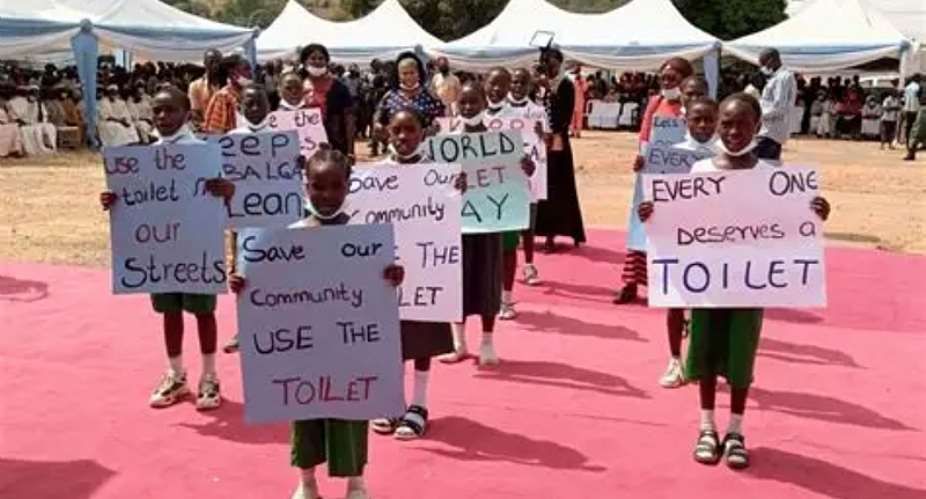
A lack of adequate toilet and handwashing facilities in homes, schools and healthcare institutions continues to expose Ghanaians to preventable diseases and undermine their health, dignity and safety, World Vision Ghana's WASH Innovations and Partnership Specialist, Mr Yaw Attah Arhin, has warned.
He described healthcare facilities without proper toilet and handwashing facilities as breeding grounds for infections, stressing that access to household toilets should be treated as a basic necessity rather than a luxury.
“A healthcare facility without a toilet and handwashing facilities is a habitat for germs.
“A toilet at home is not a luxury. It is dignity. It is safety for women and girls. It is healthy for children. It is respect for the community, while open defecation traps families in a cycle of disease, shame, and poverty. Building a toilet is breaking free from that trap.”
Mr Arhin said inadequate sanitation also affects school attendance and the quality of healthcare, particularly for children and patients who depend on public institutions.
He explained that schoolchildren were often forced to choose between using dirty or broken toilet facilities, relieving themselves in nearby bushes or staying away from school altogether. Patients, on the other hand, have to contend with unhygienic conditions while seeking medical attention.
The impact, he said, was particularly severe for women and girls, who face additional challenges in the absence of safe and private toilet facilities.
“Without private, clean toilets, adolescent girls struggle to manage menstrual hygiene, miss lessons, fall behind academically and, in some cases, drop out of school.
“Women are also exposed to harassment, embarrassment, and disease when compelled to practice open defecation or use poorly lit public toilets,” Mr Arhin stated during an engagement with the Media Coalition Against Open Defecation (M-CODe) ahead of Ghana's 2026 World Toilet Day observance.
This year's global World Toilet Day campaign focuses on the relationship between sanitation and gender equality, highlighting how access to safe toilet facilities protects the health, security, dignity and opportunities of women and girls.
Draught as a tool for sanitation advocacy
Mr Arhin said the decision to use draught as a platform for sanitation education was deliberate, given the game's popularity among men, who often influence household decisions, including investments in toilet facilities.
“Every move in draught requires thinking and strategy—just as protecting your family’s health requires building and using a toilet,” he said.
The campaign seeks to use the excitement surrounding the game to reinforce the message that access to proper sanitation is essential to protecting lives.
Beyond the competition, organisers have adopted several campaign messages, including “Make a Move! Build It, Use It, Clean It”, “A Smart Move is a Toilet at Home”, “Don’t Be Trapped; Build a Toilet!” and “Kill Open Defecation”.
The central message remains clear: “Open defecation kills, toilets save lives.”
Three-day national campaign
The activities, which began on Thursday, November 19, are designed to sustain public attention on sanitation challenges beyond the World Toilet Day commemoration.
On Thursday, WASH sector stakeholders embarked on a sensitisation walk through parts of Accra and presented petitions seeking improved sanitation to key national institutions.
The petitions were submitted to the Presidency through the Chief of Staff, the Speaker of Parliament, the Chief Justice and the Chairman of the Council of State, with calls for stronger political commitment and increased investment in sanitation.
The exercise also highlighted the need for stricter enforcement of sanitation regulations, greater investment in household toilet facilities and decisive action against indiscriminate waste disposal.
Friday, November 20, was dedicated to media engagements and a WASH quiz aimed at testing the knowledge of students, youth groups and community advocates on water, sanitation and hygiene.
A special World Toilet Day quiz was also scheduled to educate young people on personal hygiene, proper toilet use and waste management.
Sensitisation activities were planned for markets, lorry parks and other public spaces where sanitation challenges are particularly evident.
The campaign will climax on Saturday, November 21, with the National Sanitation Super Cup finale at the Accra Sports Stadium, where eight of Ghana's top draught players will compete in a knockout contest.
Selected through the Ghana Draught Association, the finalists represent different parts of the country, including the Bono Region, Tema, Kumasi and Greater Accra.
From advocacy to practical action
Organisers say the success of the campaign will ultimately be measured by whether public awareness translates into tangible improvements in sanitation infrastructure.
They are therefore calling for increased investment in toilet facilities in schools and healthcare institutions, as well as improved access to menstrual hygiene facilities for girls.
The campaign also seeks to encourage the government and other stakeholders to accelerate household toilet construction, strengthen the enforcement of sanitation by-laws and ensure sustained funding for environmental sanitation and waste management at the district level.
World Toilet Day is an official United Nations observance held annually on November 19 to mobilise action towards addressing the global sanitation crisis and achieving Sustainable Development Goal 6 (SDG 6), which seeks to ensure access to water and sanitation for all.
As the eight finalists prepare to compete for the Super Cup title, organisers hope the excitement generated by the championship will translate into a stronger national commitment to household sanitation.
For them, the ultimate victory will not be determined by the number of draught pieces captured or the player who claims the trophy, but by the number of households that take action to provide safe and improved toilet facilities.
The message is simple: Make a Move. Build It. Use It. Clean It.

 Musah Superior Dismisses Government’s $10bn Economic Plan as Unrealistic
 Zaato Accuses Ablakwa, NDC of Politicising Akufo-Addo’s Chartered Flights
 Akufo-Addo Never Sought Approval for New Presidential Jet, Says Dr Zaato
 Beyuo Defends Acquisition of New Presidential Jet
 Auditors Should Help Shape GIFMIS Relaunch, Says Seth Terkper
 Rent Commissioner Seeks Police Protection After UG Hostel Confrontation
 Zenith University College law students gain practical knowledge in copyright, mu...
 NAP Graduates to Receive Start-Up Kits, Tools, and Monthly Stipends
 'Unacceptable': EU chief condemns alleged Russian plot to kill US-Ukrainian citi...
 Nkrumah used secret walking stick signals to direct cameraman Chris Hesse – Docu...


