




The refusal by some hospitals to provide immediate medical attention to gunshot victims without police reports or other administrative requirements remains one of the troubling contradictions in Nigeria's healthcare delivery system. It is particularly disturbing that citizens who survive gunshot wounds and are rushed to hospitals for emergency treatment sometimes face another battle for survival, not necessarily because medical facilities lack the capacity to attend to them, but because bureaucratic procedures are placed ahead of the urgency of saving human lives.
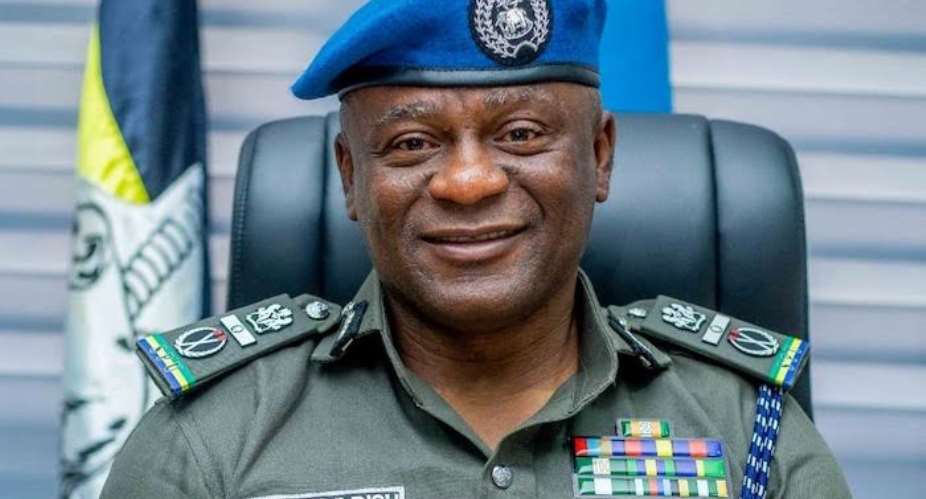
Against this background, the Inspector-General of Police (IGP), Olatunji Rilwan Disu, deserves commendation for his November 19, 2026 video message reminding doctors, healthcare workers and police officers that Nigerian law does not require a police report before treating gunshot victims. His intervention, coming just days after he reiterated the same position at the "Treat First. Save Lives" campaign in Abuja, reinforces the importance of prioritizing human life over administrative formalities.
However, while the latest reminder is commendable, it also raises an uncomfortable question: “Why should Nigerians still need repeated assurances from successive police chiefs on an issue that has been backed by legislation since 2017?
Indeed, the recurring need for such pronouncements suggests that the challenge is no longer simply about making people aware of the law. Rather, it exposes a persistent enforcement gap that requires more than public statements, media appearances and official directives.
For the avoidance of doubt, Nigeria already has a legal framework designed to prevent the needless deaths of gunshot victims arising from delays in accessing medical attention. In December 2017, former President Muhammadu Buhari signed the Compulsory Treatment and Care for Victims of Gunshots Act into law. The legislation mandates public and private hospitals to provide immediate and adequate treatment to gunshot victims without demanding police clearance or an initial monetary deposit.
Significantly, the Act strikes a reasonable balance between the responsibility of healthcare institutions to save lives and the obligation of security agencies to investigate criminal incidents. It requires hospitals to notify the nearest police station within two hours of commencing treatment. In other words, the law does not prevent police investigations; it simply insists that such investigations must not take precedence over emergency medical care.
Unfortunately, despite the clarity of this legislation, the practice of demanding police reports before attending to gunshot victims has continued to generate public concern. This explains why successive Inspectors-General of Police have found it necessary to revisit the issue.
In 2021, former IGP Mohammed Adamu publicly reiterated that medical facilities should prioritize the lives of gunshot victims rather than insist on preliminary documentation. Similarly, on October 28, 2023, following public outrage over reports of patients being rejected at emergency wards, former IGP Kayode Egbetokun issued another directive urging medical practitioners to provide urgent treatment to gunshot and accident victims, irrespective of whether they arrived with police reports.
Now, in November 2026, the same message has once again been reinforced by IGP Disu. While his commitment to protecting Good Samaritans and reminding healthcare workers of their legal obligations is worthy of recognition, the repetition of essentially the same directive over the years should concern everyone who believes that the primary responsibility of government is to protect human life.
It is difficult to understand why a law that has been in existence for nearly nine years should still require periodic reminders from the police leadership before its provisions are respected. More importantly, Nigerians should not have to wait for another police chief to assume office before hospitals and security agencies are reminded of their responsibilities.
This is why Disu must move beyond moral persuasion and media broadcasts. His latest directive should be translated into a standing operational order that clearly spells out the responsibilities of police commands, divisional officers and other relevant personnel in ensuring compliance with the 2017 Act.
First, the police leadership must address the trust deficit between security operatives and medical practitioners. There have been concerns that some healthcare workers are reluctant to treat gunshot victims because of the possibility of being harassed, intimidated, arrested or questioned unnecessarily by police officers.
Although the police have a legitimate responsibility to investigate shootings and establish the circumstances surrounding gunshot injuries, such responsibility should never be exercised in a manner that discourages medical professionals from saving lives.
Consequently, Disu should make it categorically clear to officers across the country that no doctor, nurse, hospital worker or Good Samaritan should be intimidated merely for providing emergency assistance to a gunshot victim. Any officer found abusing his authority in this regard should face appropriate disciplinary measures. Such action would help restore confidence among medical practitioners and encourage members of the public to assist injured persons without fear of unnecessary police harassment.
Second, the enforcement of the law must extend to hospitals and their managements. It is not enough for the police to protect medical practitioners from intimidation while turning a blind eye to healthcare institutions that unlawfully refuse emergency treatment.
Under the 2017 Act, failure to perform the statutory duty to provide treatment, where it results in the unnecessary death of a gunshot victim, attracts criminal consequences. Section 11 provides for a fine of N500,000, imprisonment for five years or both upon conviction for the specified offence. The law also provides sanctions for other violations of its provisions.
Against this background, Divisional Police Officers (DPOs) should establish functional liaison arrangements with public and private hospitals within their jurisdictions. Such arrangements would make it easier to address security concerns, facilitate the required police notification and ensure that emergency treatment is not obstructed by administrative bottlenecks.
There should also be accessible complaint channels through which relatives of victims and concerned citizens can report hospitals that unlawfully turn away gunshot victims. Such complaints should be investigated promptly, and where evidence establishes a violation, the appropriate authorities should initiate prosecution in accordance with the law.
Furthermore, the police should work with the Federal Ministry of Health and Social Welfare, the National Orientation Agency, the Nigeria Medical Association and other relevant professional bodies to intensify public enlightenment. Nigerians should understand that the law does not require a police report before a gunshot victim receives emergency treatment. Good Samaritans should equally be reassured that assisting injured persons is not, in itself, an offence.
It is important to stress that the responsibility for ensuring compliance does not rest exclusively on the police. Hospital administrators must respect their statutory obligations, healthcare professionals must discharge their duties responsibly, and security agencies must understand that their investigative responsibilities should complement rather than obstruct emergency medical services.
Nevertheless, the Nigeria Police Force has a particularly important role to play because the recurring fear of police harassment has become part of the concerns surrounding the treatment of gunshot victims. The IGP must therefore demonstrate through practical action that his administration will not tolerate any conduct capable of frustrating the implementation of the law.
Ultimately, a law that is repeatedly announced but poorly enforced risks becoming a mere declaration of good intentions. The history of the 2017 Act, followed by the interventions of Adamu in 2021, Egbetokun in 2023 and now Disu in November 2026, should convince the police leadership that another reminder alone cannot resolve this problem.
What Nigerians need is not another cycle of official pronouncements followed by a return to business as usual. They need a system in which hospitals understand that refusing emergency treatment without lawful justification has consequences, police officers know that intimidating healthcare workers attracts sanctions, and Good Samaritans can assist injured persons without fear.
A gunshot victim does not have the luxury of waiting for administrative approvals while bleeding. Every minute spent negotiating paperwork or searching for police clearance could reduce the victim's chances of survival.
Therefore, IGP Disu should ensure that the November 19 directive becomes a turning point in the enforcement of the Compulsory Treatment and Care for Victims of Gunshots Act. He must demonstrate that the Nigeria Police Force is prepared not merely to remind hospitals of the law but also to ensure that those who violate it are held accountable.
The ultimate test of the "Treat First. Save Lives" campaign should not be the number of directives issued, speeches delivered or awareness programmes organised. It should be whether Nigerians who suffer gunshot injuries can walk into hospitals and receive immediate medical attention without being subjected to avoidable bureaucratic obstacles.
Until that becomes the reality, repeated directives will continue to expose the gap between what the law promises and what vulnerable citizens experience. Nigeria must move from pronouncements to enforcement, because when the preservation of human life is at stake, another directive is not enough.

 Ghana to establish US$1bn pharmaceutical manufacturing hubs in Eastern, Central ...
 Rent Control to deploy 2,000-member taskforce to enforce rent laws nationwide
 Man remanded over alleged attempt to burn Kona Chief’s palace
 Pastor arrested over alleged currency counterfeiting after hiding since June
 GRA arrests 3 China Mall operators at Ashaiman, Weija and Nsawam over alleged E-...
 Court orders GH¢3.75m reward for whistleblower over Melcom tax evasion disclosur...
 Free SHS suppliers suspend picketing ahead of planned talks with Education Minis...
 Akufo-Addo left GH¢680bn debt burden for Mahama – Adongo
 Court injunction hits CLOGSAG congress scheduled for November 23 to 25
 Nkrumah used secret walking stick signals to direct cameraman Chris Hesse – Docu...


