




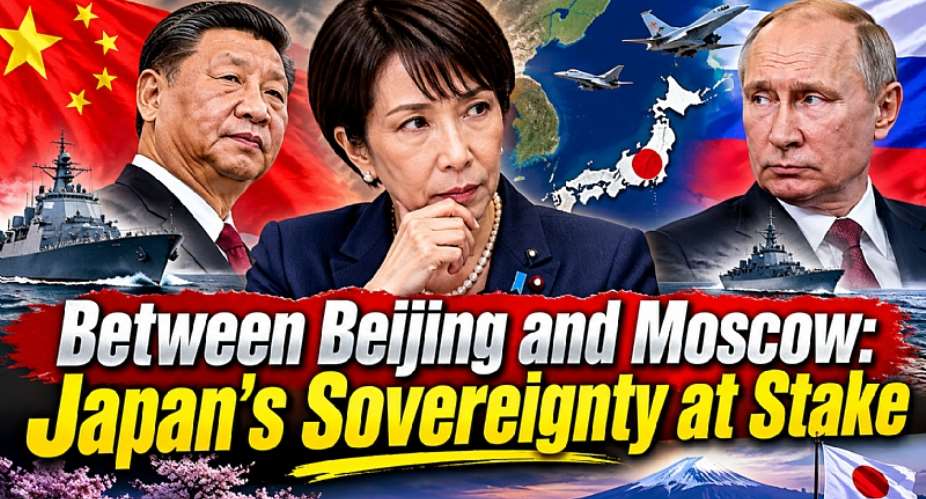
Japan has always maintained a hard-line position in the China–Taiwan conflict, firmly supporting Taiwan's existing political status. Even Takaichi, who became Prime Minister on 7 November 2025, took an unequivocal position on Taiwan. When asked whether a Chinese blockade of Taiwan would constitute a threat to Japan, she suggested that such a development could be considered an attack on Japan. Since then, relations between Japan and China have remained on a diplomatic tightrope. China has repeatedly asserted its historical position, leaving little room for Tokyo to challenge Beijing's claims. At the APEC summit in Shenzhen, although Takaichi was invited, the diplomatic protocol remained as cold as it could be. She exchanged handshakes with Xi Jinping twice, but no substantive bilateral talks took place. In contrast, she held bilateral discussions with Putin and Trump, while Xi maintained his distance.
HOW HAS CHINA PUNISHED TAKAICHI?
Japan's geographical proximity to Taiwan makes the situation even more complicated. Yonaguni Island, Japan's westernmost inhabited island, lies approximately 110 kilometres from Taiwan. Moreover, Japan's seafood trade and wider maritime interests are closely connected to the Taiwan Strait. In January 2026, China reportedly introduced several punitive measures against Japan.
Rare Earth Minerals: China restricted the supply of rare earth materials, potentially striking Japan's electric vehicle and automotive industries. These minerals are essential for semiconductor components, printed circuit boards and advanced manufacturing. This was the first major economic blow.
Seafood Ban: China's restrictions on Japanese seafood imports threatened an important export market, adding further economic pressure on Tokyo.
Travel Restrictions: Restrictions targeting hard-line Japanese figures and visitors created another layer of diplomatic isolation.
Military Display: China and Russia conducted military exercises near Japan's southwestern islands, including the area around Yonaguni, demonstrating their capacity to apply military pressure.
WHAT IS PUTIN'S POINT OF VIEW ON JAPAN?
Taiwan remains an integral part of China according to Beijing's official position, and Russia has openly supported this stance. Moscow also has its own territorial dispute with Japan over the Kuril Islands. If China weakens Japan diplomatically over Taiwan, Russia could potentially gain additional leverage in its own territorial negotiations. Both powers can use military pressure, diplomatic manoeuvring and economic instruments to compel Takaichi to reconsider her position. Russia also knows that China is one of its biggest buyers of oil. Why would Putin jeopardise that strategic relationship to favour Japan? Moscow could easily prioritise its economic and geopolitical interests over Tokyo's concerns.
WHY, THEN, DID PUTIN MEET TAKAICHI AT THE SUMMIT?
The meeting could serve several strategic purposes. First, it demonstrates diplomatic flexibility and creates an impression that Russia is willing to engage with Japan despite its alignment with the United States. Second, it signals to China that Moscow has alternative diplomatic options. Third, it allows Putin to project a softer international image, particularly as Takaichi reportedly raised the issue of prisoner releases. However, Russia's geopolitical calculations remain driven by its own interests. Putin is unlikely to sacrifice Russia's strategic partnership with China for Japan. Takaichi understands that reality.
IS TAKAICHI ALREADY TRAPPED? WHAT CAN SHE GET FROM THESE POLITICAL GIANTS?
Japan's position on Taiwan is not new. For decades, Tokyo has opposed unilateral changes to the status quo by force. In 2022, when Nancy Pelosi visited the region, China fired six missiles into waters surrounding Taiwan, some landing within Japan's exclusive economic zone. Such developments demonstrate the security risks Japan faces.
Takaichi has several options:
Strengthen the Quad: She can use the Quad platform to reinforce Japan's diplomatic position and prevent international isolation.Increase Defence Spending: Japan's commitment to raising defence expenditure to 2% of GDP reflects its understanding that it cannot depend entirely on others for its security. It must strengthen its own defence capabilities.
Avoid Overdependence on Europe: The widening differences between the United States and Europe make reliance on European support uncertain. Although European countries may support Japan diplomatically, their words and written commitments do not necessarily translate into a military presence on the ground.
Prepare for Trump's Strategic Bargaining: Trump's willingness to negotiate with geopolitical rivals cannot be ignored. If Ukraine can become part of a wider diplomatic bargain, why should Japan assume that its interests will never be compromised?
What options does Takaichi have left? She cannot blindly follow the European hard-line approach because Europe may not be prepared to fight for Japan. Therefore, she appears to be pursuing a strategy of remaining soft externally while strengthening Japan internally. She knows Trump could negotiate semiconductor and trade agreements with China or reach a settlement with Putin over Ukraine. Consequently, she must hedge her position without choosing a side prematurely. This is the real test of Japan's first female Prime Minister: how can she secure a deal for her people while navigating the political calculations of the world's giants?
CONCLUSION
There are no permanent hard principles on the international stage without the political strength to defend them. A country must maintain its presence even when others ignore it. Diplomatic engagement creates the possibility of political influence, and dialogue keeps strategic options open. Takaichi's three-hour engagement with Putin, if viewed through this perspective, reflects her desire to make Russia weigh Japan's interests. But at what cost? That is the decision she must make because nothing in that diplomatic room comes free. Sovereignty remains the ultimate question. If a country cannot establish and defend its position, choosing a bloc can make it dependent, while refusing to engage can leave it isolated. Japan must find its own strategic balance before the political giants decide its future for it.


 CSA arrests law student, NS personnel over online sexual extortion
 Tullow Oil, govt reach agreement to settle $387m tax disputes
 Prof. Agyemang Calls for Targeted PhD Regulation, Research Funding
 Tenants Union opposes proposal to increase rent advance limit from six to 12 mon...
 Mahama urges Germany, EU to sustain support for Sahel states amid terrorism thre...
 Ablakwa gives domestic worker assaulted by boss in Iraq GH¢50,000; considers rec...
 Mahama urges Oti chiefs to identify lands for agriculture under US$10bn New Econ...
 Remove your 'bomb' SRC President, that 'unfit' boy is in bed with university man...
 Power Has Moved North. What Next?
 Five ministers to face 41 parliamentary questions as House races to pass 2027 bu...


