




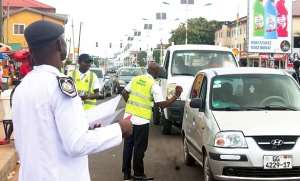
The Director of the Legal and Prosecution Unit at the Criminal Investigations Department (CID) Headquarters, ACP Alexander Odonkor, has cautioned police officers against concealing themselves behind containers to intercept motorbike riders during roadside enforcement operations.
He described the practice as an inappropriate approach to enforcing traffic regulations and urged officers to adopt more professional and courteous methods when dealing with road users.
“If we are doing that, then we need to stop. I mean, that is not the best way to enforce the law,” he said during a Ghana Police Television programme on Wednesday, November 18, 2026.
His remarks followed complaints from viewers about the conduct of some police officers during roadside checks, particularly allegations that officers positioned themselves behind containers near traffic lights before stopping motorbike riders.
One viewer also alleged that officers sometimes switched off his motorbike, removed the ignition key and ordered him to push the vehicle to the roadside without explaining the reason for the intervention.
Responding to the concerns, ACP Odonkor explained that police officers were legally permitted to demand relevant documents from riders, including driving licences, insurance certificates and roadworthiness certificates.
He said officers sometimes switched off motorbike engines and removed ignition keys to prevent riders from fleeing before the necessary checks were completed.
However, he stressed that officers must explain their actions to motorists and direct them to move to a safe location before conducting further inspections.
“Let the person know what you are doing and let them park,” he said.
ACP Odonkor further explained that where officers suspected a motorbike or a rider's backpack might contain arms or ammunition, they should clearly communicate the basis for their concerns before proceeding with the necessary checks.
He maintained that roadside enforcement must be conducted professionally and respectfully, warning that actions perceived as harassment could undermine public confidence and discourage motorists from cooperating with the police.
He therefore urged officers to improve their engagement with road users while encouraging motorists to observe traffic regulations and comply with lawful police instructions.
The discussion formed part of a public education programme on arrest warrants and the legal procedures governing police operations.

 Court of Appeal indefinitely adjourns Hanan Abdul-Wahab’s appeal over NAFCO char...
 “Even though macro indicators are well, see my pocket; there's no money” – Steph...
 33 manufacturing firms, 12 oil marketers join Ghana’s 24-hour Economy programme ...
 ACP Odonkor cautions police against hiding behind containers to intercept motorb...
 University of Ghana Enterprises cites GH¢70million debt as reason GH¢8,000 Legon...
 Parliament committee demands independent probe into deadly Manso Keniago clash
 Why Ukraine keeps trying to bring down Russia's bridge to Crimea
 Bank of Ghana cuts policy rate to 11% as economic conditions improve
 $60m presidential jet could save Ghana up to $2m annually in charter costs – Nkr...
 August 6 helicopter crash should end politicisation of presidential jet purchase...


