




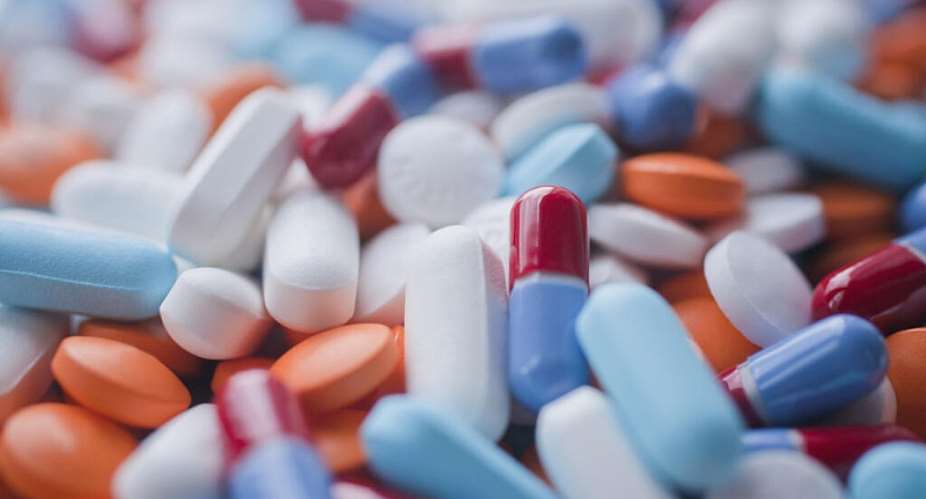
Whilst President Vladimir Putin has made economic and industrial independence a strategic priority, Russia remains heavily dependent on medicines manufactured abroad, particularly in the West. Medicines are exempted from Western sanctions on humanitarian grounds.
A survey published by Bloomberg, based on data from the Russian research firm DSM, shows that 56 percent of spending on medicines in Russia during the first eight months of this year was on imported products.
In 2022, at the start of Russia's full-scale invasion of Ukraine imports of medicines accounted for 57 per cent of expenditure. In other words, Russia's dependence on foreign medicines has barely diminished in the last four years.
'Working in Russia is like being a deep-sea diver', BBC's man in Moscow tells RFI
Moscow has long sought to develop a domestic pharmaceutical industry, aiming to guarantee access to treatment even in the event of renewed international tensions – and to limit capital outflows abroad.
Pharmaceutical exports from the European Union to Russia have increased since the start of the war, whilst European exports across all sectors have fallen sharply. Swiss pharmaceutical companies Roche and Novartis, the British firm AstraZeneca and the French company Sanofi remain among the major players in the Russian market.
Generic medicines versus complex treatments
Why Russia is struggling to produce its own medicines is, above all, a question of technology and research.
Russian manufacturers have made progress when it comes to the production of genetic medicines – those whose patents have expired meaning they can be copied, the category under which the most common medicines fall.
According to Bloomberg's calculations, based on data from the Russian Federal State Statistics Service, the country's generic pharmaceutical production rose by 71 per cent in the first eight months of 2026 compared with the same period in 2021.
Ukraine peace talks in Abu Dhabi to test Russia's willingness to negotiate
However, the situation is more complicated when it comes to sophisticated treatments for complex illnesses such as cancer, autoimmune diseases and rare conditions. Their production requires cutting-edge technology, substantial investment and, above all, years of research.
Russian manufacturers are lacking in long-term funding, making it difficult to take the risks necessary to develop new treatments, with the development of innovative medicines carrying a high probability of failure.
Despite this, the Kremlin has not abandoned its ambitions. Putin wants 80 percent of medicines deemed essential to be produced locally by 2030 – an ambitious target given the technological and financial limitations of the Russian pharmaceutical industry.
Until then, Moscow remains dependent on medicines made by its enemies.
This article has been adapted from the original version in French by Stéphane Geneste.


 Sir Sam Jonah appeals to Mahama for restoration of Acheampong's military rank of...
 Macron says limiting Ukraine aid would pave way to 'another war'
 Ukraine's relationship with NATO 'back on the table': Zelensky
 Agriculture will be a national security priority under my government – Bawumia
 Galamsey damage accumulated over years cannot be reversed immediately – Kwesi Sc...
 Government must fulfil 25,000 public sector recruitment promise – Kpebu
 Ken Ofori-Atta did better in his first two years as Finance Minister than Ato Fo...
 Ato Forson must acknowledge previous governments' contributions to economic reco...
 November 14: Cedi sells at GHS12.35 on forex market, GHS11.70 on BoG interbank
 'I never imagined my father was a Nazi': Born in a German-run 'baby factory'


