




Education is widely recognised as the foundation of national development. Yet the strength of an education system cannot be measured solely by the number of schools constructed, students enrolled, or billions of cedis allocated. Its true measure lies in whether every child, regardless of geographical location, gender, disability, or family income, has a meaningful opportunity to learn, develop essential skills, and succeed.
As Ghana prepares for the presentation of its 2027 national budget on November 12, a fundamental question deserves national attention: Will education spending meaningfully address the inequalities that continue to disadvantage children in underserved communities, girls from low-income households, and learners with disabilities?
Educational equity must be central to the national conversation, not treated as an afterthought.
According to UNICEF Ghana's 2025 Education Budget Brief, nearly 1.2 million children remain out of school, with poverty, disability, and geographical location among the major drivers of exclusion. The report also highlights persistent challenges involving inadequate infrastructure, teacher preparation, and limited access to digital learning opportunities, particularly in disadvantaged communities.
These findings remind us that expanding educational access is important, but ensuring equitable learning opportunities is equally essential.
The Geography of Educational Opportunity
For many children growing up in rural and underserved communities, access to quality education remains a daily challenge. Long distances to school, inadequate classrooms, shortages of qualified teachers, limited instructional materials, and unreliable access to educational technologies can significantly affect their learning experiences.
A national education budget that distributes resources without sufficient consideration of these disparities risks reinforcing existing inequalities.
Ghana needs an education financing approach that recognises the differing circumstances of schools and communities. Children attending poorly resourced schools should not be expected to achieve the same learning outcomes as their better-resourced peers without receiving the necessary instructional support.
This requires deliberate investment in school infrastructure, teacher recruitment and retention, teaching materials, and reliable digital learning facilities in disadvantaged districts.
Equity does not necessarily mean allocating identical resources to every school. It means ensuring that schools receive the support required to provide meaningful educational opportunities for their learners.
The 2027 budget should therefore demonstrate how educational investments will address geographical disparities rather than merely expanding national expenditure figures.
Girls' Education Requires More Than Enrollment
Ghana has made important commitments to improving girls' participation in education, including interventions intended to address menstrual hygiene challenges and expand access to digital learning opportunities.
These efforts are important, but improving girls' education requires more than increasing enrollment.
For girls in disadvantaged communities, educational participation may be affected by household poverty, inadequate sanitation, limited access to digital technologies, and social expectations that constrain their opportunities.
Such barriers can influence attendance, academic achievement, retention, and transitions into higher education or employment.
Meaningful investment in girls' education must therefore address the conditions that determine whether girls can remain in school and succeed academically.
Attention should be given to expanding opportunities for girls in science, technology, engineering, and mathematics (STEM), especially in communities where access to computers, laboratories, and qualified teachers remains limited.
The national budget should set clear priorities to support girls from disadvantaged backgrounds, strengthen their participation in STEM education, and provide appropriate learning environments.
More importantly, the success of these initiatives should be assessed through measurable improvements in attendance, retention, academic achievement, and educational progression.
Investing in girls' education should not end with getting them into classrooms. It must extend to ensuring that they have the resources and opportunities to fulfil their potential.
Children With Disabilities Must Not Remain Invisible
Perhaps one of the most important tests of educational equity is how a country supports learners with disabilities.
An education system cannot claim to provide equal educational opportunities when some children encounter inaccessible classrooms, inadequate learning materials, limited specialised support, or teachers who have not received sufficient preparation for inclusive education.
Although financial commitments are necessary, funding alone does not guarantee meaningful inclusion.
Ghana must strengthen accessible school infrastructure, assistive learning technologies, specialist services, teacher professional development, and appropriate instructional support for learners with diverse needs.
Inclusive education must also extend beyond physical access to schools. It should ensure that learners with disabilities can participate meaningfully in classroom activities, engage with appropriate learning materials, and demonstrate their knowledge and abilities.
The 2027 budget must clarify how the government intends to finance inclusive education and support children whose educational needs are often overlooked.
Government should also establish transparent mechanisms for reporting how these investments improve enrollment, attendance, retention, participation, and learning outcomes among learners with disabilities.
A truly inclusive education system does not simply accommodate children with disabilities. It creates the conditions they need to participate, learn, and succeed.
From Budget Announcements to Measurable Results
One of the greatest challenges in education financing is translating national budget commitments into tangible classroom improvements.
Substantial allocations may be announced, yet the intended beneficiaries may experience limited improvements if funds are delayed, unevenly distributed, inadequately monitored, or disconnected from actual educational needs.
Educational investment should therefore be evaluated not only by the amount allocated but also by the effectiveness, fairness, and transparency of its implementation.
Beyond announcing national expenditure figures, government should establish clear, publicly accessible indicators showing how much funding reaches disadvantaged districts, how many underserved schools receive essential resources, and whether targeted interventions improve educational outcomes.
Such information would enable parents, teachers, communities, civil society organisations, and policymakers to assess whether education spending is reaching those who need it most.
Transparency should also extend to the relationship between approved allocations, actual disbursements, completed projects, and measurable improvements in learning.
For example, constructing additional classrooms is important, but policymakers should also determine whether those classrooms reduce overcrowding, improve attendance, and contribute to better teaching and learning conditions.
Similarly, providing digital equipment should be accompanied by teacher training, maintenance arrangements, reliable infrastructure, and opportunities for students to use the technologies meaningfully.
Educational equity must become a measurable national commitment rather than an aspiration repeated in policy documents.
A Budget That Leaves No Child Behind
Ghana's national budgets should offer an important opportunity to place educational opportunity at the center of the country's development priorities.
As policymakers consider education spending, they must look beyond aggregate figures and examine the experiences of children whose learning opportunities remain constrained by circumstances beyond their control.
The success of education financing should be measured by whether a child in a remote community receives quality instruction, whether a girl facing economic hardship can remain in school, and whether a learner with a disability receives the support necessary to participate and succeed.
These outcomes require deliberate policy choices, equitable resource distribution, effective implementation, and sustained public accountability.
Ghana's educational future depends not simply on how much the nation spends, but on how fairly, effectively, and transparently those resources are used.
The forthcoming budget should therefore offer more than financial commitments. It should demonstrate a clear determination to reduce educational inequalities and ensure that national investment translates into meaningful opportunities for every learner.
Ghana's 2027 education budget should not simply tell the nation how much will be spent. It should demonstrate a commitment to ensuring that no child's educational future is determined by poverty, disability, gender, or geographical location.
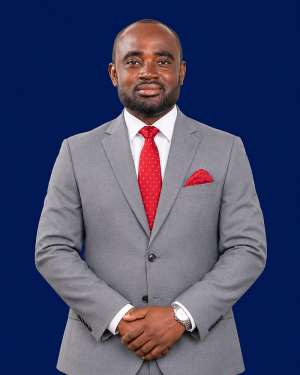
Shadrack Agyapong
Mathematics and STEM Educator | Education Researcher | Doctoral Student
U.S.-Based Ghanaian Educator
The article below is polished and ready for submission as a pre-budget opinion piece on November 11, 2026. I have strengthened its opening, added verified evidence from UNICEF Ghana, and sharpened the recommendations on equitable funding and accountability.
Ghana’s Education Budget Must Reach the Children Being Left Behind
By Shadrack Agyapong
Education is widely recognised as the foundation of national development. Yet the strength of an education system cannot be measured solely by the number of schools constructed, students enrolled, or billions of cedis allocated. Its true measure lies in whether every child, regardless of geographical location, gender, disability, or family income, has a meaningful opportunity to learn, develop essential skills, and succeed.
As Ghana prepares for the presentation of its 2027 national budget on November 12, a fundamental question deserves national attention: Will education spending meaningfully address the inequalities that continue to disadvantage children in underserved communities, girls from low-income households, and learners with disabilities?
Educational equity must be central to the national conversation, not treated as an afterthought.
According to UNICEF Ghana's 2025 Education Budget Brief, nearly 1.2 million children remain out of school, with poverty, disability, and geographical location among the major drivers of exclusion. The report also highlights persistent challenges involving inadequate infrastructure, teacher preparation, and limited access to digital learning opportunities, particularly in disadvantaged communities.
These findings remind us that expanding educational access is important, but ensuring equitable learning opportunities is equally essential.
The Geography of Educational Opportunity
For many children growing up in rural and underserved communities, access to quality education remains a daily challenge. Long distances to school, inadequate classrooms, shortages of qualified teachers, limited instructional materials, and unreliable access to educational technologies can significantly affect their learning experiences.
A national education budget that distributes resources without sufficient consideration of these disparities risks reinforcing existing inequalities.
Ghana needs an education financing approach that recognises the differing circumstances of schools and communities. Children attending poorly resourced schools should not be expected to achieve the same learning outcomes as their better-resourced peers without receiving the necessary instructional support.
This requires deliberate investment in school infrastructure, teacher recruitment and retention, teaching materials, and reliable digital learning facilities in disadvantaged districts.
Equity does not necessarily mean allocating identical resources to every school. It means ensuring that schools receive the support required to provide meaningful educational opportunities for their learners.
The 2027 budget should therefore demonstrate how educational investments will address geographical disparities rather than merely expanding national expenditure figures.
Girls' Education Requires More Than Enrollment
Ghana has made important commitments to improving girls' participation in education, including interventions intended to address menstrual hygiene challenges and expand access to digital learning opportunities.
These efforts are important, but improving girls' education requires more than increasing enrollment.
For girls in disadvantaged communities, educational participation may be affected by household poverty, inadequate sanitation, limited access to digital technologies, and social expectations that constrain their opportunities.
Such barriers can influence attendance, academic achievement, retention, and transitions into higher education or employment.
Meaningful investment in girls' education must therefore address the conditions that determine whether girls can remain in school and succeed academically.
Particular attention should be given to expanding opportunities for girls in science, technology, engineering, and mathematics (STEM), especially in communities where access to computers, laboratories, and qualified teachers remains limited.
The national budget should identify clear priorities for supporting girls from disadvantaged backgrounds, strengthening their participation in STEM education, and providing appropriate learning environments.
More importantly, the success of these initiatives should be assessed through measurable improvements in attendance, retention, academic achievement, and educational progression.
Investing in girls' education should not end with getting them into classrooms. It must extend to ensuring that they have the resources and opportunities to fulfil their potential.
Children With Disabilities Must Not Remain Invisible
Perhaps one of the most important tests of educational equity is how a country supports learners with disabilities.
An education system cannot claim to provide equal educational opportunities when some children encounter inaccessible classrooms, inadequate learning materials, limited specialised support, or teachers who have not received sufficient preparation for inclusive education.
Although financial commitments are necessary, funding alone does not guarantee meaningful inclusion.
Ghana must strengthen accessible school infrastructure, assistive learning technologies, specialist services, teacher professional development, and appropriate instructional support for learners with diverse needs.
Inclusive education must also extend beyond physical access to schools. It should ensure that learners with disabilities can participate meaningfully in classroom activities, engage with appropriate learning materials, and demonstrate their knowledge and abilities.
The 2027 budget presents an opportunity to clarify how government intends to finance inclusive education and support children whose educational needs are often overlooked.
Government should also establish transparent mechanisms for reporting how these investments improve enrollment, attendance, retention, participation, and learning outcomes among learners with disabilities.
A truly inclusive education system does not simply accommodate children with disabilities. It creates the conditions necessary for them to participate, learn, and succeed.
From Budget Announcements to Measurable Results
One of the greatest challenges in education financing is translating national budget commitments into tangible improvements in classrooms.
Substantial allocations may be announced, yet the intended beneficiaries may experience limited improvements if funds are delayed, unevenly distributed, inadequately monitored, or disconnected from actual educational needs.
Educational investment should therefore be evaluated not only by the amount allocated but also by the effectiveness, fairness, and transparency of its implementation.
Beyond announcing national expenditure figures, government should establish clear, publicly accessible indicators showing how much funding reaches disadvantaged districts, how many underserved schools receive essential resources, and whether targeted interventions improve educational outcomes.
Such information would enable parents, teachers, communities, civil society organisations, and policymakers to assess whether education spending is reaching those who need it most.
Transparency should also extend to the relationship between approved allocations, actual disbursements, completed projects, and measurable improvements in learning.
For example, constructing additional classrooms is important, but policymakers should also determine whether those classrooms reduce overcrowding, improve attendance, and contribute to better teaching and learning conditions.
Similarly, providing digital equipment should be accompanied by teacher training, maintenance arrangements, reliable infrastructure, and opportunities for students to use the technologies meaningfully.
Educational equity must become a measurable national commitment rather than an aspiration repeated in policy documents.
A Budget That Leaves No Child Behind
Ghana's 2027 national budget offers an important opportunity to place educational opportunity at the centre of the country's development priorities.
As policymakers consider education spending, they must look beyond aggregate figures and examine the experiences of children whose learning opportunities remain constrained by circumstances beyond their control.
The success of education financing should be measured by whether a child in a remote community receives quality instruction, whether a girl facing economic hardship can remain in school, and whether a learner with a disability receives the support necessary to participate and succeed.
These outcomes require deliberate policy choices, equitable resource distribution, effective implementation, and sustained public accountability.
Ghana's educational future depends not simply on how much the nation spends, but on how fairly, effectively, and transparently those resources are used.
The forthcoming budget should therefore offer more than financial commitments. It should demonstrate a clear determination to reduce educational inequalities and ensure that national investment translates into meaningful opportunities for every learner.
Ghana's 2027 education budget should not simply tell the nation how much will be spent. It should demonstrate a commitment to ensuring that no child's educational future is determined by poverty, disability, gender, or geographical location.
Shadrack Agyapong
Mathematics and STEM Educator | Education Researcher | Doctoral Student
U.S.-Based Ghanaian Educator
Sources
These are provided separately from the article so that readers can verify its factual claims.
1. UNICEF Ghana (2025). Education Budget Brief 2025. Supports the figures on out-of-school children, rural disadvantage, disability-related exclusion, infrastructure, and foundational learning. Official UNICEF report.
2. Ghana News Agency (November 6, 2026). Finance Minister to Present 2027 Budget on November 12. Confirms the scheduled presentation date and the Finance Minister. Read GNA report.
3. UNICEF Ghana (2025). UNICEF Ghana Budget Briefs – 2025. Provides the broader institutional context on social-sector financing, efficiency, and equity. UNICEF budget reports.

 Armed mob attacks NAIMOS task force at Manso Keniago; two injured
 GES assures Funsi SHS students of action over water, electricity shortages
 17-year-old arrested over fatal shooting of Ghanaian teenager Javits Frimpong in...
 New Economy: 'Is Mahama government abandoning its 2024 promises?' – Kwesi Pratt
 'God is not a rickety goat to let NPP come back to power' — Cape Coast Mayor on ...
 Govt rules out new taxes in 2027 budget
 Government targets improved foundational learning for children by 2030
 Goldplat suspends operations at Ghana plant after trench collapse kills contract...
 GACL targets end of year start for Wa, Bolga, Sunyani airports
 Credit Akufo-Addo's govt for new oil discovery – Adomako-Mensah to NDC


