




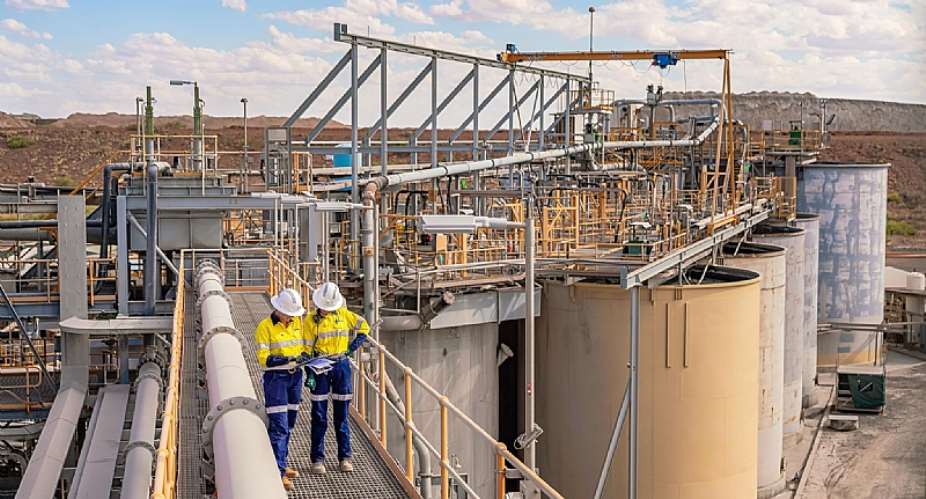
Mining giant Newmont Ghana considered venturing into the bottled-water business using water treated at its mining facilities but abandoned the idea over concerns about public perception.
The company's Regional Director for Environmental Affairs, Mr Albert Otchere Ainoo, made the revelation at the Ambassador's Water Experts Program (AWEP) Symposium held at the Accra Marriott Hotel on Tuesday.
According to Mr Ainoo, the company had considered bottling its treated water for commercial sale, believing that the quality of the water was sufficiently high to warrant such consideration.
However, concerns about how consumers would react to purchasing drinking water originating from a mining operation ultimately influenced the decision not to pursue the initiative.
The disclosure raises an interesting question about consumer confidence in treated industrial water and whether public perceptions of its source can influence the commercial viability of water-reuse initiatives.
Mr Ainoo maintained that water treated at Newmont's mining operations meets World Health Organization (WHO) drinking-water quality guidelines.
He further claimed that the quality of the treated discharge compares favourably with drinking water available to the public.
In response to questions about the scientific basis for the company's assertions, he disclosed that its water samples are analysed at SGS laboratories.
The revelation comes at a time when water quality, pollution and environmental sustainability remain major concerns in Ghana, particularly in communities affected by mining.
While advanced treatment technologies can make previously contaminated water suitable for various purposes, producing water for human consumption requires comprehensive safety assessments and compliance with applicable regulatory requirements.
The World Health Organization recognises potable water reuse as a potential water-supply option under appropriate conditions but emphasises the importance of effective treatment, risk management, monitoring and public acceptance.
The Food and Drugs Authority regulates packaged drinking water, including the licensing of manufacturing facilities and registration of products intended for sale.
The authority has also strengthened testing requirements for packaged drinking water, including checks for heavy-metal contamination.
It remains unclear whether Newmont's bottled-water proposal progressed beyond internal consideration or whether the company conducted specific feasibility studies, sought regulatory approval or developed a potential commercial product.
Nevertheless, Mr Ainoo's disclosure brings a fresh dimension to discussions about the relationship between environmental technology, industrial water reuse and consumer confidence.
It also highlights the distinction between water that meets specified quality benchmarks and a packaged drinking-water product that has completed the necessary safety and regulatory approval processes.
The disclosure was made during the two-day AWEP Symposium, held under the theme "Addressing Mercury Pollution: Collaborative Solutions for Sustainable Mining in Ghana."
The programme brings together environmental scientists, mining industry representatives and other stakeholders to explore sustainable approaches to managing mercury pollution and protecting Ghana's water resources.

 Armed mob attacks NAIMOS task force at Manso Keniago; two injured
 GES assures Funsi SHS students of action over water, electricity shortages
 17-year-old arrested over fatal shooting of Ghanaian teenager Javits Frimpong in...
 New Economy: 'Is Mahama government abandoning its 2024 promises?' – Kwesi Pratt
 'God is not a rickety goat to let NPP come back to power' — Cape Coast Mayor on ...
 Govt rules out new taxes in 2027 budget
 Government targets improved foundational learning for children by 2030
 Goldplat suspends operations at Ghana plant after trench collapse kills contract...
 GACL targets end of year start for Wa, Bolga, Sunyani airports
 Credit Akufo-Addo's govt for new oil discovery – Adomako-Mensah to NDC


