




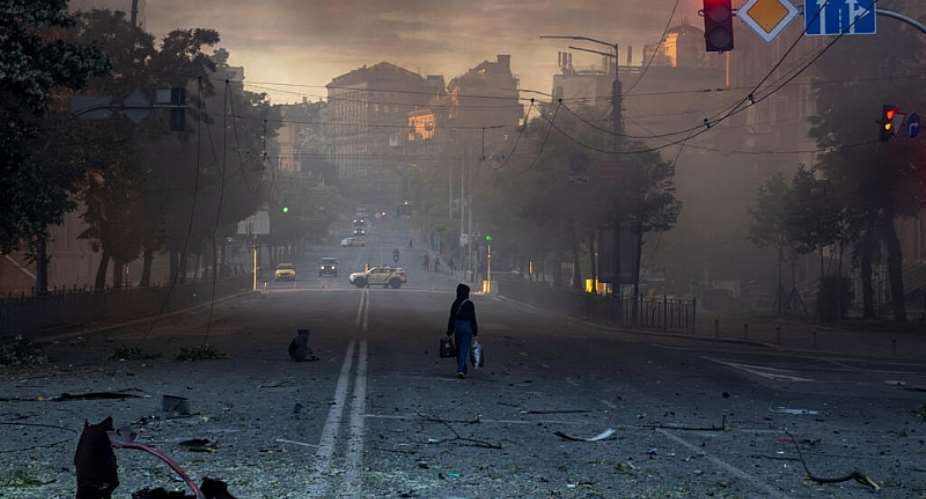
U.S. President Donald Trump recently suggested that Ukraine’s borders could change as part of a peace deal with Russia, saying, “they’re going to end up with a little bit different shape.” In February 2025, he berated Ukrainian President Volodymyr Zelenskyy during an Oval Office meeting, telling him, "You have to be thankful. You don't have the cards."
This transactional approach brings to mind the warnings of the late Pakistani scholar and anti-colonial activist Eqbal Ahmad, who described the Oslo Accords as a “peace of the weak.” He argued that the Palestine Liberation Organization, rushing to secure some measure of power, accepted ambiguous promises and sacrificed the prospect of genuine sovereignty. The resulting Palestinian Authority, in his view, was reduced to the role of “policeman and municipal official.”
Ukraine and Palestine have different histories, but Ahmad’s warning offers a useful lens for understanding these negotiations. An agreement reached under duress is no guarantee of a just or lasting peace.
Rather than exploiting Ukraine’s dependence to extract concessions, the United States must bolster Kyiv’s negotiating leverage to secure a settlement that protects Ukraine’s independence. The measure of success must be whether Ukrainians can determine their own future, not whether an American president can claim to have closed a deal.

 Two Aduman SHS teachers remanded over alleged sodomy case involving two minors
 'What are the technical reasons for the new cedi notes?’ – Oppong Nkrumah questi...
 GES forwards 347 salary arrears cases of 2024 teacher recruits for payment
 No basis for rent increases in Ghana today – Kwakye Ofosu cites reduced building...
 2027 Budget: New Economy is ‘copy and paste’ of 24-hour policy – Amin Adam
 2027 Budget: Ato Forson contradicted himself on borrowing – Amin Adam
 Microsoft says it is 'deeply sorry' after widespread outages cause global chaos
 Microsoft outage causes global chaos
 The Nvidia affair: Are markets about to fall out of love with AI?
 'Too early to discuss presidential bid’ – Dr. Ato Forson


