




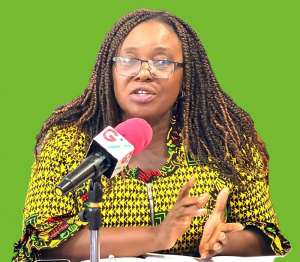
“If Ghana is serious about leaving no one behind, it must be equally serious about reaching everyone, especially those furthest behind," Mrs Rita Naa Odoley Sowah (MP), Deputy Minister for Local Government, Chieftaincy and Religious Affairs, stated on Thursday to close the 2026 edition of the MOLE conference (MOLEXXXVII).
The conference, which was organised by CONIWAS, took place from November 1st to 6th and was on the general theme — “Accelerating Climate-Resilient WASH Service Delivery for Last-Mile Communities: Options, Strategies and Actions” — and demands a shift from dialogue to delivery. The opening ceremony on Monday was chaired by Nene Agudey Obichere III, Mankralo of Ada State, representing the Paramount Chief of the Ada Traditional Council.
The Media Coalition Against Open Defecation (M-CODe), through the empowerment of World Vision Ghana, is providing a strategic and targeted communication platform for the conference, ensuring national visibility and citizen engagement.
Mrs Sowah cited figures presented at the opening that should compel urgency and fairness: In August 2026, basic water access was 96.4 per cent in urban areas against 74.4 per cent in rural areas, a gap of 22 percentage points.
Open defecation, at 17.7 per cent nationally according to the 2021 Census, rises to 31.3 per cent in rural areas. Rural basic hygiene fell from 36 per cent in 2015 to 31 per cent in 2024. At the pace recorded between 2015 and 2024, basic sanitation would reach only about 39 per cent by 2030.
Behind these figures, she said, are communities such as Totope in Ada East and Bonikope in Ada West. These communities do not become less deserving of safe water because they are small, rural, difficult to reach or commercially unattractive to service providers.
“Our commitment must be to ensure that the last mile does not become the forgotten mile,” she said.
The Deputy Minister said climate change is no longer a distant threat. Flooding, droughts, water scarcity, damage to sanitation infrastructure and disruption of services disproportionately affect vulnerable communities. When floods damage water systems, when drought reduces safe water, or when sanitation facilities become unusable, consequences extend to public health, livelihoods, education, dignity and economic productivity.
For last-mile communities, Mrs Sowah stressed, these are not future risks but present realities that determine whether a borehole functions, whether a toilet remains usable and whether a household can maintain dignity and health.
“We must move beyond responding to climate-related emergencies after they occur and invest in systems that can withstand climate shocks,” she said. “The cost of inaction is often greater than the cost of prevention.”
The Deputy Minister outlined five priorities to guide action: prioritise climate-resilient infrastructure across its life cycle; strengthen local government capacity, partnerships and local ownership; close the service delivery gap for last-mile communities with attention to women, children, persons with disabilities, the elderly and other vulnerable groups; make evidence and accountability central; and move from policy commitments to measurable action.
On evidence, she said monitoring must track not only aggregate coverage but also who is served, at what level of service and with what reliability. Success must be measured by actual improvements in people’s lives.
She urged stakeholders to return to their institutions with renewed responsibility, specific commitments and practical actions. Knowledge shared, partnerships established and recommendations developed must inform decisions, resources and services delivered.
“The true measure of success of the Mole Conference will be what changes in our communities after we leave Aqua Safari Resort,” she said. “It will be whether households gain access to safe water and dignified sanitation, whether local authorities are better equipped, and whether communities are more resilient to climate-related shocks,” she stated.
She commended CONIWAS, the Planning Committee, development partners, donors including UNICEF, WaterAid Ghana, World Vision Ghana, SNV and others, and the chiefs and people of Ada for their contributions towards the success of MOLEXXXVII.
The six-day conference balanced plenary and panel discussions with interactive parallel sessions, group discussions, verbal and poster presentations, side events for innovators, media events, and exhibitions.
Two virtual conference centres were set up with online links to enable participation from persons unable to travel to Ada.
Other activities included conference reception, capacity-building workshops, learning field trips to WASH facilities and tourist sites around Ada, and a special dinner and awards night.
The high-level participants include representatives from ministries, departments and agencies; MMDAs; traditional authorities; development partners; academia; research institutions; NGOs, CBOs, FBOs, civil society, the private sector, media, regulatory bodies including the Water Resources Commission and PURC, informal WASH service providers, community representatives and financial institutions.

 Only 61% of Ghanaian children have birth certificates – UNICEF reveals
 Contraflow: “No Aayalolo bus has been involved in any accident" — Ayariga
 Queen Máxima urges Ghana to prioritise financial health in next inclusion strate...
 Navy intercepts 4.7 tonnes of suspected Indian hemp at Ada Estuary
 Assafuah runs away from invitation to appear with evidence before Mahama's commi...
 November 6: Cedi sells at GHS12.25 on forex market, GHS11.67 on BoG interbank
 Put Nkrumah's 1957 independence photo on banknotes – Memorial Park to BoG
 Health Ministry dismisses claims gov't is abandoning newly trained doctors
 Trump calls midterms 'crooked', demands Alaska votes go to Republican candidate
 Kenyan starvation cult leader faces death sentence over child murders


