




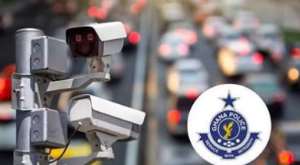
On the first Sunday of November, a trotro driver eases onto the N1 in Accra. He has driven this road for fifteen years. He knows every pothole, every junction where the lights died in the rains, every spot where an officer might wave him over for a quiet word and a quieter payment.
What he does not know is that a camera on a tripod, in a place with no warning sign, has just clocked him at 68 km/h. Nor does he know that the fine is already travelling by text message to a man in Kasoa who sold him the bus in 2019 and never changed the paperwork.
That driver is imaginary. Every one of his problems is real.
TraffiTech-GH, the police system that catches speeding motorists on camera and fines them by SMS, went live on 1 November. Within four days, two arms of government were contradicting each other on the radio, transport unions had parked their vehicles in protest, and fraudsters were already sending fake fines to frightened motorists.
None of this means the idea is wrong. It means Ghana switched on the camera before it fixed the road.
A camera has no pocket
Ask any Ghanaian driver about traffic policing and the talk turns quickly to the officer who stops you, finds a fault, and suggests the matter can be “settled”. That small transaction poisons everything. The driver learns the law has a price. The officer learns the uniform pays. The public learns that enforcement is about money, not lives.
A camera cannot be flattered, threatened or tipped. When the police first explained the scheme to regional stakeholders in 2023, cutting face-to-face contact between officers and motorists, and so rebuilding trust, was one of its stated aims.
The need is desperate. Ghana’s roads killed 2,949 people in 2025, according to the National Road Safety Authority (NRSA). That is the highest toll in 35 years of records: roughly eight deaths a day, one every three hours. Deaths rose 18 per cent in a single year, almost twice as fast as crashes, which means Ghana’s crashes are getting more violent. Violence on the road is mostly a matter of speed. The Motor Traffic and Transport Department (MTTD) says speeding lies behind 62 of every 100 road deaths.
Speed cameras work where they are done properly. A widely cited international review of the research found that crashes causing death or serious injury fell near camera sites in every study it examined. And in Accra, the effect was instant. Within days, drivers and broadcasters were remarking on traffic crawling along the N1 at speeds nobody had seen in years.
President John Mahama put the government’s case in one line: if the fines are too expensive, do not speed. As a moral argument, it is hard to beat. The trouble is that fairness needs more than a clear rule. It needs a driver who could reasonably have known the rule and obeyed it.
How it works
The system is run by the MTTD of the Ghana Police Service with the NRSA. Cameras fitted in police vehicles, on movable tripods and at some fixed sites record vehicles going over the limit. Officers in regional “back offices” check the footage. The registered owner then receives a text from the sender ID GPS-MTTD with the offence, place, time and amount due.
The owner has 14 days to pay through Ghana.gov or mobile money, or to contest. After that, 1 per cent of the fine is added every day, and unpaid fines can block licence renewals and vehicle transfers at the DVLA.
The default limits are 30 km/h near schools, markets, hospitals, churches and mosques; 50 km/h in towns; 90 km/h on highways; and 100 km/h on motorways. Speeding comes first. Red-light running, wrongful overtaking and tailgating are to follow.
The scheme is not new. Its roots go back to around 2008. A public-private partnership was signed in December 2022, and about 120,000 warning-only notices had gone out by the end of 2025. Nearly two decades of preparation should have produced a launch with few loose ends. It did not.
A speed limit is a bargain. The state says: this is the limit here, and I have told you so. The driver agrees to keep to it. On many Ghanaian roads, the state has not kept its half.
Limits change at particular points: where a highway enters a town, where a road passes a school or market, where a dual carriageway narrows. These are exactly the places where signs matter most, and on many roads there is nothing there at all. The MTTD itself has admitted that many roads have no speed camera signs, and that some speed limit signs are defective or have fallen down and never been replaced.
Others are still standing but cannot be seen. Trees and shrubs nobody trims have swallowed them. So have billboards, kiosks, shops and walls that went up after the sign did, often with a permit from the same district assembly responsible for the road.
Traffic lights are no better. In September the think tank CUTS International Accra reported lights across the capital hidden by trees, damaged, knocked out of line or simply dead. At some junctions one signal head worked and its partner did not. Its point was simple: a camera having a clear view of a car does not mean the driver had a clear view of the light.
Then there is a problem almost nobody saw coming. Nana Annor Amihere II, a safety professional, pointed out in The Ghanaian Chronicle that Ghana’s speed limit signs show a bare number with no unit. The law means kilometres per hour. But many of our cars arrive second-hand from America, and their speedometers show miles per hour first. A driver who sees “50” on the sign and holds 50 on his dial is doing about 80 km/h. The camera records a serious offence by a man who honestly thought he was obeying the law. The fix costs almost nothing: print “km/h” under the number. It was not done.
The police answer is that drivers must know the default limits and a missing sign is no defence. Legally, perhaps. Morally, it is thin. A school with no sign looks like any other building, and a stranger arriving in a town at night has no way of knowing where the 90 zone ends.
The NRSA’s own Director-General, Abraham Amaliba, put it best: Ghana cannot apply twenty-first-century digital policing to nineteenth-century broken-down infrastructure. When the head of the road safety authority says the roads are not ready, it is hard to argue the launch was well timed.
The wrong man gets the bill
A camera photographs a number plate, not a face. The fine goes to whoever the DVLA lists as the owner, at whatever phone number is on file, and that owner is liable irrespective of who was driving.
That only works if the register is accurate. It is not. Cars in Ghana change hands informally, sometimes several times, without the paperwork following. According to the policy analyst Bright Simons, pilot runs in 2024 found owner details missing on a wide scale, and insurance records carrying brokers’ numbers instead of owners’. People change SIM cards, abandon lines, or register cars in a relative’s name.
A notice that never arrives cannot be paid in 14 days. Yet the 1 per cent daily penalty keeps running against someone who does not know it exists. Companies, churches and schools face another problem: the notice reaches the institution, not the driver, and there is no clear procedure for naming who was behind the wheel.
The lawyer Albert Gyamfi has argued that this clashes with the presumption of innocence, because a register of who owns a car says nothing about who drove it on a given day. His remedy was obvious: clean the register first. A six-month “update your details or face fines” campaign would have cost little and saved a great deal of anger.
Whose rules?
The most damaging confusion came from the top. Police guidance says the absence of a sign is no defence and that enforcement need not be announced. On 4 November, Mr Amaliba said cameras would operate only on roads with clearly posted limits, because motorists should not be punished for the authorities’ failures. A day later, President Mahama directed that warning signs be placed ahead of every camera.
So, four days in, a driver could not get a straight answer to two basic questions. Is a missing sign a defence? Will cameras be signposted?
Even the size of the fine has been explained in different ways. Some accounts say 10 penalty units, about GH¢120, for each of the first three offences, rising after that. Others describe a sliding scale of GH¢240 to GH¢480 depending on how fast the driver was going. No cap on the daily late-payment charge has been published.
Appeals go to MTTD stations, so the police judge their own tickets. Fake fine texts were circulating within a day of launch. And Ghana’s Data Protection Act applies to every image the cameras take, yet nobody has told the public how long pictures are kept or who may see them.
Follow the money
This is the question officials have been slowest to answer.
According to the Finance Ministry’s 2024 report on public-private partnerships, every cedi collected is split 60 per cent to government and 40 per cent to the private operator, Nationwide Traffic Management & Enforcement Limited (NTMEL). Mr Simons reports that NTMEL is part-owned by the Swedish camera firm Sensys Gatso and had earned nothing by the end of 2025. It needs fines to flow.
There is nothing wrong with a private company supplying technology. The worry is the incentive. When the operator earns more from every ticket, the pull is to put cameras where tickets are plentiful rather than where people die. Mr Simons notes that Uganda’s similar scheme, which reportedly gave its foreign operator 80 per cent of fines, was suspended within days of launch last year.
And what of the government’s 60 per cent? Nobody has said. Nothing ties it to road safety, to signs and markings, or to the NRSA, which admitted that part of 2025’s record death toll came from its own inactivity after funding dried up and it had to stop public education campaigns. Will the money go into the Consolidated Fund, to vanish into general spending, or into the Road Fund, which exists for road maintenance and safety? The commentator J. B. Allotey has called for exactly that ring-fencing, with monthly public accounts and independent audits.
Until a rule is written down, “the fines will fix the roads” is a hope, not a policy. A driver fined for speeding past a sign hidden by a mango tree is entitled to ask whether any of his money will be spent trimming it.
Taking the officer off the roadside removes one chance for abuse. It does not remove them all.
Every capture is checked by an officer before a notice goes out. That step protects drivers from machine errors, but it also means a person decides who gets fined. Without a record of every notice dropped and why, the well connected could be quietly spared. The bribe would simply move indoors.
Tripod and vehicle cameras move at an officer’s discretion, so placement is a choice. The MTTD says officers in private cars, and state vehicles without a valid exemption, will be fined like anyone else, but who grants exemptions is not published. And a system that records where every vehicle goes is a gift to anyone inside it willing to leak data to a jealous spouse, a debt collector or a fraudster.
There is no evidence any of this has happened. The point is that nothing yet visible would stop it.
The drivers’ complaint
The fiercest resistance came from commercial transport unions, and their grievance was about fairness, not cameras.
Traders, they said, have turned bus stops, loading bays and walkways into market stalls, leaving trotros nowhere legal to stop. The law already bans trading in those spaces. Yet the state was preparing to fine drivers for stopping in the wrong place while leaving traders on the right one. One union statement accused the government of using the system to extort money from innocent drivers.
The unions also said they first heard of the scheme through the media. Sit-down strikes spread as far as Wa before the GPRTU called them off after an invitation to the Presidency. A strike that strands millions of commuters is an expensive way to learn that the people most affected by a policy should have been in the room from the start.
One year from now
Will the roads be properly signed by this time next year? History counsels caution. In 2018 a road safety plan promised GH¢335 million a year for three years, partly for signs and road markings. It collapsed within months. Mr Amaliba now says markings will be redone as roads are resurfaced ahead of the 70th independence anniversary in March 2027. That is at least a date to hold him to.
But signs are not a one-off job. A sign is put up once and must stay visible every day, which means someone must trim the trees, replace what is knocked down, and stop assemblies approving buildings that block a driver’s view. No agency has said that job is theirs.
Here is a simple test for November 2027. On every road where cameras operate, is there a clear sign, marked in km/h, at every point where the limit changes, with nothing grown or built in front of it?
Right idea, wrong order
Think of a football match. Before the referee shows a yellow card, someone has to paint the lines and tell both teams the rules. TraffiTech-GH is a fair referee who walked onto a pitch with half the lines missing.
The repairs are not expensive. Walk every camera route and fix the signs, lights and markings before switching each camera on. Put “km/h” on every sign. Clean the vehicle register. Publish one clear rulebook, with one voice from the police, the NRSA and the ministry. Set up an independent appeals body. Publish the operator’s contract and pay it a fixed fee, not a share of fines. Ring-fence the government’s share for road safety. Clear the traders from bus stops. And every quarter, publish the one number that matters: deaths on the roads the cameras watch.
If deaths fall, TraffiTech-GH will defend itself. If they do not, no amount of fines will.
Any fifteen-year-old knows the rule from the classroom: you cannot fairly mark someone wrong for breaking a rule you never clearly showed them. The state is asking drivers to keep their side of the bargain. It must now keep its own.
Stephen Gyasi Jnr. is a journalist and communications consultant based in Accra.


 Akufo-Addo’s govt initiated Ghana’s BRICS partnership idea – Mahama
 If NDC had followed how we had wanted to do the Gold for Reserves, they wouldn't...
 No one should endure sexual harassment to secure jobs – Prof Opoku-Agyemang
 'US must tackle gun violence' – Mahama after death of Ghanaian teenager, Javits ...
 Bear with us on TraffiTech, it is here to save lives – Mahama to Ghanaians
 JUSAG Strike: Wage dispute must not suspend justice for entire nation – Ahiagbah...
 My focus on digitalisation is not an escape from economics; it is the new econom...
 Speaker Bagbin's handling of Abu Jinapor's allegation raises concerns – Egyapa M...
 Abu Jinapor showed highest form of disrespect to Bagbin – Hamza Suhuyini
 NPP becoming irrelevant to Ghana's political discourse – Solomon Owusu


