




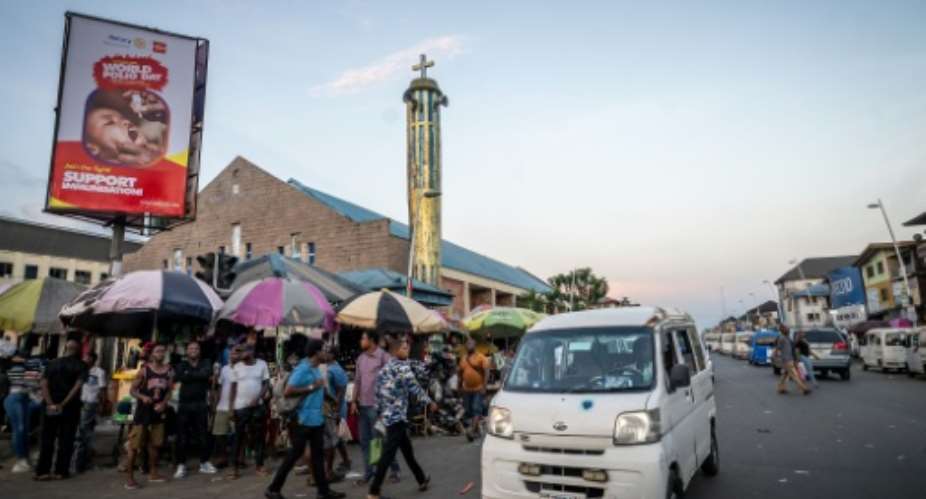
As Nigeria heads toward elections in just over two months, political battles will be waged over the airwaves and at rallies -- and, perhaps more importantly, behind the scenes, by the country's "godfathers".
The Nigerian political scene is dominated by a caste of competing kingmakers stretching all the way to the very top -- with President Bola Tinubu, who is seeking re-election, known as the "godfather of Lagos".
Nigeria's distinct brand of patronage, where politicians owe loyalty to the unelected figures who backed their rise, has bred a culture which, critics say, leads the government to prioritise elite hobnobbing and backstabbing over making ordinary people's lives better.
And the cloak-and-dagger domestic drama has fed suspicions on the international stage, with the existence of an FBI dossier on Tinubu over alleged links to a drug trafficking network leaving many to wonder whether Washington has undue influence over the 74-year-old leader.
So-called godfathers aren't "just supporting or sponsoring someone, which would have been legitimate. But it's positioning yourself in ultimate control", said Henry Ekine, a legal activist in Rivers state, ground zero for the exploits of Nigerian shadow governance.
With polls just months away, oil-rich Rivers has been mired in political crisis, triggered by the fallout from the dispute between the governor and his godfather, analysts say.
Tinubu -- who has denied wrongdoing in the decades-old drugs case -- will hold a rally Saturday in Rivers, a pivotal battleground home to the fifth-highest number of registered voters.
Impeachment threats, arson allegations
Godfathers, often themselves active or ex-politicians, are less like mentors and more like "de facto" governors -- influencing public contracts, siphoning funds and using their power to "decide who is considered for appointment in government offices", Ekine said.
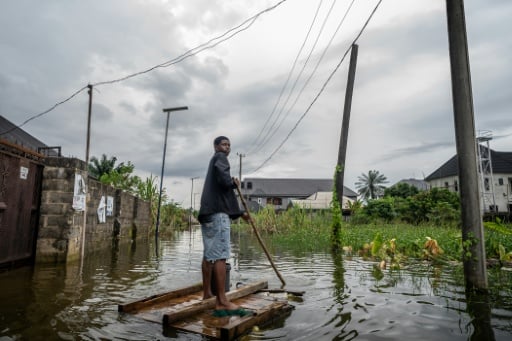 Port Harcourt has been hit by repeated flooding, with critics accusing the government of ignoring day-to-day administration. By Light Oriye Tamunotonye (AFP)
As much as godfathers have worked to install their "godsons" into power, they've also battled them. In 2019, after a falling out with his successor, former Kano governor Rabiu Kwankwaso backed challenger Abba Kabir Yusuf.
Kwankwaso's influence was apparent: on campaign posters, images of his face were larger than Yusuf's.
In Rivers, Governor Siminalayi Fubara fell out with his godfather, ex-governor Nyesom Wike, who is close to Tinubu and reportedly paved the way for Fubara's own election in 2023.
Ever since, the state has lurched from one crisis to the next.
Lawmakers loyal to Wike have launched multiple impeachment probes against Fubara.
Fubara at one point attempted to govern with a state assembly of just four loyal lawmakers after dismissing 27 pro-Wike members.
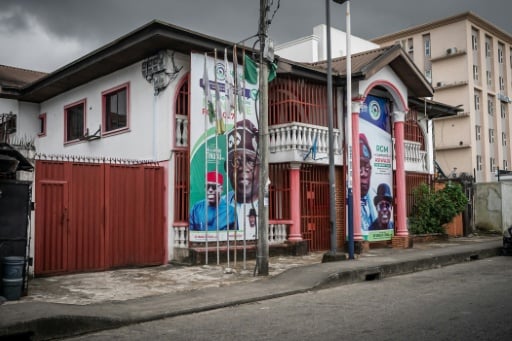 Nigerian President Bola Tinubu's ruling party is backing a new candidate for governor in Rivers state. By Light Oriye Tamunotonye (AFP)
Other lowlights include a mysterious fire that gutted the state legislature and attacks on oil infrastructure, the latter of which Tinubu cited as a reason for declaring a constitutionally disputed state of emergency last year.
Representatives for Wike and Fubara did not respond to a request for comment.
The fallout has been so bad that Fubara, a member of Tinubu's ruling All Progressives Congress, is, unusually, not running for a second term.
Thoroughly sidelined, Fubara became an early lame duck, Dengiyefa Angalapu, a research analyst at the Abuja-based Centre for Democracy and Development, told AFP.
And since then, "governance died in Rivers state," he said.
Citizens 'pay daily'
Along a residential street on the outskirts of Port Harcourt, the road abruptly ends, disappearing under waist-high floodwaters that have swallowed a mixed middle-class and working-class neighbourhood.
Businesses are shuttered and thousands of residents are displaced, forcing some to shell out for hotels for weeks as the water refuses to recede.
"We need intervention immediately," resident Kingsley Obinna Ejikem, 40, told AFP.
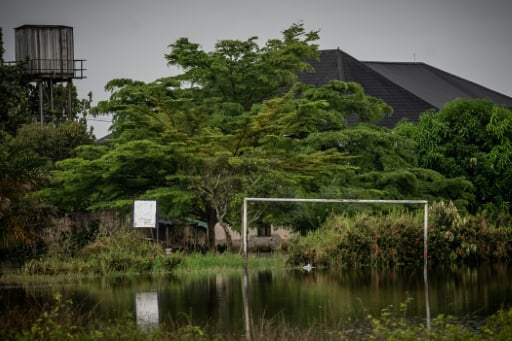 The infrastructure woes in Port Harcourt come despite the fossil fuel wealth of Rivers state, located in the oil-rich Niger Delta. By Light Oriye Tamunotonye (AFP)
"It's more important than politics. We don't care about politics," the frustrated oil-and-gas worker said.
But Obinna Ebogidi sees a link.
There had been a similarly bad flood in the neighbourhood a decade ago, and milder annual flooding since.
Canals and drains need to be regularly cleared of rubbish and silt, but that wasn't done, Ebogidi, a 34-year-old civil society leader, told AFP at a nearby restaurant.
"The people who are supposed to be administrating governance have instead been so distracted with infighting," he said, while citizens "pay daily for it".
Looking up from his drink, his gaze piercing the ceiling, Ebogidi, who lost his laptop in the flood and is currently rebuilding his destroyed fence, said he's nervous about the waters rising again.
Outside, clouds are gathering. There's more rain coming.


 BoG Governor tells Queen Máxima about Ghana’s digital finance gains for business...
 Foreign Affairs Ministry pledges support to family of Ghanaian PhD graduate kill...
 Number of Ghanaians living abroad rises to 293,416 in 2021
 How father and son allegedly beat 31-year-old man to death over cocoa beans at A...
 Ghana, Trinidad and Tobago explore joint mechanism for reparatory justice engage...
 24-year-old Ghanaian found dead in New York, days after teenager’s murder
 Bread shortage threatens to plunge more Sudanese into hunger
 South Korea to deploy military mission to keep Strait of Hormuz open
 How Chinese AI is censoring the controversy around Mbappé’s Chairman Mao comment...
 ‘We tasted death’ – Lil Win recounts terrifying PassionAir flight incident with ...


