




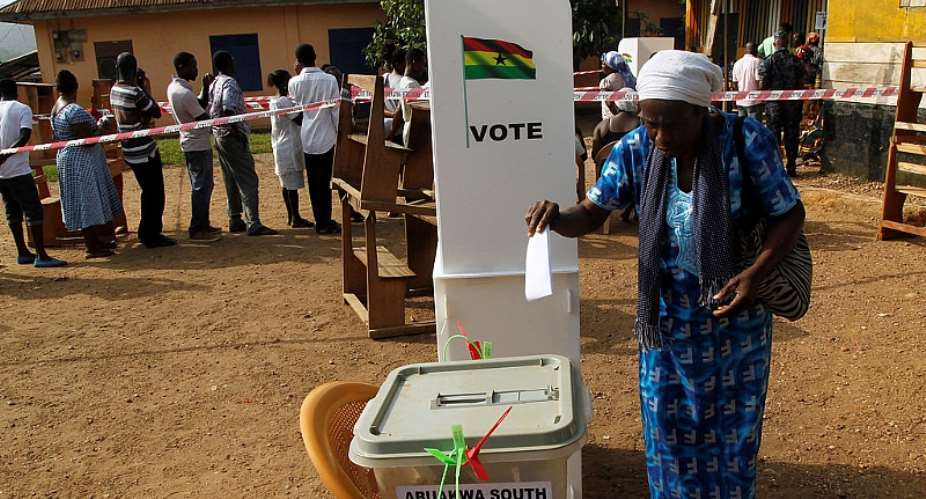
Democracy, at its core, is a system of government in which political power rests with the people, who exercise it either directly or through elected representatives.
This principle is not merely a philosophical abstraction; it is the foundation upon which legitimate governance is built. When the people are denied the right to choose their leaders freely, or when their collective will is constrained by mechanisms that override their preferences, the very essence of democracy is undermined.
In Ghana, the debate over presidential term limits has brought this tension into sharp focus, raising fundamental questions about who ultimately decides the fate of a nation's leadership.
The argument that denying Ghanaians the opportunity to select the president they want because of term limits is undemocratic deserves serious consideration.
Term limits, while often justified as safeguards against authoritarianism, can also function as restrictions on the sovereign will of the people.
If a majority of citizens believe that a particular leader has served well and wish to see that leadership continue, should constitutional provisions stand in the way of their collective choice? Democracy is not served when legal frameworks become instruments that frustrate popular will rather than express it.
Critically, the 1992 Constitution of Ghana is not a static document. It provides mechanisms for its own amendment to reflect the evolving will of the people.
The framers of the Constitution recognised that circumstances change, that leadership needs evolution, and that the people must retain the ultimate authority to shape their governance.
The amendment process exists precisely because no constitutional arrangement should be so rigid that it cannot respond to the expressed desires of the citizenry. To argue otherwise would be to treat the Constitution as a tool of restriction rather than an expression of popular sovereignty.
The threshold for a successful referendum is deliberately demanding, ensuring that any constitutional change enjoys broad, genuine support.
At least forty percent of registered voters must turn out to vote, and at least seventy-five percent of those voting must approve the amendment.
These requirements are not obstacles; they are guarantees that any amendment reflects a clear and overwhelming national consensus. The process is designed to protect against hasty or narrow changes while still allowing the people to exercise their democratic right to decide.
Every citizen of a country wants favourable economic conditions for a better living. Given what President John Dramani Mahama has accomplished in less than two years, some Ghanaians genuinely want the Constitution amended so that he can continue his good leadership.
This is not an unreasonable desire; it is a natural response to tangible progress. Power resides in the people, and when they see results that improve their lives, they should have the right to express their preference through democratic means. Let the people of Ghana decide through a referendum.
The path forward is clear and constitutionally sound. Rather than foreclosing debate or allowing legal technicalities to silence popular sentiment, Ghana should trust its citizens to make informed decisions about their own future.
The referendum mechanism exists for exactly this purpose. If the people wish to amend the Constitution to allow a particular leader to continue, they should be given the opportunity to do so through a process that ensures their voice is heard clearly and decisively.
Ultimately, democracy flourishes when institutions serve the people rather than constrain them. The 1992 Constitution's amendment provisions demonstrate the wisdom of allowing for evolution and change.
The threshold for referendum success is appropriately high, ensuring that only genuine national consensus leads to constitutional change.
Let the people of Ghana exercise their sovereign right. Let them decide through a referendum whether they wish to amend their Constitution. Power resides in the people, and that power should never be denied.
Anthony Obeng Afrane


 BoG Governor tells Queen Máxima about Ghana’s digital finance gains for business...
 Foreign Affairs Ministry pledges support to family of Ghanaian PhD graduate kill...
 Number of Ghanaians living abroad rises to 293,416 in 2021
 How father and son allegedly beat 31-year-old man to death over cocoa beans at A...
 Ghana, Trinidad and Tobago explore joint mechanism for reparatory justice engage...
 24-year-old Ghanaian found dead in New York, days after teenager’s murder
 Bread shortage threatens to plunge more Sudanese into hunger
 South Korea to deploy military mission to keep Strait of Hormuz open
 How Chinese AI is censoring the controversy around Mbappé’s Chairman Mao comment...
 ‘We tasted death’ – Lil Win recounts terrifying PassionAir flight incident with ...


