




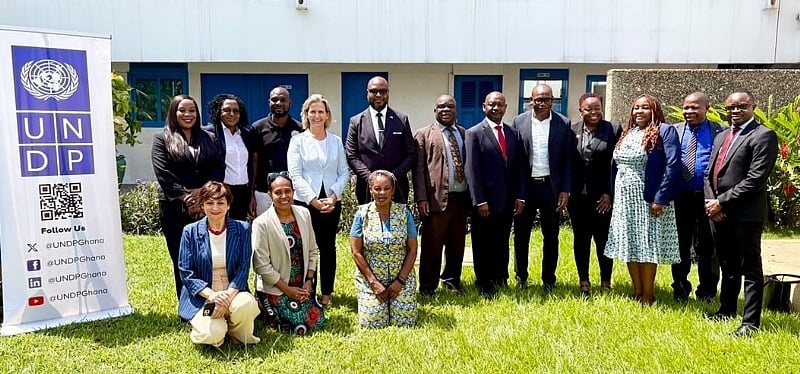
Managing mineral resources responsibly and ensuring that they benefit people and communities were the main focus of a week-long learning exchange between Ghana and Malawi, held from 24 to 30 October 2026 as part of the United Nations Development Programme’s (UNDP) South-South Cooperation engagements.
The Malawi delegation, led by the country’s Minister of Mining, Hon. Thoko Tembo, comprised government officials and technical experts who engaged with key institutions in Ghana's mining sector to learn from the country's experiences and gain practical insights into responsible mineral resource management.
The visit, facilitated by UNDP Ghana in collaboration with UNDP Malawi and the Government of Malawi, provided an opportunity for Malawi to learn from Ghana's experience in domestic gold purchasing, mineral sector regulation, responsible sourcing, investment promotion, environmental protection and mineral revenue management.
The exchange also highlighted the importance of South-South Cooperation, which enables developing countries to share knowledge, experiences and practical solutions to common development challenges.
Building a Shared Understanding of Mining Governance
The knowledge exchange programme began with engagements at the UNDP Ghana Country Office, where the visiting team interacted with colleagues working on environmental sustainability, natural resource governance and mineral sector development.
Discussions included Ghana's ongoing work under the GOLD+ project and efforts to strengthen critical minerals governance. These initiatives provided useful background on how Ghana is addressing challenges related to responsible mineral production, environmental sustainability, institutional coordination and inclusive participation in the mining sector.
The visiting team also paid a courtesy call on Ghana's Minister for Lands and Natural Resources, Hon. Emmanuel Armah-Kofi Buah. The engagement provided an opportunity to discuss the role of mining in national development and the importance of strong institutions, responsible investment and cooperation between African countries.
These initial engagements helped establish a common understanding of the opportunities and challenges facing the two countries and set the stage for more detailed technical discussions.
Understanding Ghana's Domestic Gold Purchasing System
One of the main areas of interest during the exchange was Ghana's experience in developing and managing domestic gold purchasing arrangements.
During technical engagements with the Bank of Ghana and the Ghana Gold Board (GoldBod), participants explored the structure and operation of Ghana's domestic gold purchasing system, including the roles of different institutions and the financial arrangements required to support its implementation.
The discussions examined how gold purchasing programmes can contribute to national economic objectives, including strengthening gold reserves, supporting foreign exchange management and improving the organisation of domestic gold markets.
Participants also considered the practical challenges involved in operating such systems. These included how purchases are financed, how payments are settled, how financial and operational risks are managed, and how responsibilities are shared between institutions.
Particular attention was given to the importance of clear institutional mandates, effective financial controls and proper coordination among the central bank, gold purchasing institutions, commercial banks and other relevant agencies.
For Malawi, these discussions provided an opportunity to examine the institutional and financial considerations that may be relevant when developing or strengthening its own domestic mineral purchasing arrangements.
The engagements also demonstrated that establishing a gold purchasing system requires more than creating an institution. It involves reliable financing, appropriate risk management, transparent procedures and strong oversight to ensure that the system can operate effectively and sustainably.
Promoting Transparency and Accountability in the Minerals Sector
Transparency in mineral resource management was another important area of discussion. During an engagement with the Ghana Extractive Industries Transparency Initiative (GHEITI), the visiting team learned about Ghana's approaches to improving transparency and accountability in the extractive sector.
Discussions focused on the importance of making information about mineral revenues, payments and institutional responsibilities available to support public accountability.
Participants also explored how reporting arrangements and cooperation among government institutions, mining companies and other stakeholders can help improve oversight of the sector.
The session highlighted the need for governments to understand not only how much revenue is generated from mineral resources, but also how these revenues are collected, reported and used.
These lessons were particularly relevant to discussions on strengthening public confidence in the management of mineral wealth and ensuring that the benefits of extraction contribute to national development.
Creating Opportunities for Local Businesses and Investment
Beyond mineral production and revenue collection, the exchange examined how mining can create wider economic opportunities.
Technical sessions with the Ghana Chamber of Mines, Ghana Association of Banks and Ghana Investment Promotion Centre (GIPC) explored the connections between mining operations, local businesses, financial institutions and investment.
At the Ghana Chamber of Mines, discussions considered how mining companies can support local suppliers and service providers through procurement opportunities, supplier development and stronger business relationships.
Participants explored the requirements that local businesses must meet to participate in mining supply chains, including quality standards, technical capacity, reliable delivery and compliance with industry requirements.
The discussions also highlighted opportunities to strengthen relationships between large-scale mining companies, artisanal and small-scale mining operators, and small and medium-sized enterprises.
An important lesson was that increasing local participation requires deliberate efforts to prepare businesses to meet the needs of the mining industry. This includes training, access to information, improved production capacity and opportunities to connect with potential buyers.
Access to finance was another major issue discussed during the engagement with the Ghana Association of Banks. Participants examined the financing challenges faced by local businesses seeking to supply goods and services to mining companies. These include the need for working capital, equipment financing and suitable financial products that respond to the needs of mining-related businesses.
The discussions explored how banks and mining companies can work together to improve financing opportunities, including arrangements linked to purchase orders, invoices and equipment acquisition.
At GIPC, attention turned to the conditions needed to attract responsible investment into the minerals sector. The engagement explored investment opportunities in mineral processing, value addition and related industries, as well as the infrastructure, skills, technology, financing and market access required to make such investments viable.
Together, these sessions demonstrated that the contribution of mining to national development can extend beyond the extraction and export of minerals. With the right policies and partnerships, mining can create opportunities for local manufacturing, service delivery, employment and business growth.
Seeing Responsible Mining Practices on the Ground
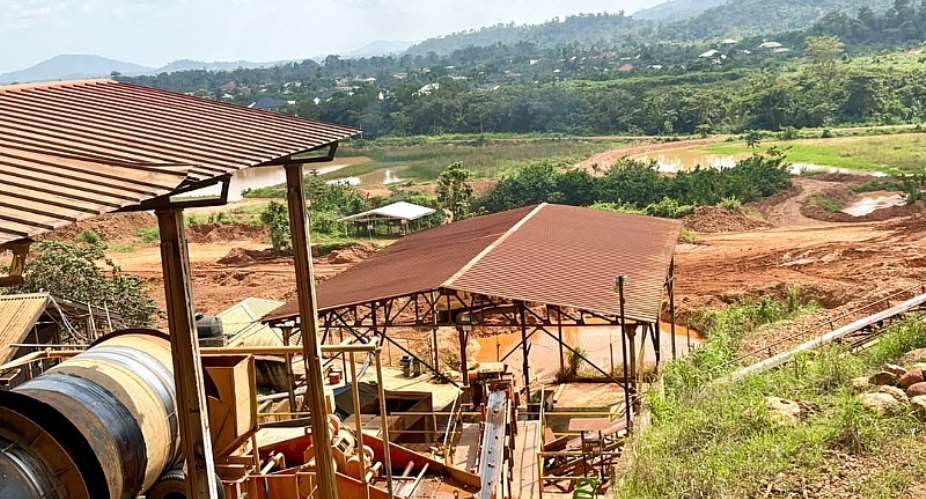
A key part of the exchange was a field visit to Kibi Goldfields Limited in Osino, Ghana's Eastern Region, with support from the Environmental Protection Authority (EPA).
The visit provided an opportunity for the Malawi team to gain practical insights into mining operations, environmental management and the measures taken to reduce the environmental impact of mining activities.
One important area of discussion was land reclamation and rehabilitation, particularly how land disturbed by mining activities can be restored and made suitable for future use. Participants learned about the importance of rehabilitating mined areas, restoring vegetation and managing affected land to reduce long-term environmental damage.
Discussions also covered environmental compliance, protection of water resources and workplace health and safety. These provided insights into the responsibilities of mining companies and the role of regulatory institutions in ensuring that mining activities meet environmental and safety standards.
The field visit helped participants understand how mining regulations are applied in practice and highlighted the importance of planning for land restoration as part of responsible mining operations.
Addressing Illegal Mining and Environmental Damage
Environmental protection emerged as a key priority in the final technical engagements, underscoring its importance to sustainable resource management and long-term development.
. Representatives from Ghana's Environmental Protection Authority (EPA) met with the visiting team to share the country's efforts to address illegal mining, protect water bodies and restore lands affected by mining activities.
The discussions explored the challenges involved in tackling illegal mining and the roles of different institutions in monitoring mining activities and enforcing environmental regulations as part of the solution. Particular attention was given to the need to address not only those directly involved in illegal mining but also the individuals and businesses that finance, supply equipment or support these operations.
Participants also examined the practical challenges of restoring degraded lands and polluted water bodies, including the funding, technical expertise and coordination required. Other areas covered included environmental permitting, mercury management and the responsibilities of mining companies in meeting environmental standards and rehabilitating affected areas.
The engagement further highlighted the importance of linking environmental compliance to access to formal gold markets and financing as a way of encouraging responsible mining practices.
Overall, the discussions emphasised the need for stronger collaboration among regulatory institutions, mining operators and local communities to address environmental challenges and promote responsible mining.
Ensuring Mineral Revenues Benefit Communities
Another major lesson from the exchange concerned how revenues generated from mining can contribute to development, particularly in communities affected by mineral extraction.
During an engagement with the Minerals Development Fund (MDF), participants learned about its institutional arrangements and the importance of transparency and accountability in the management of mineral revenues, as well as Ghana's arrangements for managing and distributing mineral revenues intended to support development in mining communities.
Participants also examined how mineral revenue-sharing mechanisms can help support community development and strengthen the relationship between mining activities and the people living in mining areas.
The success of mineral resource management should not be measured only by production levels or government revenueIt should also consider whether communities experience meaningful improvements in their livelihoods, infrastructure and access to development opportunities.
For Malawi, the discussion provided useful lessons on the institutional arrangements and accountability measures that can help ensure mineral wealth contributes to local and national development.
Turning Lessons into Action
The week-long exchange concluded with a debrief session, where participants reflected on the knowledge and practical experiences gained from their engagements with Ghana's mining institutions and the field visit.
Malawi's Minister of Mining, Hon. Thoko Tembo, who led the delegation, had earlier welcomed the opportunity to learn from Ghana's experience. He emphasised the importance of understanding both the progress Ghana has made and the challenges it has faced, particularly in regulating artisanal and small-scale mining and improving access to finance for mining businesses.
According to the Minister, these experiences would help Malawi identify practical approaches and avoid similar challenges as it works to develop its own mining sector.
Reflecting on the exchange, Ted Sitima Wina, Senior Economist, UNDP Malawi, also highlighted the importance of seeing how Ghana's mining policies are implemented in practice.
"What stood out most was seeing how Ghana puts mining policies into practice. We are taking home valuable lessons on responsible mineral management and practical ideas to strengthen our systems and ensure mining delivers greater benefits to our people."
The reflections highlighted the value of learning directly from institutions responsible for managing mineral resources. Key lessons included the need for stronger coordination among institutions, effective financial management, greater support for local mining businesses and improved environmental protection.
Participants also recognised the importance of transparent mineral revenue management and ensuring that mining communities benefit from the resources extracted from their areas.
The exchange provided Malawi with practical experiences and approaches it can consider as it strengthens its mining institutions and works towards a more responsible and sustainable minerals sector.
Strengthening African Cooperation for Sustainable Development
The Ghana–Malawi South-South Learning Exchange demonstrated how cooperation between African countries can support practical solutions to shared development challenges.
By bringing together government institutions, regulators, financial sector representatives and mining industry stakeholders, the programme created opportunities for direct learning and the exchange of experiences across different areas of mineral resource governance.
The engagements provided insights into the institutional, financial, environmental and economic considerations involved in building a responsible and well-managed minerals sector for Malawi.
For Ghana, the exchange offered an opportunity to share experiences, including the practical challenges and lessons associated with managing mineral resources.
Through continued knowledge sharing and cooperation, initiatives such as this can help countries strengthen their institutions, improve resource governance and promote mineral sector development that creates economic opportunities while protecting people and the environment.
The exchange reaffirmed a shared development priority: ensuring that Africa's mineral wealth is managed responsibly and contributes to lasting benefits for present and future generations.
Source: UNDP

 'Ghana should also organise midterm elections to boot out lazy MPs' – Solomon Ow...
 Learn AI or risk being left behind – A Plus advises Ghanaians
 ‘We tasted death’ – Lil Win recounts terrifying PassionAir flight incident with ...
 I wouldn’t be surprised if motorists challenge TraffiTech-GH in court – Martin K...
 Ghana demand justice over second citizen killed in New York within a week
 TraffiTech-GH: 'If the fines are too expensive, then do not speed' – Mahama
 Roads not perfect in UK yet they have speed cameras; we can't wait for perfect r...
 Council of State needs revamp — Cletus Avoka
 GFA President urges Parliament to reverse ban on alcohol sponsorship of sports
 Minority accuses Bagbin of parliamentary bullying over Jinapor’s ejection


