




The Federal Government obviously does not need anyone to remind it that the growing agitation by the Joint Health Sector Unions (JOHESU) over the long-standing demand to adjust the Consolidated Health Salary Structure (CONHESS) deserves urgent attention. This is not an issue that should be treated with indifference, bureaucratic excuses or unnecessary political maneuverings. It concerns the welfare, dignity and professional recognition of thousands of Nigerian health workers whose contributions to the survival and well-being of citizens cannot be overemphasized. More importantly, it concerns the lives of ordinary Nigerians who depend on public hospitals for medical attention. The Federal Government must do everything within its power to avert another industrial crisis in Nigeria's health sector.
JOHESU's reported frustration over the delay in implementing the CONHESS adjustment, a dispute said to have persisted for approximately 13 years, should worry every well-meaning Nigerian. Thirteen years is a remarkably long time for a matter affecting the welfare of essential public servants to remain unresolved. No responsible government should allow an industrial disagreement of this magnitude to linger for so long, particularly in a sector as sensitive as healthcare. The Federal Government must appreciate that behind every union demand are workers, families, professional expectations and legitimate concerns about fairness, remuneration and working conditions.
While the Federal Government has a responsibility to manage public finances prudently and ensure that salary adjustments are sustainable, it must also recognise that healthcare workers are not ordinary employees whose absence from work can be accommodated without serious consequences. They occupy a critical position in society. Their services are indispensable, and their daily responsibilities often involve decisions and interventions that determine whether patients live or die. Consequently, any disagreement between government and health sector unions must be handled with exceptional sensitivity, understanding and urgency.
The danger of medical personnel embarking on industrial action, for whatever reason, cannot be overstated. Unlike many other sectors where industrial action may result primarily in financial losses, delays in production or inconvenience to consumers, a strike in the health sector can have devastating and irreversible consequences. A patient who requires emergency surgery cannot always wait until negotiations between government and unions are concluded. A pregnant woman experiencing complications cannot suspend her medical emergency because health workers are on strike. A child suffering from a severe infection, a road accident victim requiring urgent attention, or a patient battling a life-threatening condition may not have the luxury of time.
Every hour that essential medical services are disrupted can increase the risk of complications, suffering and avoidable deaths. Patients requiring dialysis, cancer treatment, blood transfusions, intensive care and other life-saving interventions are particularly vulnerable. Many Nigerians who rely on government-owned hospitals have limited financial capacity to seek alternatives in expensive private healthcare facilities. For such people, the public hospital is often their only hope. When that hope is compromised by an industrial dispute, the consequences can be tragic.
It is therefore important that both government and JOHESU appreciate the enormous responsibility they carry. However, the greater responsibility rests with the Federal Government to demonstrate leadership, provide solutions and prevent the situation from deteriorating. Government has the authority, institutional capacity and responsibility to convene negotiations, examine the issues, make necessary concessions and develop a realistic implementation framework. It should not wait until workers down their tools before taking their grievances seriously. The Federal Government must also understand that industrial harmony in the health sector cannot be achieved through the mere suppression of workers' demands or appeals for patience. Genuine industrial harmony is built on fairness, mutual respect, transparency and the willingness of all parties to honour agreements. Where workers believe that their concerns have been ignored for years, repeated appeals for patience may eventually lose their persuasive force. Government must demonstrate, through concrete action, that it values the contributions of all categories of healthcare professionals.
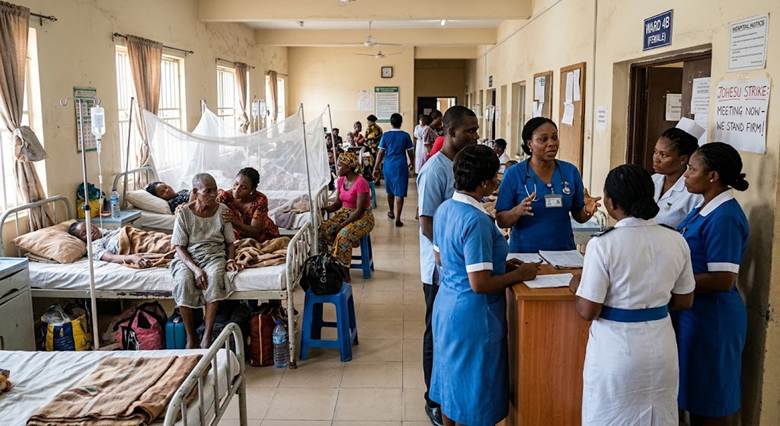
It is equally important to recognise the diverse professionals who make the Nigerian healthcare system function. Doctors are indispensable, but they do not work in isolation. Nurses, pharmacists, medical laboratory scientists, radiographers, physiotherapists, health information managers, environmental health officers and numerous other professionals contribute to the delivery of quality healthcare. From diagnosis and medication management to patient monitoring, rehabilitation, infection prevention and emergency response, the healthcare system depends on the collective efforts of these professionals.
No category of healthcare worker should feel that its contribution is being deliberately undervalued. A functional hospital is the product of teamwork, professional competence and interdependence. The absence of any critical component can affect the quality and efficiency of patient care. Government must therefore approach the CONHESS issue with a clear understanding that the welfare of non-physician health professionals is an important part of strengthening the entire healthcare system.
There is also a broader national interest at stake. Nigeria is already struggling with significant healthcare challenges, including inadequate infrastructure, shortages of skilled personnel, medical migration, poor funding and unequal access to essential health services. The country can ill afford another prolonged disruption of public healthcare delivery. At a time when retaining experienced health professionals should be a national priority, allowing avoidable industrial disputes to undermine workers' morale would be counterproductive.
The continuing migration of Nigerian healthcare professionals to other countries should serve as a warning. Many skilled personnel leave because of concerns about remuneration, working conditions, professional recognition and opportunities for career advancement. Government should be making every reasonable effort to encourage these professionals to remain in the country and contribute to improving the health system. Allowing longstanding disagreements over salary structures to escalate into industrial action sends the wrong message to existing workers and those considering a future in the profession.
This is why the Federal Government should please listen to JOHESU. Listening does not necessarily mean accepting every demand without examination. It means creating a genuine platform for dialogue, taking workers' concerns seriously and demonstrating a sincere commitment to resolving outstanding issues. If there are financial or administrative constraints affecting the implementation of the CONHESS adjustment, government should explain them transparently and present a credible, time-bound roadmap for addressing the matter. What workers need is not another round of indefinite assurances but a clear indication that their concerns are receiving the attention they deserve.
The Ministry of Health and Social Welfare, the relevant government agencies and the leadership of JOHESU should urgently intensify consultations. Such discussions should be conducted in good faith, without threats, intimidation or unnecessary political interference. Both parties must be prepared to make reasonable compromises in the overriding interest of the nation. Government should also ensure that any understanding reached is properly documented, communicated and implemented within agreed timelines. There must be no repetition of the unfortunate situation in which agreements are reached but implementation is subsequently delayed.
JOHESU, on its part, should continue to explore every available avenue for peaceful engagement and appreciate the vulnerability of patients who would bear the greatest burden of any industrial action. The right of workers to seek improved welfare and defend their professional interests is recognised, but the human consequences of a prolonged healthcare shutdown must remain a major consideration. Industrial action in healthcare is never an ordinary labour dispute; it places lives and public confidence in the health system at great risk.
The responsibility for preventing such a crisis is shared, but government must lead the way. It is not enough to appeal to health workers to remain patient while their concerns continue to linger. The government must show that it understands the urgency of the situation and is prepared to take practical steps towards a lasting resolution.
Nigeria's public healthcare system needs stability, motivated personnel and a workforce that feels respected and fairly treated. It does not need another strike, another round of avoidable suffering or another opportunity for frustrated professionals to consider leaving the country. The Federal Government should therefore rise above bureaucratic delays and give JOHESU a listening ear.
The time to act is now. Let the government engage, negotiate and resolve the outstanding CONHESS issues before they degenerate into another industrial confrontation. No salary disagreement, administrative bottleneck or failure of communication should be allowed to threaten the delivery of essential healthcare services to millions of Nigerians.
The lives of ordinary citizens must never become collateral damage in a dispute that responsible leadership and sincere dialogue can resolve. The Federal Government should please listen to JOHESU. It is in the interest of the workers, the government, the Nigerian healthcare system and, above all, the millions of Nigerians whose lives depend on uninterrupted access to medical care.


 NPP accuses Mahama govt of abandoning Bolga–Bawku–Pulmakom road while prioritisi...
 Close to 300 unqualified persons including drug traffickers hold diplomatic and ...
 US midterm elections must serve as a lesson to NDC – Osahen Afenyo-Markin
 Sammi Awuku earns LL.M. in international energy law
 Speaker Bagbin defends decision to eject Abu Jinapor, dismisses Minority walkout...
 'I cannot be intimidated by any caucus' – Speaker Bagbin warns
 Sam George pushes for probe into Ningo-Prampram military brutalities
 Democrats warn Trump camp to ‘lawyer up’ as anger over corruption drives midterm...
 'They must be sacked now' – NPP demands dismissal of NACOC, GACL, GPHA, National...
 AMA gives traders 48 hours to vacate unauthorised bus stops ahead of enforcement


