




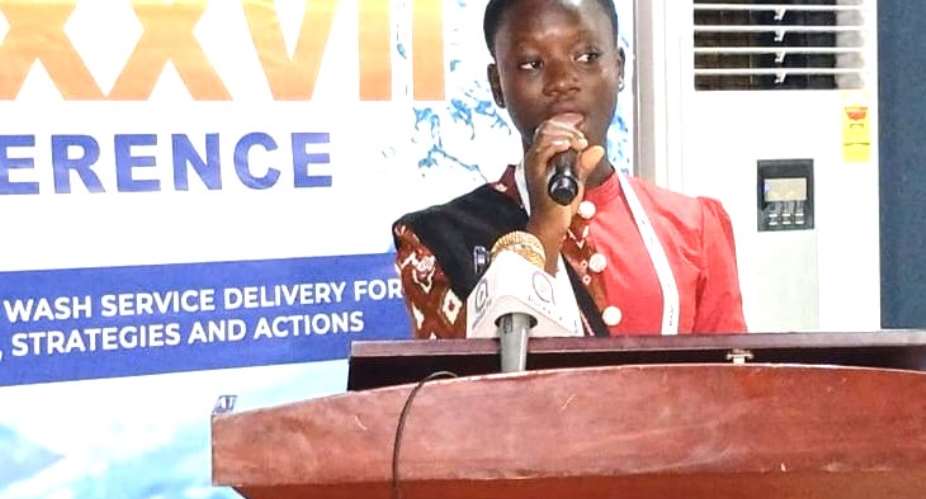
The Reigning Child Sanitation Diplomat, Miss Nabeeha Erasoung Sulemana Atiah, has reminded national leaders that children are always the first and hardest hit by lack of safe Water, Sanitation, and Hygiene (WASH) services, with climate change worsening the crisis daily in last-mile communities.
Delivering a solidarity message at the opening of the 37th MOLE WASH Conference (MOLE XXXVII) at Aqua Safari Resort, Ada Foah, Miss Atiah, said she spoke on behalf of all Ghanaian children, especially those living in the most vulnerable, hard-to-reach, and last-mile communities.
The conference is being held from November 1st to 6th, 2026, and is on the theme "Accelerating Climate-Resilient WASH Service Delivery for Last-Mile Communities: Options, Strategies, and Actions" building on the deliberations of MOLE XXXVI.
The opening ceremony was chaired by Nene Agudey Obichere III, Mankralo of Ada State, on behalf of the Paramount Chief of Ada Traditional Area.
The Media Coalition Against Open Defecation (M-CODe), through the empowerment of World Vision Ghana, is providing a strategic and targeted communication platform for the conference, ensuring national visibility and citizen engagement.
“It is a great honour and privilege to stand before you today on behalf of all Ghanaian children. On behalf of all past Child Sanitation Diplomats and all children across Ghana, I bring you warm greetings and heartfelt appreciation for giving us space, one more time, to share our opinion,” she said.
“We extend our deepest gratitude to CONIWAS, especially for continuously ensuring that the voice of the Ghanaian child is heard wherever national policies, strategies, and actions are being shaped,” she added.
Miss Atiah expressed profound appreciation to strategic partners sustaining child advocacy platforms, including World Vision Ghana, Kings Hall Media, Zoomlion Foundation, School Health Education Programme (SHEP) of the Ghana Education Service, and the Ministry of Local Government, Chieftaincy and Religious Affairs, for creating and sustaining the School Sanitation Solutions Challenge, the Children Sanitation Festival, and the Child Sanitation Diplomat campaign.
She said the advocacy journey by children for safe, clean, and dignified living environments has been made possible by their unwavering commitment.
Reflecting on the conference theme, the Child Diplomat said the reality must be admitted that children suffer most when WASH fails and climate change is making it worse.
“In our last-mile communities, climate change is our daily reality. When heavy rains submerge pit latrines, or sweep away everything from open defecation fields, our drinking water sources become contaminated with dangerous waste,” she explained.
“When droughts dry up our streams, children are forced to walk long distances early in the morning in search of water, risking personal safety and missing vital school hours. When schools lack climate-resilient, gender-friendly toilets, adolescent girls are forced to stay home for a couple of days every month.”
“For us, clean water and safe sanitation are fundamental rights that protect our health, preserve our dignity, and safeguard our future,” she stressed.
In a purposeful reframing of the appeal, Miss Atiah urged leaders, development partners, and the private sector to stop viewing investment in climate-resilient WASH for last-mile communities as charitable or social expense.
She argued that while it may be difficult to recover investment in monetary terms directly, it creates numerous local business and livelihood opportunities and galvanizes the local economy.
“With access to improved water, for instance, our parents are now able to produce more hygienic local beverages and dishes for sale in market centres to earn something to feed us better and support our education,” she said.
“With improved availability of water and access to safe sanitation, our parents are also able to save more time to engage in productive ventures and reduce their health bills to support Ghana's economy.”
“Every cedi invested in safe water and resilient sanitation yields immediate and massive economic returns for our local communities and the nation,” she declared.
She added that climate-resilient infrastructure also protects national investments by preventing the recurring economic cost of repairing or replacing destroyed facilities every year.
“Building WASH systems that withstand floods and droughts prevents recurring costs. Proactive investment today guards against disaster management emergency costs tomorrow,” she said.
Miss Atiah seized the MOLE platform to make a direct demand on behalf of Ghanaian children.
“We, children of Ghana, therefore, wish to seize the opportunity of this forum to call for immediate and unconditional access to safe and climate-resilient WASH infrastructure and services everywhere irrespective of the difficult conditions and location of any community in the country,” she said.
“There is a big economic opportunity that will be unlocked, so even if private investors feel reluctant to go, the government must go there and reap economic returns for the benefit of Mother Ghana,” she urged.
She wished CONIWAS, organizers, special guests, resource persons, and participants successful deliberations with practicable conclusions.
The MOLE Conference, convened by CONIWAS since 1989, remains Ghana's foremost multi-stakeholder platform for shaping WASH policy, strengthening practice, and advancing rights to safe water and dignified sanitation, with this year's edition focusing deliberately on climate resilience and equity for last-mile communities.

 Moscow strikes Kyiv as Ukraine prepares for talks with Russia and the US
 Ousted Paraguay president under house arrest after bank collapse
 Trump announces immigration hardliner Stephen Miller as new chief of staff
 Pope Leo arrives in Uruguay for first stop on 12-day South America tour
 No proxy voting, strict 7am to 5pm schedule – NDC outlines measures for Northern...
 Efya marries Nigerian singer Tomi Thomas in traditional ceremony
 Motorists are becoming more responsible after TraffiTech deployment – NRSA
 Mahama to open Ghana Armed Forces critical care and emergency hospital
 Viral shoplifting suspect busted at Akode near Somanya
 What Trump’s midterms debacle could mean for US support for Ukraine


