




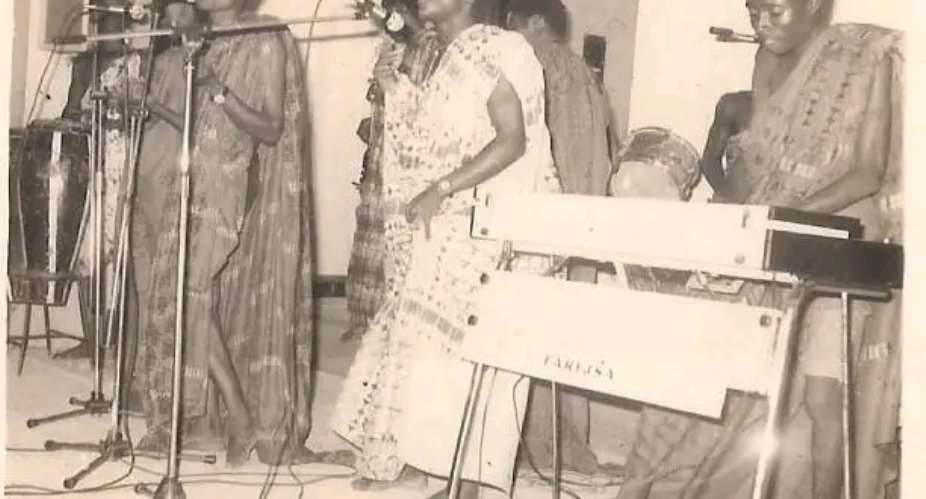
Long before modern talent competitions, digital music platforms and social media transformed Ghana's entertainment industry, secondary schools across the country were producing remarkable musical talents through school bands, entertainment programmes and inter-school music competitions. During the 1960s, 1970s and 1980s, these activities became an important part of student life, providing opportunities for young musicians to demonstrate their creativity, confidence and artistic abilities.
One of the memorable features of this period was the popular Pop Chain music culture, including the Ananse Krom Popchain competition, remembered by former students as an exciting platform for musical rivalry among secondary schools. Associated in alumni recollections with the Ghana Broadcasting Corporation (GBC), the competition brought together talented student musicians and helped generate considerable enthusiasm for contemporary popular music.
Among the schools that contributed to this vibrant musical culture was Abuakwa State College (ABUSCO), an institution whose reputation extended beyond academic achievement into sports, entertainment, cultural activities and student leadership. Guided by its proud Susubiribi spirit, ABUSCO developed a strong tradition of musical expression, with its celebrated student band, Sticky Fingers, becoming one of the most memorable symbols of that era.
Sticky Fingers was more than an ordinary school entertainment group. It was a talented musical ensemble whose members demonstrated considerable instrumental ability, stage confidence and a passion for contemporary music. The band drew inspiration from Western rock, pop and psychedelic sounds while incorporating the rhythmic influences of Ghanaian highlife and other African musical traditions.
During the late 1970s, when Pop Chain competitions and school entertainment programmes attracted enthusiastic audiences, bands such as Sticky Fingers represented the creativity and competitive spirit of Ghana's secondary school students. Their performances were not simply opportunities for recreation; they were occasions for schools to demonstrate talent, discipline, teamwork and institutional pride.
For ABUSCO students of that generation, the excitement surrounding Sticky Fingers reflected a wider school culture in which music occupied an important place alongside academic work, sports and extracurricular activities. Rehearsals, entertainment nights and performances brought students together and helped create lasting friendships and memories.
The band's strength lay in its collection of gifted musicians, many of whom became familiar personalities within the school community.
The rhythm section featured George Danso, remembered as a skilled bass guitarist who reportedly later joined the Signals Regiment at Burma Camp. His bass playing provided a solid musical foundation for the group. He was supported by Officer Toro on drums and Iron Starling on percussion and congas, creating the rhythmic energy that characterised the band's performances.
The guitar section was equally impressive. Ametewe, who played both acoustic and Fender electric guitars, contributed to the band's melodic arrangements, while Willie Bobo handled lead guitar duties, adding the expressive solos and instrumental passages associated with popular music of the period.
One of the notable personalities associated with Sticky Fingers was Frankie Lee, identified as Kwasi Ampene, the son of ABUSCO music master Kwame Ampene. His contribution on keyboards helped enrich the band's musical arrangements and demonstrated the influence of formal music education on the development of student talent.
Kwasi Ampene subsequently pursued a distinguished career in music scholarship and became a professor of music in the United States. His academic work has contributed to the study and preservation of African musical traditions, particularly Ghanaian music and Akan cultural heritage.
His journey from the musical environment of Abuakwa State College to international academic recognition illustrates how early exposure to music, mentorship and creative opportunities can influence a young person's future.
The vocal section of Sticky Fingers also featured memorable performers, including Yaw Adu, Bob Cat and Awuku Darlin. Their singing brought personality and excitement to the band's performances, while Papa Alonzo contributed additional rhythm and stage energy through his maracas.
Together, these musicians formed a group that captured the imagination of students and helped establish Sticky Fingers as an important part of ABUSCO's cultural identity.
The popularity of school bands during this period must also be understood within the broader development of Ghanaian popular music. The 1970s witnessed a fascinating interaction between traditional highlife, Western rock, soul, funk and other emerging musical styles. Young Ghanaian musicians were increasingly exposed to international recordings and new instruments, encouraging experimentation and the development of distinctive musical arrangements.
Secondary schools became important centres for this creative exchange. Students learned to play guitars, drums, keyboards and percussion instruments, often through a combination of formal instruction, personal practice and guidance from more experienced musicians.
School bands provided practical training environments in which students could develop musical discipline, learn arrangements, perform before audiences and understand the importance of cooperation.
For many young people, these experiences offered lessons that extended far beyond music.
A successful band required punctuality, regular rehearsals, respect for fellow performers, careful preparation and the ability to perform under pressure. Every instrumentalist had a responsibility to the entire group, and individual talent could achieve its greatest impact only through collective effort.
In this respect, Sticky Fingers represented the educational value of extracurricular activities. The band demonstrated that schools could develop well-rounded individuals by providing opportunities for students to discover and nurture talents outside the classroom.
The Ananse Krom Popchain era also contributed to a healthy sense of rivalry among secondary schools. Musical competitions generated excitement comparable to major sporting encounters, with students supporting their respective school bands and celebrating outstanding performances.
Such events encouraged creativity, confidence and artistic excellence while strengthening relationships among students from different institutions.
Although detailed archival records of the competitions, participating bands and results are not readily available, the memories preserved by former students remain an important source of Ghana's educational and cultural history. These recollections deserve systematic documentation, supported wherever possible by contemporary photographs, recordings, newspaper reports and broadcasting archives.
For the ABUSCO community, the story of Sticky Fingers is particularly significant because it highlights a dimension of the College's history that can easily be overshadowed by accounts of academic performance, sporting achievements and institutional development.
Schools are remembered not only for examination results and distinguished alumni but also for the cultural experiences that shape the identities of generations of students.
The music performed during entertainment nights, the excitement of inter-school competitions and the personalities who brought joy to school gatherings all form part of an institution's living heritage.
Sticky Fingers occupies a special place within that heritage.
As Abuakwa State College approaches its 90th anniversary in 2027, there is an opportunity to recognise and preserve the achievements of the musicians who helped build its cultural reputation.
The anniversary celebrations could provide a platform for documenting the history of Sticky Fingers and other notable school entertainment groups through interviews with surviving members, former students and teachers.
Old photographs, musical instruments, performance programmes, newspaper publications and available audio recordings could be collected to establish a permanent archive of ABUSCO's musical history.
A special reunion or commemorative performance involving former members and contemporary student musicians would also provide an opportunity to connect different generations of Abuscodians through music.
Such an initiative could inspire today's students to appreciate the value of creativity, artistic discipline and cultural expression while strengthening the bond between the College and its alumni.
The experience of Sticky Fingers also offers an important lesson for Ghana's contemporary education system. At a time when discussions about educational development frequently concentrate on examination performance, science, technology and employability, the contribution of music and the creative arts should not be overlooked.
Music develops confidence, teamwork, communication, innovation and emotional expression. It can also open pathways to careers in performance, education, production, entertainment and cultural research.
The achievements of past school bands demonstrate why educational institutions should continue investing in musical instruments, creative arts facilities, qualified instructors and opportunities for students to perform.
For generations of Abuscodians who experienced the Pop Chain era, the name Sticky Fingers continues to evoke memories of youthful enthusiasm, musical excellence and school pride.
The musicians may have belonged to different year groups, but their collective contribution created a cultural legacy that deserves recognition.
Their story reminds us that the greatness of an educational institution is measured not only by the professionals, academics and public figures it produces but also by the opportunities it creates for young people to discover their talents and express themselves.
Sticky Fingers was not merely a school band. It was an expression of the Susubiribi spirit, a celebration of youthful creativity and an important chapter in the musical heritage of Abuakwa State College.
As ABUSCO prepares to celebrate ninety years of existence, the legacy of Sticky Fingers and the excitement of the Ananse Krom Popchain era should be remembered, documented and passed on to future generations.
The instruments may have fallen silent, and the performers may have followed different paths in life, but the memories of their music remain part of the enduring story of Abuakwa State College.
Once an Abuscodian, always an Abuscodian. Susubiribi!


 How the record-breaking $6.3 billion heist in crypto history unfolded
 Paying GH¢5,000 to declare intention to contest as MP amounts to monetisation of...
 NPP will return to power with Bawumia in 2028 – Osahen Afenyo-Markin
 Ghana, Burkina Faso trade about US$1bn annually – Trade Minister
 NPP's new parliamentary aspirant selection process designed to favour Bawumia lo...
 ECOWAS steps up regional efforts to address climate-induced migration
 I was the brain behind La General Hospital reconstruction – Dr Okoe Boye
 2027 budget: Gov't must account for jobs created under 24-hour economy – Prof Bo...
 'Go prove criminality in court, not on TV' — Shamima Muslim tells Minority on So...
 TUTAG suspends nationwide strike, academic work resumes November 2


