




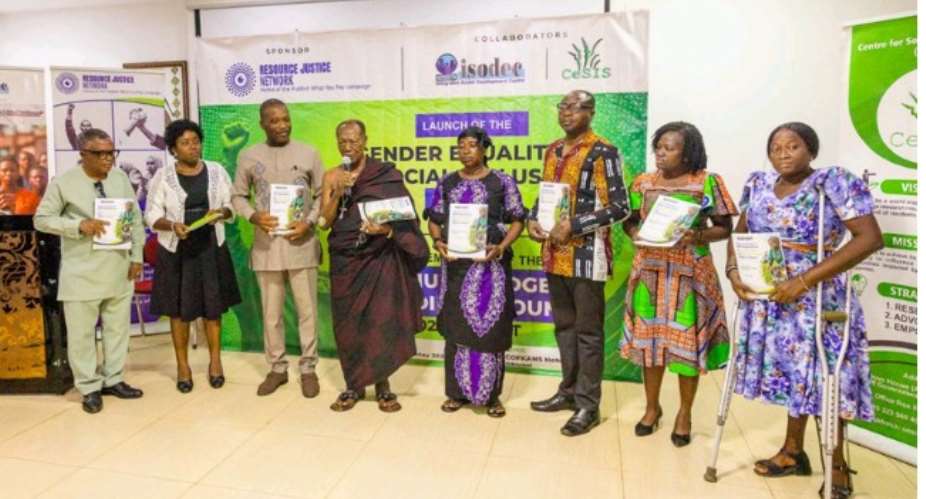
The Integrated Social Development Center (ISODEC) in partnership with the Center for Social Impact Studies (CeSIS) supported by the Resource Justice Network (RJN) has launched a report on the use of Ghana’s petroleum revenues and the extent to which expenditure advances gender equity and social inclusion (GESI).
The report was launched at a sensitization workshop in Obuasi which brought together over 60 stakeholders including representatives of state institutions, civil society organizations, traditional authorities, women and youth groups, persons with disabilities and other community stakeholders.
The study looked at whether the expenditure of petroleum revenue especially the Annual Budget Funding Amount (ABFA) had intentionally been targeted to the needs of women, young people, persons with disability and other vulnerable and marginalized groups.
According to the report, although some groups may benefit indirectly from development projects funded by petroleum revenues, gender equity and social inclusion have not generally been intentionally incorporated into expenditure planning.
Many projects were found to be gender blind with limited disaggregation of data to show participation and benefits of vulnerable groups. It also pointed to poor monitoring systems and delays in disbursement of funds meant to benefit persons with disabilities. The report also found that some communities were unaware of projects implemented with petroleum revenues, raising concerns about transparency, citizen participation and access to information.
The findings point to the need for government and relevant institutions to make gender equity and social inclusion a deliberate component of petroleum revenue management. The report recommends the amendment of the Petroleum Management Act to strengthen the involvement of vulnerable and marginalized groups, as well as the disaggregation of data on petroleum revenue expenditure to demonstrate its impact on different social groups.
Speaking at the event, the National Coordinator of the Resource Justice Network, Mr. Benard Anaba said petroleum revenues were public resources and must be managed transparently and used to improve the lives of all citizens, particularly vulnerable and marginalized groups. He described the launch as timely and urged stakeholders to use the findings to demand more inclusive and accountable management of petroleum revenues.
The Executive Director of CeSIS, Mr. Robert Tanti Ali called for greater consultation with women, persons with disabilities, youth and other excluded groups in the planning and implementation of development projects financed with public resources.
The launch also provided a platform for stakeholders to discuss the practical implications of the findings.
The report was expected to contribute to ongoing advocacy for transparent, accountable and inclusive management of Ghana’s petroleum revenues, ensuring that public resources translate into development outcomes that respond to the needs of all sections of society.
ISODEC Launches Report on Gender Equity and Social Inclusion in Petroleum Revenue Spending
The Integrated Social Development Center (ISODEC) in partnership with the Center for Social Impact Studies (CeSIS) supported by the Resource Justice Network (RJN) has launched a report on the use of Ghana’s petroleum revenues and the extent to which expenditure advances gender equity and social inclusion (GESI).
The report was launched at a sensitization workshop in Obuasi which brought together over 60 stakeholders including representatives of state institutions, civil society organizations, traditional authorities, women and youth groups, persons with disabilities and other community stakeholders.
The study looked at whether the expenditure of petroleum revenue especially the Annual Budget Funding Amount (ABFA) had intentionally been targeted to the needs of women, young people, persons with disability and other vulnerable and marginalized groups.
According to the report, although some groups may benefit indirectly from development projects funded by petroleum revenues, gender equity and social inclusion have not generally been intentionally incorporated into expenditure planning.
Many projects were found to be gender blind with limited disaggregation of data to show participation and benefits of vulnerable groups. It also pointed to poor monitoring systems and delays in disbursement of funds meant to benefit persons with disabilities. The report also found that some communities were unaware of projects implemented with petroleum revenues, raising concerns about transparency, citizen participation and access to information.
The findings point to the need for government and relevant institutions to make gender equity and social inclusion a deliberate component of petroleum revenue management. The report recommends the amendment of the Petroleum Management Act to strengthen the involvement of vulnerable and marginalized groups, as well as the disaggregation of data on petroleum revenue expenditure to demonstrate its impact on different social groups.
Speaking at the event, the National Coordinator of the Resource Justice Network, Mr. Benard Anaba said petroleum revenues were public resources and must be managed transparently and used to improve the lives of all citizens, particularly vulnerable and marginalized groups. He described the launch as timely and urged stakeholders to use the findings to demand more inclusive and accountable management of petroleum revenues.
The Executive Director of CeSIS, Mr. Robert Tanti Ali called for greater consultation with women, persons with disabilities, youth and other excluded groups in the planning and implementation of development projects financed with public resources.
The launch also provided a platform for stakeholders to discuss the practical implications of the findings.
The report was expected to contribute to ongoing advocacy for transparent, accountable and inclusive management of Ghana’s petroleum revenues, ensuring that public resources translate into development outcomes that respond to the needs of all sections of society.

 GoldBod to formalise eligible small-scale miners within six months under new pro...
 Ghana explores local, reginal production of HIV medicines
 Ghana’s economy grows to GH¢1.4 trillion in 2025 but fails to create decent jobs...
 Student denies charges of stealing Bishop Obinim's GH¢1.5million
 There's no dumsor in Ghana, everybody has power — Mahama
 Govt pledges support for family, seek justice for Ghanaian teenager killed in Ne...
 9% pay increment means little if workers cannot afford basic goods – Kwasi Kwart...
 Ghana making financial gains but losing environmental battle against galamsey – ...
 Northern Ashanti Mine takeover: 'Ghana looking like a failed state' – Kofi Benti...


