




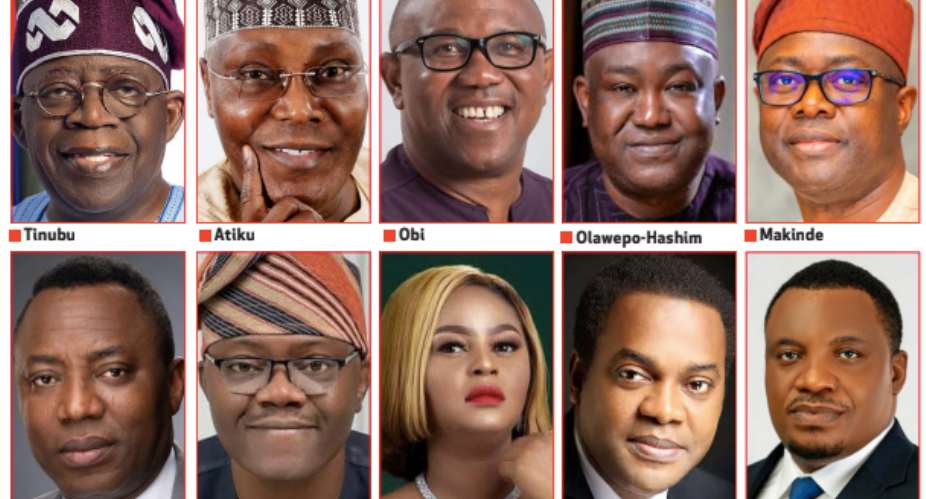
As Nigeria gradually approaches the 2027 general elections, the country is once again entering a familiar season of political calculations, shifting alliances, campaign promises and renewed appeals for public support. Politicians are preparing to convince Nigerians that they deserve another opportunity to occupy public offices, while political parties are mobilising their structures to secure electoral victories. Amid this unfolding political drama, however, one question deserves serious consideration: Have Nigerians learnt enough from their political experiences to make more discerning choices at the ballot box?
This question is important because elections are not merely occasions for political parties to demonstrate their popularity or for candidates to test their electoral strength. They are opportunities for citizens to determine the direction of their country and decide who should be entrusted with the responsibility of managing their collective affairs. Unfortunately, Nigeria's electoral experience has repeatedly shown how primordial sentiments, including ethnicity, religion, regional loyalty and political affiliations, can overshadow considerations of competence, integrity, character and the capacity to deliver good governance.
As the 2027 elections approach, Nigerians must resist the temptation to repeat this pattern. The country cannot afford another electoral cycle in which sentiments take precedence over substance, political loyalty becomes more important than accountability, and the identity of a candidate matters more than what that candidate brings to the table.
There is nothing inherently wrong with identifying with one's ethnic group, religion, geographical region or political party. These are aspects of social and political identity that people are entitled to cherish. The problem arises when such identities become the overriding considerations in determining who deserves to govern. At that point, electoral choices cease to be informed decisions about the future of the country and become exercises in defending primordial interests, sometimes at the expense of the collective wellbeing of Nigerians.
The reality is that hunger does not recognize ethnicity. Poverty does not discriminate between Christians and Muslims. Unemployment does not spare people because they come from a particular geopolitical zone. Neither do insecurity, poor healthcare, inadequate electricity supply, deteriorating infrastructure and the rising cost of living respect political affiliations.
A Nigerian struggling to feed a family, pay school fees, access affordable healthcare or keep a small business afloat experience these challenges regardless of the language spoken at home or the region from which he or she originates. This should be sufficient reason for voters to reconsider the wisdom of allowing primordial sentiments to determine their electoral preferences.
Indeed, the consequences of poor electoral choices are not confined to the political class. They are borne disproportionately by ordinary citizens who must contend with the consequences of governance decisions long after election campaigns have ended. Politicians may enjoy the privileges of public office, but it is the ordinary Nigerian who must endure the consequences of inadequate policies, poor implementation, economic mismanagement and institutional failures.
This is why the 2027 elections should not be approached as another opportunity to reward political loyalty or settle ethnic and religious scores. They should be approached as an exercise in evaluating individuals who seek public office.
Nigerians must interrogate the records of candidates seeking their votes. What have they achieved in previous public assignments? What is their understanding of the country's economic challenges? Can they articulate realistic solutions to unemployment, insecurity, inflation, poor electricity supply and the declining purchasing power of households? Do they demonstrate respect for democratic institutions, the rule of law and accountability? Are their campaign promises supported by credible plans, or are they simply attractive political statements designed to secure votes?
These questions should matter far more than the candidate's ethnic background, religious identity, political godfather or geographical origin.
Similarly, voters must be wary of politicians who invoke ethnic solidarity or religious sentiments whenever their records are questioned. Governance is not an ethnic inheritance, nor is public office a religious entitlement. The responsibility of elected leaders is to serve the entire population, not merely those who share their ancestry, faith or political preferences.
It is equally important that Nigerians distinguish between genuine political achievements and carefully packaged propaganda. The ability to command large crowds, distribute campaign souvenirs, make generous promises or mobilise influential supporters does not automatically translate into the capacity to govern effectively. A candidate's credibility should be established through verifiable records, sound ideas, transparency and a demonstrable commitment to public service.
Another four years of hardship would be too long and too heavy a burden for millions of Nigerians already struggling to survive. For households battling rising living costs, young people searching desperately for employment, businesses struggling against multiple economic pressures and families worried about their security, the consequences of another disappointing electoral outcome could be devastating.
This is not to suggest that any candidate can magically resolve all the country's problems within four years. Nigeria's challenges are complex, deeply rooted and require sustained institutional reforms, responsible leadership and collective commitment. However, this reality makes the quality of leadership even more important. Citizens deserve leaders who understand these challenges, possess credible ideas for addressing them and are prepared to be held accountable for their decisions.
The electorate must also understand that voting is not an act of permanent loyalty. Supporting a candidate does not mean surrendering one's right to question that candidate. Political parties are vehicles for democratic participation, not religious organizations demanding unquestioning allegiance. Likewise, ethnic and regional identities should never become excuses for defending poor performance.
Nigerians must therefore resist political manipulation that encourages them to defend candidates simply because they belong to their ethnic group, worship in their religious congregation or represent their geographical region. A candidate who fails to meet reasonable standards of leadership should be subjected to scrutiny, irrespective of identity. Conversely, a candidate should not be dismissed merely because he or she comes from a different ethnic, religious or regional background.
Ultimately, the future of Nigeria cannot be secured through sentimental attachments to individuals or political parties. It requires citizens who are willing to place the national interest above narrow affiliations and demand accountability from those seeking their mandate.
As 2027 approaches, Nigerians must remember that the ballot is not a ceremonial instrument for expressing ethnic pride, religious loyalty or partisan devotion. It is a powerful democratic instrument through which citizens influence the quality of governance they receive.
The choice before the electorate is therefore bigger than party colours, campaign slogans and familiar political alliances. It is about the kind of leadership Nigerians want and the standards they are prepared to demand from those entrusted with public office.
Four years may appear short in the political calendar, but for a family struggling to survive, a young graduate without employment or a business owner battling to remain afloat, four years of poor governance can feel like an eternity.
Nigerians must not allow primordial sentiments to mortgage their collective future. The 2027 elections should be an opportunity for sober reflection, independent judgement and informed participation. Candidates should be assessed on their merits, records, character, ideas and capacity to serve.
The country has endured enough challenges to make another four years of avoidable hardship a burden too heavy to contemplate. The time has come for voters to look beyond where candidates come from and pay closer attention to what they can genuinely offer Nigeria.


 How the record-breaking $6.3 billion heist in crypto history unfolded
 Paying GH¢5,000 to declare intention to contest as MP amounts to monetisation of...
 NPP will return to power with Bawumia in 2028 – Osahen Afenyo-Markin
 Ghana, Burkina Faso trade about US$1bn annually – Trade Minister
 NPP's new parliamentary aspirant selection process designed to favour Bawumia lo...
 ECOWAS steps up regional efforts to address climate-induced migration
 I was the brain behind La General Hospital reconstruction – Dr Okoe Boye
 2027 budget: Gov't must account for jobs created under 24-hour economy – Prof Bo...
 'Go prove criminality in court, not on TV' — Shamima Muslim tells Minority on So...
 TUTAG suspends nationwide strike, academic work resumes November 2


