




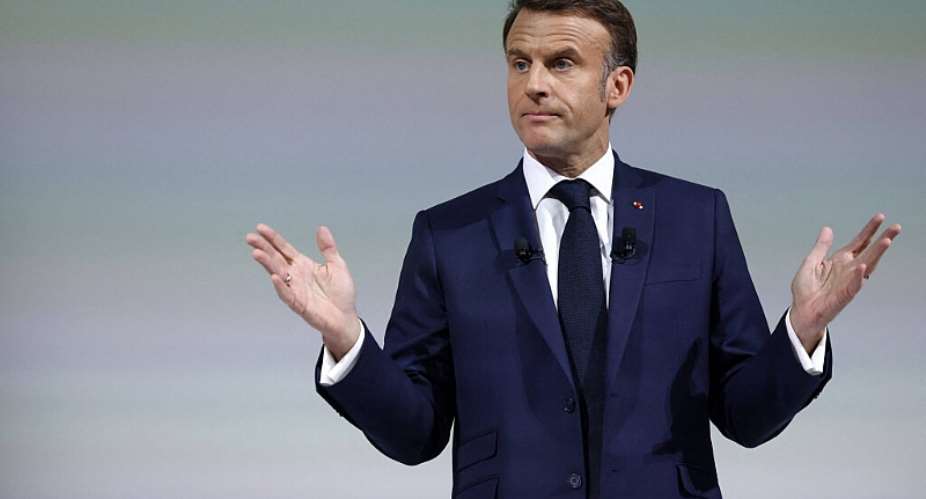
Finally, the ill-fitting mask on the ugly face of government policy comes off. In the sunset of his administration, French President Emmanuel Macron is facing a boiling, indignant movement that began with the protests of disgruntled students and has burgeoned into something much more significant. On September 17, teachers at the Antoine de Saint-Exupéry High School in the southeastern Parisian suburb of Créteil went on strike over severe staff shortages. Students and parents added themselves to the strike. The school entrance was blocked, videos taken, and social media platforms used to disseminate the message. A blooming followed through to October, drawing in some 3,700 schools and hundreds and thousands of protesters. Social, economic and political angst had been stirred, with grievances focused on inadequate provision of teaching, packed classrooms, overburdened schedules and the dilapidation of school infrastructure. The university admissions platform Parcoursup also came in for criticism.
As part of the response to the protests, Macron has, as is traditional with a smug incumbent caught off guard, identified an aggravating, foreign influence steering matters. Conveniently for him, the fault seems to lie with the progenitors of the social media world, those American Big Tech beasts and platforms that have turned users into anything from bovine consumers to adept, resourceful users of technology.
It’s the resourceful aspect of the technology that is proving particularly troubling for government officialdom. As one of the last acts of his administration, France’s desperate leader has attempted to impose age-restrictions on users of social media platforms ostensibly as a therapeutic exercise. In doing so, he has joined a wide tent of invigilating governments keen to use the alleged malignancies of social media as an alibi for controlling access to certain online platforms, a mood captured by the efforts of the European Union to advance the all suppressing EU Kids Act. (Australia was the first to bolt out of the stables last December with its Online Safety Amendment (Social Media Minimum Age) Act 2024, paraded as a noble effort to limit the use of social platforms by those under 16 years of age. Unsurprisingly, it is showing itself to be a foolish legislative bauble, weak and circumvented.)
On July 21, the French parliament adopted the “Loi visant à protéger les mineurs face aux risques associés à l’usage des réseaux sociaux” (Law aiming to protect minors from the risks associated with social media usage), an alleged palliative for the ills (examples include anxiety, depression and sleep disorders) of using social media for those under 15. This exaggerated sense of moral success did not last long. In August, France’s Constitutional Council poured cold water on the government’s grand strategy, striking down the legislation as needlessly broad and hopelessly excessive. The access to the platforms, for instance, was “not subject to any condition relating to the functionalities or content offered, the dangers they expose users, and the inadequacy of the safeguards with which they are provided.” Saliently, the Council noted that the ban encumbered the rights of young people to access information and engage in the democratic system. This meant retarding the useful instruction of children to meaningfully engage the political process on ceasing to be minors. Social networking platforms were not inherently wicked things; they could also serve as educational tools, promote civic engagement and aid in building communities. A chastened Macron proceeded to direct Prime Minister Sébastien Lecornu to make the necessary adjustments in line with the Council’s decision.
The response from Macron to these youth-inspired protests, in light of his stuttering efforts against the corruptions of social media, is a more candid reflection on why governments seek to restrict any platform that adds vim to dissent and disagreement. In remarks made to members of law enforcement during his October 26 visit to Marseille City Hall, the president scorned social media sites for “damaging our democracies” and being “tools for mobilising the worst impulses”. They had brought “young and not-so-young people to places where criminal acts, attacks and looting were taking place.” This imprecise, misleading assessment proved most telling.
In the week leading up to October 24, recent reports reveal that the French interior ministry was putting feelers out to telecom operators regarding restricting access to social networks. Discussions also considered the possibility of restricting mobile internet altogether in specific areas. In simple terms, the Macron administration was considering the very sort of thing it freely accuses non-Western authoritarian governments of doing. According to an unnamed employee from a telecommunications provider, speaking to Politico, “What they wanted, above all, was to block the communication channels that allow gangs to meet up and organize.”
The digital outlet Blast shed much blessed light on the proposed response in obtaining a letter allegedly sent by Lecornu on October 22 to the directors of the four chief telecom companies: Christel Heydemann of Orange, Benoît Torloting of Bouygues Telecom, Thomas Reynaud of the iliad Group, and Arthur Dreyfus of Altice France. The PM sought power to “temporarily suspend access” provided by the companies to Snapchat, TikTok, and Instagram in the event urban violence was to recur. (The X platform was subsequently added to the list.) The directors were to ready themselves for such a temporary suspension to take place over the weekend of October 24 and 25 to avert what had taken place between October 17 and 18, namely, the coordination of organised looting, communication about potential targets, the movement of groups, and the locations of law enforcement.
The minutes of the meeting between high-ranking government officials from the General Secretariat of the government, the PM’s office, the Directorate General for Enterprise and legal experts from the four operators show a lack of consensus. Government suggestions to limit mobile phones to certain areas were rebuffed: the operators did not have the means of imposing limited, temporary blocks. In any case, alternative messaging services, such as a VPN, would suffice to circumvent such measures. The proposed measures were ultimately, and enlighteningly stymied. The fact that they were considered at all shows, yet again, that regulating the internet and its various platforms has little to do with Edenic children or their welfare but much to do about limiting the inconveniences of free speech and the means of protesting against a rotten status quo.
Dr. Binoy Kampmark was a Commonwealth Scholar at Selwyn College, Cambridge. He currently lectures at RMIT University. Email: [email protected]


 October 29: Cedi sells at GHS12.25 on forex market, GHS11.63 on BoG interbank
 Ghana’s mineral wealth must not come at environmental cost – Zanetor
 NPP's SC suit to counter pending suits backing Mahama’s third-term eligibility –...
 No constitutional dispute has arisen to warrant NPP’s suit on presidential term ...
 'NPP has become group of flip-floppers' – Edem Agbana on South Africa evacuation...
 Kufuor explains why his government opted for HIPC despite concerns over Ghana’s ...
 Policewoman who attempted 120-hour painting marathon dies after short illness
 I entered politics in my 20s but became president at 62 – Kufuor
 Accra-Tema Motorway project reaches 53% completion despite delays
 Prisons Service to publish findings on alleged plot to poison Chairman Wontumi


