




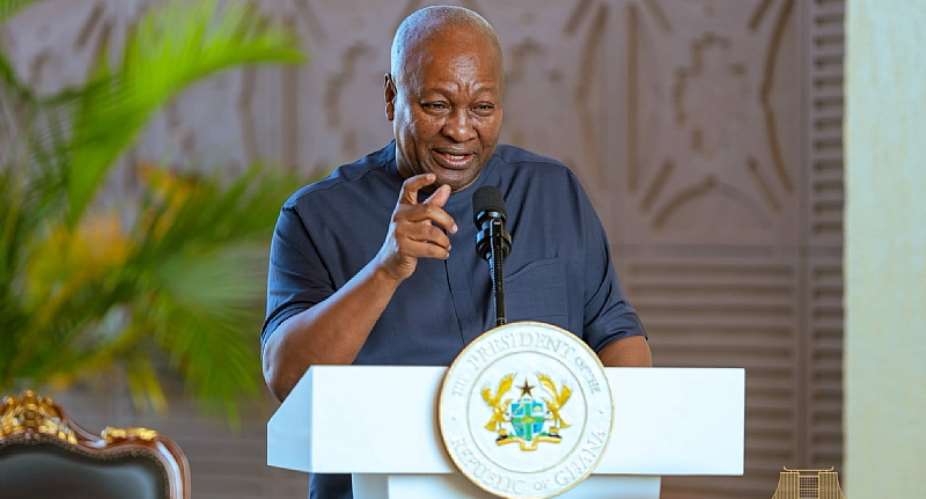
President John Dramani Mahama’s recent announcement in Moscow concerning Ghana’s ambition to extend its railway network towards Burkina Faso is an important development in the country’s transport and regional integration agenda. Speaking during his visit to Russia, the President outlined plans to prioritise the Western Railway Corridor, linking Takoradi Port to Kumasi and eventually extending northwards through Hamile to Bobo-Dioulasso in Burkina Faso.
The significance of this proposal extends far beyond railway construction. It raises a fundamental question about Ghana’s economic future: Can we transform our geographical position along the Gulf of Guinea into a competitive logistics gateway for the landlocked economies of West Africa?
This is not the first time I have drawn attention to the importance of connecting Ghana’s transport infrastructure to the Sahel. In my earlier article, “The Volta Lake Is Waking Up: Ghana Must Not Waste This Moment,” I argued that Ghana must move beyond treating individual railway lines, inland ports and waterways as isolated infrastructure projects. I advocated an integrated logistics corridor linking Tema Port to Mpakadan by rail, continuing through the Volta Lake to Buipe, and connecting onwards to northern Ghana, Burkina Faso and other Sahelian markets. The central argument was simple: Ghana’s transport future lies not merely in constructing infrastructure, but in developing economic corridors that connect ports, production centres, inland markets and neighbouring countries.
President Mahama’s announcement in Moscow reinforces the relevance of that argument. However, the proposed Takoradi–Kumasi–Hamile–Bobo-Dioulasso railway introduces another dimension that deserves serious consideration. For decades, Ghana’s railway development has been heavily influenced by the colonial economic structure, under which railway lines were primarily constructed to transport minerals, timber and agricultural commodities from inland production areas to coastal ports. Although these networks contributed to economic activity, their geographical coverage largely reflected the export priorities of the colonial economy.
Today, Ghana has an opportunity to redefine that railway geography.
Rather than simply rehabilitating the colonial network for its original purpose, the country should transform it into a modern freight and passenger transport system that supports industrialisation, regional trade, agricultural development and economic integration. The proposed Western Railway Corridor offers a practical starting point. Takoradi Port already serves important mineral and agricultural export activities, while the Western and Ashanti regions contain significant industrial and resource-based economic opportunities. A railway connecting these areas to Kumasi and eventually northern Ghana could improve the movement of bulk commodities while creating opportunities for inland logistics terminals, agro-processing facilities, manufacturing centres and distribution hubs. However, the most transformative part of the proposal lies beyond Ghana’s northern border.
Burkina Faso is landlocked and depends on transport corridors through neighbouring coastal countries for access to international maritime trade. A reliable railway connection to Takoradi could provide an additional option for moving imports and exports, including agricultural commodities, industrial inputs, machinery and containerised cargo. For Ghana, the opportunity would extend beyond railway freight revenue. Increased transit trade could stimulate port activity, warehousing, logistics services, freight forwarding, customs operations and investment along the corridor. This is why the proposed railway should not be understood merely as a line connecting Takoradi to Burkina Faso.
It should be planned as an international economic corridor connecting Ghana’s maritime infrastructure to the productive and commercial geography of the Sahel. Nevertheless, there is an important distinction between an ambitious railway vision and a commercially sustainable railway system.
The President’s emphasis on using mineral and agricultural freight to support the financial viability of the railway is understandable. Railways require substantial capital investment, and dependable freight volumes can provide an important foundation for long-term operations. However, the economic case must be supported by rigorous analysis. Government should establish the expected cargo volumes, freight tariffs, competing road transport costs, terminal requirements, maintenance obligations and likely demand from Burkina Faso before committing to successive construction phases.
The railway must be designed around identifiable freight markets rather than the assumption that cargo will automatically materialise once tracks are laid. Equally important is the need for cross-border coordination. An international railway cannot function efficiently if its infrastructure ends at the national border or if differences in technical standards, customs procedures and operating arrangements create unnecessary delays.
Ghana and Burkina Faso would need coordinated agreements on railway interoperability, border operations, cargo handling, security, investment responsibilities and freight service management. These arrangements should be developed alongside the physical infrastructure rather than after construction. There is also a broader national planning question.
Ghana is simultaneously pursuing the development of the Tema–Mpakadan–Volta Lake–Buipe multimodal corridor. Some may view this initiative and the proposed Takoradi–Burkina Faso railway as competing investments. I believe that would be the wrong interpretation. The two corridors could serve complementary purposes.
The western railway could provide a continuous land-based freight connection from Takoradi through Ghana’s mineral and industrial regions towards Burkina Faso. The eastern multimodal corridor could use Tema Port, railway infrastructure, Volta Lake barges and northern road connections to serve different cargo markets and destinations. Together, they could provide Ghana with a more diversified national logistics network, reducing dependence on a single port, route or transport mode. But complementarity must be demonstrated through careful corridor planning. Ghana should avoid constructing expensive parallel infrastructure without understanding which commodities, destinations and freight markets each corridor is best positioned to serve.
The objective should be to develop a coordinated national freight strategy that allows Takoradi, Tema, the Western Railway, inland waterways and road networks to reinforce one another. The African Continental Free Trade Area provides an additional reason to take this proposal seriously. Ghana’s position as host of the AfCFTA Secretariat carries an opportunity to demonstrate how physical connectivity can support continental economic integration.
Trade agreements alone cannot move goods across borders. They require functioning ports, railways, roads, logistics terminals, efficient customs systems and predictable transport services. A Ghana–Burkina Faso railway could become a practical example of how transport investment supports the movement of goods between coastal and landlocked African economies.
However, infrastructure development must also deliver benefits to the communities through which it passes. Railway stations, freight terminals and industrial logistics hubs should be strategically located to support agricultural production, local businesses, employment and regional development.
A railway that carries minerals and transit cargo across Ghana without creating meaningful opportunities for surrounding communities would represent an incomplete development strategy. This is where the planning philosophy must change. We should no longer ask only where the railway will pass. We must also ask what economic activities the railway will make possible.
President Mahama’s remarks in Moscow have reopened an important national conversation about the future of Ghana’s railways. The challenge now is to translate that vision into a coordinated programme supported by feasibility studies, realistic financing, international cooperation, transparent implementation and commercially viable operations.
As I argued in my earlier article on the Volta Lake transport corridor, Ghana possesses a geographical advantage that remains insufficiently utilised. Our ports, inland waterways and position between the Atlantic coast and the Sahel provide opportunities to become a major logistics gateway for West Africa.
The proposed railway to Burkina Faso offers another opportunity to realise that potential. But Ghana must resist the temptation to measure success simply by kilometres of railway constructed or the number of locomotives acquired.
Success should be measured by the freight transported, industries supported, logistics costs reduced, jobs created, markets connected and regional trade facilitated.
The real ambition should not be merely to take Ghana’s railway to Burkina Faso. It should be to bring Ghana’s ports, industries and economic opportunities closer to the entire Sahel.
That is how a railway becomes more than infrastructure.
That is how a railway becomes an economic corridor.
Author: Joseph Fuseini ([email protected])


 'NPP has become group of flip-floppers' – Edem Agbana on South Africa evacuation...
 Kufuor explains why his government opted for HIPC despite concerns over Ghana’s ...
 Policewoman who attempted 120-hour painting marathon dies after short illness
 I entered politics in my 20s but became president at 62 – Kufuor
 Accra-Tema Motorway project reaches 53% completion despite delays
 UG students plan November 2 protest over 26% accommodation fee hike
 Police debunk 10 alleged missing manhood cases in Asankragwa, warn against false...
 EPA gives Empire Cement 30 days to relocate over Densu Delta Ramsar Site concern...
 Canada will offer technical support for establishment of Women's Development Ban...
 Prisons Service to publish findings on alleged plot to poison Chairman Wontumi


