




Consider a river that has served a community for generations. Children fetch water from it in the morning. Farmers irrigate with it by afternoon. Fishermen depend on it for their catch. Then upstream, the water changes colour, and a question arises that no village should have to ask: is this still safe?
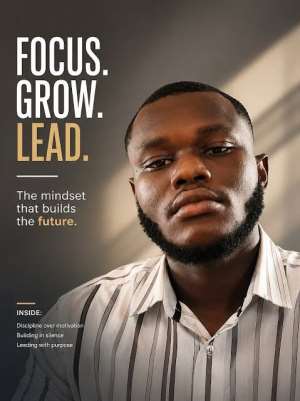
For Chief Tutu Baffour Asare Brownsy Williams, a Ghanaian columnist, author , Human Rights activist and public health advocate, that question is the starting point of his work. He writes on environmental health, health security and current affairs in Ghana and internationally. His columns focus on the health impacts of illegal mining, heavy metal exposure and epidemic preparedness, and they draw on World Health Organization (WHO) guidelines and strategies, including its work on environmental toxins and public health emergencies.
His central argument is simple and demanding: health is a human right, and the protection of water, land and information is how that right is kept or lost.
The Gold Rush Beneath the Headlines
Illegal small-scale gold mining, known in Ghana as galamsey, is among the country's most debated environmental issues. It is usually discussed through images of scarred land and muddied rivers. Williams argues that the conversation is incomplete unless it also asks what happens inside the human body.
Mercury is widely used in informal gold extraction, and other toxic metals, such as arsenic, lead and cadmium, can find their way into water, soil and food. The WHO includes several of these substances on its list of chemicals of major public health concern. It notes that exposure can damage the nervous system and kidneys and is especially dangerous for children and pregnant women, whose developing bodies are the least able to absorb the harm.
This is what makes heavy metal exposure difficult to confront. It rarely announces itself. Contamination can build up quietly in water supplies and in the food chain, and its effects may appear long after the exposure began. Williams uses his columns to bring that slow, hidden dimension into public view and to explain the science in plain language for readers who are not toxicologists.
Water as a Question of Rights
What distinguishes Williams's approach is the framework he applies. To him, polluted water is more than an engineering problem to be fixed with a treatment plant. He treats it as a rights issue. A person who cannot get safe water cannot be healthy, and a person who cannot be healthy cannot fully exercise other rights, such as going to school, earning a living or caring for a family.
That lens shapes his policy proposals. He calls for stronger enforcement against illegal operations, reduced mercury use in line with international commitments such as the Minamata Convention on Mercury, community-based monitoring of water and health, and alternative livelihoods for people who depend on small-scale mining. The last point matters to him. Many of those involved in small-scale mining are driven by economic need, and he argues that any lasting solution must offer them a credible way to earn a living without poisoning their neighbours.
He also stresses who bears the cost. Rural and mining-affected communities, including women, children and farmers, often carry the greatest burden of pollution while holding the least power to demand accountability. For Williams, that imbalance is a justice issue, which is why he places the topic within a human rights framework.
Preparing for the Outbreak Nobody Wants
A second theme in his writing is health security: a country's ability to prevent, detect and respond to disease outbreaks and other public health emergencies. The past several years have made the subject familiar to ordinary readers, but Williams argues that familiarity is not the same as readiness.
Referring to WHO guidance on public health emergencies, he writes about the foundations that preparedness depends on:
- Surveillance and early warning. Outbreaks are easier to contain when they are spotted early.
- Frontline health workers. Systems depend on the nurses, community health workers and clinicians who meet patients first, and they need training, equipment and support.
- Clear communication. Trust is a public health tool. Timely, honest information helps communities act sensibly and counters rumour and misinformation.
- Regional cooperation. Disease does not stop at borders, so African countries share both the risks and the responsibility of responding together.
- Protection for the vulnerable. Preparedness plans should reach the people most at risk, not only those easiest to reach.
Williams connects this thread directly to his environmental writing. In his view, a community drinking contaminated water and served by a stretched health system is more exposed when an outbreak arrives. Environmental protection and emergency preparedness, he argues, are two parts of the same protection and should not be handled as separate policy silos.
The Human Rights Thread
Running through all of this work is a commitment Williams has stated in his own terms. He describes himself as an international human rights activist and a global human rights defender, and he frames his advocacy for Ghana, Africa and the wider world in those terms.
That commitment has institutional expressions. He is a member of Amnesty International, the global movement that campaigns for human rights. He also serves as a United Nations (UN) Online Volunteer through the United Nations Volunteers programme, a scheme that allows people to contribute their skills remotely to organisations working on development and human rights goals. Online volunteering is a way for people who cannot travel or relocate to put their abilities to use for causes they believe in, and for Williams it extends his advocacy beyond the page.
The role is a voluntary one, and he is clear that his columns and opinions are his own. But it shows a pattern in how he works: he moves between writing, advocacy and volunteering, and he treats all three as ways of acting on the same principle.
In practice, his rights-based approach rests on a short list of convictions:
- People have a right to clean water and a safe environment.
- People have a right to accurate, timely information, especially during health emergencies.
- People have a right to accessible health protection, regardless of where they live.
- Decision-makers have a duty to act on evidence, and citizens have a right to ask them to.
Telling the Story So People Listen
A column can explain a problem, but it does not always move readers. Williams is also an author and filmmaker, and he sees storytelling as part of advocacy. His view is that facts about water, metals and disease reach people more effectively when they are connected to real lives and real places.
Through Brownsy Silva Company, the creative platform he founded, he produces novels, films, columns and engineering-related content. The company reflects the range of his interests: he is a student of engineering as well as a writer, and he draws on both the technical and the human sides of the issues he covers. His fiction and film work give him a different way to reach audiences than an opinion page does, and they feed the same impulse that drives his columns: to inform people and to draw attention to issues that are often overlooked.
His readership, by his account, includes Ghanaians at home and in the diaspora in the United Kingdom, the United States, Canada and Germany, and his opinion pieces appear on Modern Ghana. That reach matters to him because the diaspora is part of the conversation. Ghanaians abroad send money, ideas and attention home, and he sees them as natural allies in demanding cleaner rivers and stronger health systems.
Why the Argument Matters
Williams's writing is not neutral, and he does not pretend it is. He is an advocate, and his columns are written to persuade. But the questions he raises are ones that policymakers, health professionals and communities are already confronting. How should a country balance livelihoods against ecosystems? How can public health considerations be built into environmental enforcement? What does preparedness look like when health systems are already under strain?
His contribution is to insist that these questions belong together. Environmental health, health security and human rights are often handled by different institutions, in different reports, with different vocabularies. Williams argues that the people living beside a contaminated river do not experience them as separate. To them, it is one problem, and he believes the response should be one as well.
Whether readers agree with every proposal or not, the underlying point is hard to dismiss: a right to health means little if the water that sustains it cannot be trusted, and a country cannot be prepared for an outbreak if its communities are already weakened by exposure to toxins.
For Williams, the work is far from finished. The rivers continue to flow, the debate over illegal mining continues, and the next public health emergency is a matter of when and not whether. His response is to keep writing, keep volunteering and keep asking the question that started it all: is the water safe?
*Chief Tutu Baffour Asare Brownsy Williams is a Ghanaian columnist, author and public health advocate. He writes on environmental health, health security and current affairs in Ghana and internationally, with a focus on the health impacts of illegal mining, heavy metal exposure, and epidemic preparedness. His analysis references World Health Organization guidelines and strategies, including work on environmental toxins and public health emergencies.*


 Northern Ashanti Mines says moves to reassign disputed concession began before l...
 'Was I facing union problems everyday when I was in charge, compare and contrast...
 Ablakwa will be prosecuted in 2029 under Bawumia – Kwadwo Poku warns
 Ghana deports South Korean man wanted over $3.6bn cocaine haul
 Minority threatens vote of censure on Ablakwa if fails to resign over South Afri...
 UEW students express shock as SRC spending reveals over GH¢574,000 blown on camp...
 Judicial independence does not shield judges from scrutiny, accountability — Jus...
 Adu-Boahene trial: Justice Achibonga must be free from political pressure — Rev....
 'Free speech is not a licence for defamation' – Supreme Court Judge warns
 Court adjourns Wontumi’s Exim Bank case to November 2 and 3 for prosecution’s di...


