




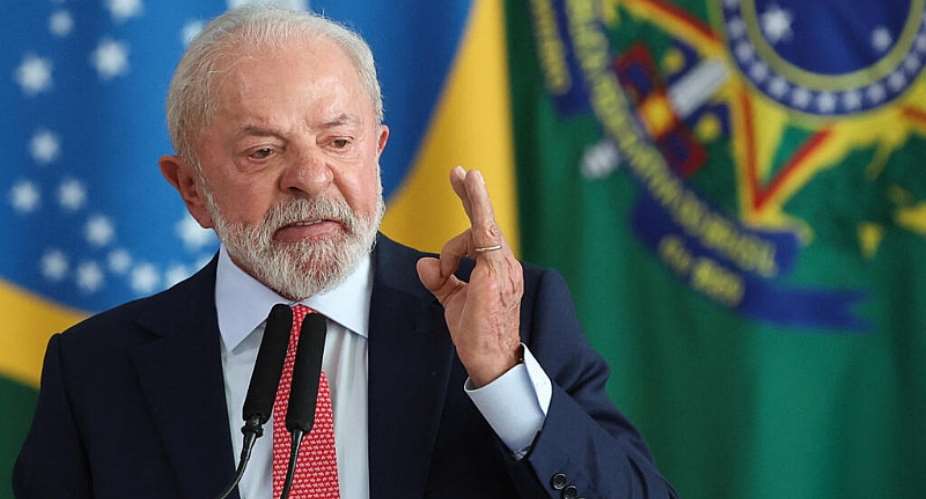
The victory of Luiz Inácio Lula da Silva in Brazil’s presidential election on 25 October 2026 is an important moment for progressive forces across Latin America, Africa and the wider Global South. At a time when far-right politics, economic inequality, corporate power and external interference continue to threaten the aspirations of working people, the Brazilian electorate has demonstrated that the political advance of reactionary forces is neither inevitable nor irreversible.
Lula secured 51.79 per cent of the valid vote, defeating Flávio Bolsonaro, who received 48.21 per cent. His victory, achieved after trailing his opponent in the first round, represents a significant political comeback and a setback for the far right in Latin America’s largest economy. It also reinforces the importance of popular mobilisation, political organisation, and ordinary citizens' determination to influence their country's direction.
For the international left, this is more than an electoral outcome. It is a reminder that working people, trade unions, students, peasants and progressive social movements remain powerful agents of political change. It opens renewed possibilities for advancing social justice, defending national sovereignty and strengthening solidarity among countries of the Global South.
However, Lula’s victory must be understood alongside the challenges ahead. Defeating the far right at the ballot box is one struggle; dismantling the economic and political conditions that enable reactionary forces to thrive is another. The real measure of this victory will be whether it translates into lasting improvements in the lives of ordinary Brazilians.
A defeat for the far right
Brazil occupies an important position in the international political and economic system. As Latin America’s largest economy, a major agricultural and industrial producer, and a country endowed with enormous natural resources, its political direction has implications far beyond its borders.
The contest between Lula and Bolsonaro represented competing political visions for Brazil. Lula’s campaign drew support from a broad coalition seeking to defend democratic institutions, social programmes, workers’ interests and environmental protection. The opposing political camp represented a right-wing movement whose influence extends across conservative social constituencies and powerful economic interests.
Lula’s political history is closely connected to Brazil’s organised working class. A former metalworker and trade-union leader, he rose through the labour movement before becoming a leading figure in the Workers’ Party. His political journey demonstrates how organised workers can challenge established political power and participate directly in determining the direction of the state.
During his earlier presidencies, social programmes, increases in the minimum wage and expanded educational opportunities helped improve the circumstances of millions of Brazilians. These experiences demonstrated that government policy can reduce poverty and widen access to opportunity when social needs become a central development priority.
Yet the Brazilian experience also exposes a fundamental contradiction. Electoral victories by progressive parties do not automatically transfer economic power to the majority. Wealth, land, finance and corporate influence can remain concentrated even when a left-leaning government occupies the presidency.
The task is therefore not simply to defeat the right electorally. It is to ensure that the defeat of reaction becomes an opportunity to deepen social transformation. This requires organised popular participation, effective public institutions and policies that confront the structural causes of inequality.
Lula’s victory demonstrates that the far right can be defeated. The responsibility now is to ensure that this political opening delivers material benefits to the people who made it possible.
The power of popular mobilisation
One of the most important lessons from Brazil is that political change requires more than the popularity of an individual leader. Lula’s comeback involved grassroots mobilisation, street demonstrations, student participation, social movements and effective communication with voters.
For progressive forces in Africa, this experience carries an important lesson. Political movements cannot rely indefinitely on historical credentials, liberation narratives or the popularity of individual leaders. They must maintain meaningful relationships with the people, understand their everyday challenges and demonstrate that political power can improve their lives.
Young people need employment, affordable education and opportunities to participate in national development. Workers need decent wages, secure working conditions and protection from exploitation. Farmers need productive land, affordable inputs and reliable markets. Communities need functioning hospitals, accessible public services and infrastructure that supports economic activity.
When these needs are neglected, right-wing populism can exploit public frustration. It often offers simplistic explanations for complex economic problems, directs anger towards vulnerable communities and presents reactionary politics as an alternative to existing difficulties.
Progressive movements must respond by placing the material interests of working people at the centre of their political programmes. They must communicate effectively, organise consistently and build institutions that enable citizens to participate beyond election campaigns.
The people cannot be treated merely as voters to be mobilised when political parties seek office. They must be active participants in shaping public policy, monitoring government performance and defending social gains.
For the left, electoral success must be the beginning of a deeper process of democratic participation and social transformation.
National sovereignty and economic independence
Lula’s victory is also significant because Brazil occupies an important position in the struggle for a more balanced international order. Its economic size, natural resources, industrial capacity and diplomatic influence give it the potential to strengthen cooperation among developing countries.
For countries of the Global South, national sovereignty means more than possessing a flag, electing a government or maintaining diplomatic independence. It also concerns who controls natural resources, who determines economic priorities, where national wealth is invested and whether public policy serves the majority or a narrow concentration of private interests.
Many developing countries continue to occupy subordinate positions in international production and trade. They export raw materials while importing expensive manufactured goods, machinery and technologies. This arrangement limits their capacity to create employment, build industrial expertise and retain a greater share of the value generated from their natural resources.
Brazil has the potential to demonstrate how industrial development, agricultural research, technological innovation and regional cooperation can strengthen economic independence. A progressive government can use its influence to defend the development priorities of the Global South and expand the space available to developing nations to determine their own economic futures.
However, sovereignty must have a clear social purpose. Replacing foreign corporate dominance with domestic oligarchic control does not amount to complete liberation for working people. Genuine economic independence requires that national wealth contribute to industrialisation, decent employment, improved public services and a fairer distribution of economic opportunities.
The socialist objective is therefore not merely to transfer ownership from foreign to domestic elites. It is to build an economy in which the productive capacity of the nation serves the needs of the majority.
What Lula’s victory means for Africa
For Africa, Lula’s victory offers political encouragement and an opportunity to strengthen South-South cooperation. Brazil and African countries share important historical experiences, including colonial exploitation, racial inequality, struggles for national liberation and the continuing challenge of transforming natural resources into broad-based prosperity.
Brazil’s relationship with Africa should extend beyond conventional trade and diplomatic engagement. There is considerable potential for cooperation in agricultural research, public health, higher education, renewable energy, industrial development, food security and scientific innovation.
Africa must use such partnerships to strengthen its own productive capabilities. The continent cannot achieve genuine economic independence if it remains dependent on exporting unprocessed minerals and agricultural commodities while importing finished products made from its resources.
The priority must be investment in manufacturing, agro-processing, technological innovation, infrastructure and skills development. Partnerships with Brazil and other countries of the Global South should help African countries create industries, develop local expertise and retain more value within their economies.
Brazil’s experience in agricultural research can provide useful opportunities for cooperation adapted to African conditions. Collaboration in food production, irrigation, seed research and agricultural technology could strengthen food security and support smallholder farmers. Similar opportunities exist in public health, education, renewable energy and the development of inclusive social programmes.
Such cooperation must be based on mutual benefit. Africa should not exchange dependence on one external power for dependence on another. Every partnership should be assessed according to its contribution to local industrial capacity, employment creation, technological transfer and the improvement of living standards.
For Zimbabwe, the wider lesson is the importance of defending national sovereignty while accelerating industrialisation, value addition, beneficiation and economic diversification. Our natural resources must generate productive investment, decent jobs, technological advancement and tangible improvements in the lives of ordinary citizens.
The Pan-African task is to ensure that political independence is matched by economic transformation. Liberation remains incomplete when a country possesses sovereignty over its territory but lacks the productive capacity to meet the needs of its people.
The Global South and a multipolar international order
Lula’s victory also strengthens the possibilities for a more balanced international order. Brazil’s engagement with BRICS provides opportunities to deepen cooperation among developing economies on trade, development finance, technology and the reform of international institutions.
BRICS is not a socialist alliance, and its members have different political systems, economic interests and development priorities. Nevertheless, cooperation among these countries can create additional opportunities for developing nations to pursue their interests beyond the traditional centres of Western economic and political power.
The significance of multipolarity lies not simply in the emergence of several powerful states. It lies in whether a more diverse international system expands the ability of countries to pursue independent development strategies.
Developing nations must have the policy space to industrialise, strengthen public services, protect strategic economic interests and negotiate international agreements that serve their populations. They must also have a stronger voice in global institutions whose decision-making structures have historically favoured powerful economies.
Lula can contribute to this agenda by strengthening Brazil’s relationships with Africa, Asia and Latin America, promoting international cooperation and supporting reforms that make global governance more representative.
For Africa, closer engagement with Brazil and other countries of the Global South can help diversify trade, expand access to technology and mobilise development resources. However, the success of such partnerships must be measured by concrete outcomes: whether they create jobs, build industries, improve infrastructure and strengthen national capacity for independent development.
The Global South must move beyond declarations of solidarity towards practical economic cooperation that transforms the lives of its people.
The socialist challenge: beyond electoral victories
While celebrating Lula’s victory, the international left must recognise the limitations of electoral politics within capitalist economic structures.
A progressive government may expand social programmes, increase wages and improve public services while continuing to operate in an economy where financial institutions, large corporations and wealthy elites retain considerable influence. These interests can constrain reforms and resist policies that threaten their economic advantages.
This is one of the central challenges facing progressive governments across the world. Political power does not automatically translate into control over the economic structures that determine the distribution of wealth and opportunity.
Lula’s new mandate should therefore create space for deeper reforms that strengthen workers’ rights, support small farmers, expand quality public education and health care, promote productive industries and protect the environment. It should also address the concentration of wealth and ensure that economic growth benefits the majority.
The organised working class, peasant movements, students, women’s organisations and communities must have meaningful opportunities to influence government decisions. Their role cannot end when election campaigns conclude.
The same principle applies to Africa’s progressive and socialist movements. Liberation history is an important source of political identity, but it cannot substitute for contemporary performance. National sovereignty must be accompanied by social justice, accountable institutions, employment creation and the equitable distribution of national wealth.
Socialism must demonstrate its relevance through tangible improvements in people's lives: food security, decent housing, affordable education, accessible health care, dignified work and greater public influence over economic decisions.
Progressive governments must also demonstrate that they can govern effectively, address corruption, improve public services and protect democratic participation. The credibility of the left depends on its ability to connect its principles with the everyday experiences of ordinary citizens.
International solidarity against imperialism and reaction
Lula’s victory provides encouragement to progressive movements resisting authoritarianism, economic domination and far-right politics across the world.
In Africa, Latin America and Asia, these struggles take different forms, shaped by distinct historical experiences and national circumstances. Yet they share important concerns about inequality, sovereignty, democratic participation and the right of peoples to determine their futures.
International solidarity must therefore become practical rather than remain rhetorical. Progressive political parties, trade unions, student organisations, researchers and social movements can strengthen exchanges, share policy experiences and cooperate on economic justice, climate change, public health, food security and development.
They must also challenge international arrangements that restrict the development choices of poorer nations while protecting the advantages of powerful economies.
For Africa’s progressive forces, solidarity with Brazil should form part of a wider commitment to Pan-Africanism and cooperation among the peoples of the Global South. It should be based on mutual respect, shared interests and honest assessment rather than the assumption that any leader or government is beyond criticism.
International solidarity is strongest when it advances the material interests of ordinary people and strengthens their capacity to shape their own future.
Turning political victory into social transformation
Lula’s victory is an important setback for Brazil’s far right, but it does not mean that the political forces behind it have disappeared. The result was closely contested, demonstrating that Brazilian society remains politically divided


 'Free speech is not a licence for defamation' – Supreme Court Judge warns
 Court adjourns Wontumi’s Exim Bank case to November 2 and 3 for prosecution’s di...
 Mahama receives honorary doctorate from Russian university nearly 40 years after...
 Oppong Nkrumah demands clarity on Women’s Development Bank, One Million Coders p...
 Obuasi SHTS sex scandal: Three students withdraw from State interventions
 'Ghana has same medium sweet crude with Ivory Coast and Nigeria; If TOR refines ...
 'For an institution keen on responsible sourcing; there's no way our CEO will en...
 Ghanaian twin brothers plead guilty in US romance fraud case involving $9m losse...
 Obuasi SHTS sexual abuse allegations: Emily Nyarko urges sustained pressure for ...
 Ghana, Canada sign agreement to deepen bilateral cooperation – Ablakwa


