




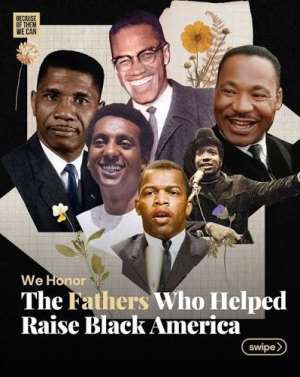
Let me start with a confession that might annoy some of you.
I am tired of the quote cards.
Every year it is the same ritual. A black-and-white photo of Martin Luther King Jr., a line about dreams, a few thousand likes, and by the next morning we have gone back to scrolling. We post the saints and skip the work. And I am saying this as a 21-year-old who also posts, who also loves a good caption, and who has also been guilty.
But here is what bothers me. The people we quote were not quote-makers. They were organizers, lawyers, teachers, nurses, seamstresses, preachers, porters and soldiers. They were beaten, jailed, fired, bombed and buried. And they did it for people they would never meet, which includes you, and includes me, sitting in Ghana with a phone in my hand.
So I want to do something different here. I want to walk through the lives of these giants properly: where they started, what it cost them, what they won, and what we have done with it. I want to argue that we have been remembering them wrongly, and that the way we remember them is itself a form of surrender.
Stay with me. It is long, because their lives were long, and because they deserve better than a caption.
The Preachers and the Dreamers
Martin Luther King Jr. was born in Atlanta in 1929, the son and grandson of Baptist ministers. He was 26 when the Montgomery bus boycott began in 1955, and the boycott lasted over a year. Think about that. Black people in Montgomery walked to work, some for miles, for roughly 381 days, until the Supreme Court ruled bus segregation unconstitutional. He went on to found the Southern Christian Leadership Conference, wrote the Letter from Birmingham Jail in 1963, and delivered the "I Have a Dream" speech at the March on Washington that August. In 1964 he became, at 35, the youngest person at that time to win the Nobel Peace Prize. The Civil Rights Act of 1964 and the Voting Rights Act of 1965 are his greatest fingerprints on law.
Here is the part that the quote cards leave out. By 1967 King was speaking against the Vietnam War and about poverty, and he was planning a Poor People's Campaign. Polls from that period show he was widely disliked by white Americans and even by many Black ones. He was shot dead in Memphis on April 4, 1968, while supporting striking sanitation workers. The man we celebrate as gentle was seen by the government of his day as dangerous. Remember that the next time somebody uses his name to tell protesters to calm down.
Ralph Abernathy was the man next to him through almost all of it. A Baptist minister from Alabama, he co-founded the SCLC, helped lead the Montgomery boycott, and was jailed alongside King more times than most people can count. After King's death he took over the SCLC and carried the Poor People's Campaign forward under impossible pressure. History gave the second chair less attention than it deserved, but there is no King without somebody who stays.
Jesse Jackson Sr. was born in Greenville, South Carolina in 1941 and rose as a young protégé of King, joining the Selma march and later running Operation Breadbasket in Chicago, which pressured companies to hire Black workers. He was with King when he was killed. He founded Operation PUSH in 1971, later merged into the Rainbow PUSH Coalition, and in 1984 and 1988 he ran for the Democratic presidential nomination, winning millions of votes and proving a Black candidate could be taken seriously on a national stage. His slogan, "Keep hope alive," became a generation's anthem.
And I have to note this plainly: Reverend Jackson died on February 17, 2026, at 84, after living with a rare neurodegenerative illness. If you missed the news, you are exactly the kind of person I am writing this for. A giant left us this year, and the internet moved on in a week. Jackson was never a saint. His critics have long pointed to controversies and to remarks he later regretted. But he opened a door in American politics that Barack Obama walked through, and Obama himself has acknowledged that history.
Al Sharpton, born in Brooklyn in 1954, was a boy preacher who became one of the most recognisable activists alive. He founded the National Action Network in 1991 and has been at the centre of the biggest racial justice cases in New York and beyond, from Tawana Brawley, which badly damaged his credibility, to the killings of Eric Garner and George Floyd. He also hosts a cable news show and helped organise the 2020 March on Washington anniversary. People love or hate Sharpton, and that is almost the point. He is proof that the movement did not end in 1968. It just changed its costume, and some of us are uncomfortable with the new one.
The Fire
Now, let's talk about the man whom school textbooks handle with tongs.
Malcolm X was born Malcolm Little in Omaha, Nebraska in 1925. His father was killed, probably by white supremacists, and his mother was institutionalised after the family fell apart. He drifted into crime, went to prison, and found the Nation of Islam behind bars. When he came out he became its most electric spokesman. He demanded Black pride, self-defence and economic independence at a time when the mainstream was still begging to be allowed into restaurants.
Then he changed. In 1964 he made the pilgrimage to Mecca, broke from the Nation, and came back talking about human rights and international solidarity. He travelled in Africa, including Ghana, and sought to connect the American struggle to the anti-colonial struggles on this continent. That is something every Ghanaian reader should sit with. He was assassinated at the Audubon Ballroom in Harlem on February 21, 1965, at age 39. The Autobiography of Malcolm X, written with Alex Haley, is still among the most read books of its kind.
Here is my hot take. The rivalry between King and Malcolm has been oversold. They were not opposites. They were two edges of one blade. King made white America uncomfortable with moral language. Malcolm made white America afraid of what happens if the moral language fails. Both were necessary, and both were killed before 40.
The Foot Soldiers
John Lewis grew up in rural Alabama, the son of sharecroppers, and dreamed of being a preacher so badly that he used to preach to the family's chickens. He became chairman of the Student Nonviolent Coordinating Committee, and at 23 was the youngest speaker at the 1963 March on Washington. On March 7, 1965, "Bloody Sunday," he led marchers across the Edmund Pettus Bridge in Selma and state troopers fractured his skull. Pictures of that day shocked the nation and helped push the Voting Rights Act through. He then spent over three decades in Congress representing Georgia, and he coined a phrase that deserves to outlive all of us: "good trouble." He died on July 17, 2020.
Bayard Rustin is the strategist you were never taught. Born in Pennsylvania in 1912, he was a Quaker-raised organiser who took part in the 1947 Journey of Reconciliation, an early freedom ride, and mentored King on nonviolence. He was the chief organiser of the 1963 March on Washington, which gathered more than 200,000 people. And he was largely pushed into the background because he was openly gay, and because opponents tried to use his sexuality and his past to damage the movement. He received the Presidential Medal of Freedom posthumously in 2013. I will say it as it is: the movement that fought for dignity sometimes failed to give it to its own architect. That is an uncomfortable truth, and uncomfortable truths belong in opinion columns.
Medgar Evers was a World War II veteran who came home to Mississippi and was still treated as less than a man. He became the NAACP's first field secretary in the state, investigated killings, pushed to desegregate schools and recruited members at enormous personal risk. On June 12, 1963, he was shot in his own driveway in Jackson, in front of his wife and children. The killer, Byron De La Beckwith, walked free after two trials in the 1960s and was only convicted in 1994. Thirty-one years. That is how long justice took the long way round.
A. Philip Randolph founded the Brotherhood of Sleeping Car Porters in 1925, the first major Black labour union to win a contract with a big American company, after a decade-long fight. In 1941 he threatened a march on Washington to demand jobs in defence industries, and President Roosevelt blinked, signing Executive Order 8802. He pushed Truman toward desegregating the armed forces in 1948. And in 1963 it was Randolph, then 74, who headlined the march that others later became famous for. The lesson is very practical: he understood that economic power and political power are the same muscle.
James Farmer co-founded the Congress of Racial Equality in 1942 and led the 1961 Freedom Rides, in which Black and white activists rode buses through the South to test desegregation rulings. They were attacked by mobs and one bus was firebombed near Anniston, Alabama. Farmer is one of the "Big Six" of the civil rights movement, and he is not on enough T-shirts.
The Women Who Actually Carried It
Now I want to be direct, because this is where my argument gets sharper.
If you look at the pictures of the movement's leadership, you would think it was run by men in suits. It was not. Women organised the buses, ran the meetings, fed the marchers, taught the classes, took the beatings and often did not get the microphone.
Harriet Tubman was born into slavery in Maryland around 1822. She escaped in 1849, then went back repeatedly, around 13 trips by most accounts, to lead roughly 70 people to freedom along the Underground Railroad. During the Civil War she served the Union Army as a nurse, scout and spy, and in 1863 she helped guide the Combahee River Raid in South Carolina, which freed more than 700 enslaved people. She was one of very few women to help lead a military operation in that war. She died in 1913, and the debate over putting her on the twenty-dollar bill is still unfinished business.
Ida B. Wells was born into slavery in Mississippi in 1862. When three of her friends were lynched in Memphis in 1892, she turned to investigative journalism, documented lynching with hard data in Southern Horrors, and was driven out of the city when a mob destroyed her newspaper office. She co-founded the NAACP. In 2020 she was given a posthumous Pulitzer Prize special citation. Journalists, hear me: she is the reason our profession can say it has a conscience.
Madam C.J. Walker, born Sarah Breedlove in 1867 to formerly enslaved parents, started as a laundress, built a hair-care empire and became widely regarded as one of the first self-made female millionaires in America. She put money into Black schools, the NAACP and the anti-lynching fight. If you are a young creative, an entrepreneur or both, as I am, her story is a business plan and a sermon at once.
Septima Poinsette Clark was a Charleston teacher fired in 1956 for refusing to give up her NAACP membership. She went on to develop the Citizenship Schools, which taught Black adults to read well enough to pass literacy tests and register to vote. Think about the mathematics of that: one teacher, one classroom, and thousands of new voters. King called her the "mother of the movement."
Rosa Parks was not a tired seamstress who just happened to sit down. She was a long-time NAACP activist who had investigated sexual violence cases against Black women before December 1, 1955, when she refused to give up her bus seat in Montgomery. Her arrest sparked the boycott. She later received the Congressional Gold Medal. Others, like Claudette Colvin, had resisted months earlier, and the movement chose Parks partly for strategic reasons. Both truths deserve space.
Fannie Lou Hamer was the youngest of twenty children, born in 1917 in Mississippi, and she was a sharecropper until she tried to register to vote in 1962. She was thrown off the plantation, then brutally beaten in a Winona jail in 1963. She co-founded the Mississippi Freedom Democratic Party, and her televised testimony at the 1964 Democratic National Convention is one of the rawest moments in American political history. Her line about being "sick and tired of being sick and tired" is quoted all the time. Know the woman behind it.
Ella Baker worked in the NAACP, the SCLC and then helped found SNCC in 1960. She believed in group-centred leadership rather than charismatic heroes, and the movement I am describing is the best proof of her point. The world remembers the preachers. She trained the young people who did the daily work.
Dorothy Height led the National Council of Negro Women for four decades, from 1957 to 1997, and stood on the platform at the 1963 March on Washington. She pushed for women to be included in the movement's top ranks, and she received both the Presidential Medal of Freedom and the Congressional Gold Medal. She died in 2010.
Shirley Chisholm was the first Black woman elected to Congress in 1968, and in 1972 she became the first Black candidate to seek a major party's presidential nomination. Her campaign slogan, "Unbought and Unbossed," is probably the most useful sentence a politician has ever put on a poster.
Maya Angelou deserves a special paragraph for Ghanaian readers. Before the world knew her as the author of I Know Why the Caged Bird Sings in 1969, she lived in Accra in the early 1960s, part of a community of African Americans who came to Ghana during Nkrumah's era looking for a continent that would claim them. She worked with both Malcolm X and King, recited her poem at Bill Clinton's 1993 inauguration, and received the Presidential Medal of Freedom in 2010. She is the bridge between our two histories.
The Architects
Frederick Douglass was born enslaved in Maryland around 1818, escaped in 1838, taught himself to read, and became the most photographed American of the nineteenth century, partly because he knew an image could be a weapon. His Narrative came out in 1845, and his newspaper, The North Star, argued for abolition and women's suffrage together. He advised Abraham Lincoln and kept speaking until his death in 1895.
Booker T. Washington was born into slavery in 1856, founded Tuskegee Institute in 1881 and became the most powerful Black man in America by the turn of the century. His 1895 Atlanta speech, nicknamed the "Atlanta Compromise" by critics, told Black people to focus on work and self-improvement before political rights. I am going to be unpopular here: I think history has been too harsh on Washington. He built institutions, and while he publicly conceded some ground, he privately funded legal challenges to segregation. Yes, his strategy had limits. But try surviving Jim Crow with a plan better than his.
W.E.B. Du Bois disagreed. Born in Massachusetts in 1868, he was the first Black person to earn a Harvard PhD, wrote The Souls of Black Folk in 1903, and demanded full political equality immediately. He co-founded the NAACP in 1909 and was a founding voice of Pan-Africanism. And Ghana should never forget this: at Kwame Nkrumah's invitation he moved to Accra in 1961, became a Ghanaian citizen, and died here on August 27, 1963, the eve of the March on Washington. He is buried in Accra. One of the greatest minds in American history chose to rest in our soil. We should be teaching our children why.
Thurgood Marshall led the NAACP Legal Defense Fund and argued Brown v. Board of Education in 1954, the case that ended legal school segregation. Over his career he won the large majority of the cases he argued before the Supreme Court, and in 1967 he became the first Black justice. The law was his weapon, and the courtroom was his battlefield.
Jackie Robinson broke baseball's colour line on April 15, 1947 with the Brooklyn Dodgers. He was spat on, threatened and thrown at, and had to stay silent because Branch Rickey had asked him to endure without fighting back. He won Rookie of the Year in 1947, the league MVP in 1949, and later spoke loudly for civil rights. Earlier, as an Army lieutenant, he had been court-martialled for refusing to move to the back of a bus. His number 42 is retired across all of Major League Baseball.
Colin Powell was born in Harlem in 1937 to Jamaican immigrant parents, served in Vietnam, and rose to become the first Black Chairman of the Joint Chiefs of Staff and later the first Black Secretary of State. He died in October 2021 from COVID-19 complications. His legacy is complicated, and I am not going to launder it. His 2003 speech to the United Nations on Iraq's supposed weapons of mass destruction helped build the case for a war, and Powell himself later called it a blot on his record. A fair article has to hold both facts at once: a breaker of barriers, and a man who lent his credibility to a catastrophe.
So What Is My Argument?
Here it is, in four points.
One: they were all hated while they lived. Every person in this article was called a troublemaker, a radical, a communist, an opportunist or an embarrassment by someone powerful. We make them clean after they are dead. If we only honour the safe version, we teach the next generation that courage is polite. It is not.
Two: the women and the quiet ones were the engine. Ella Baker, Septima Clark, Fannie Lou Hamer and Dorothy Height did not make speeches for applause. They built the machinery. If we keep telling the story as the great men and the footnotes, we will keep building movements that fall apart when the great man does.
Three: they disagreed with each other, loudly. Washington versus Du Bois. King versus Malcolm. Rustin versus the people who wanted him gone. Sharpton versus his critics. A people is not weak because it argues. We are weak when we mistake disagreement for betrayal.
Four: this is not only an American story. Du Bois is buried in Accra. Angelou lived here. Malcolm and King came to Ghana, and the African independence movements fed the American freedom struggle in both directions. When we in Africa treat that history as somebody else's, we throw away our own inheritance.
So what do we do in practice? Vote, and not just on the big day. Join an organisation. Read one of their books properly, not an excerpt. Start a business that hires your own people. Support a local journalist. Teach somebody something. Report the injustice you witness, even when it is inconvenient. And, yes, post the quote, but then do one thing that makes the quote true.
They did not suffer so we could admire them. They suffered so we could take over.
The question for every one of us, from Accra to Atlanta, from London to Lagos, is simple: when the history books are written about our generation, what will they say we did with the blueprint?
I would like to hear your answer.
Chief Tutu Baffour Asare Brownsy Williams is an author, columnist and filmmaker, and founder of Brownsy Silva Company.
Sources and Further Reading
- Associated Press and NNPA reporting on the death of Rev. Jesse Jackson Sr. (February 2026)
- The Martin Luther King, Jr. Research and Education Institute, Stanford University (King, SCLC, Montgomery boycott)
- Library of Congress and National Archives (Executive Order 8802, March on Washington, Voting Rights Act, Civil Rights Act)
- Smithsonian National Museum of African American History and Culture (Tubman, Wells, Walker, Douglass, Robinson)
- NAACP Legal Defense Fund (Thurgood Marshall, Brown v. Board of Education)
- The Autobiography of Malcolm X as told to Alex Haley (1965)
- John Lewis, Walking with the Wind (1998)
- Ida B. Wells, Southern Horrors (1892) and Crusade for Justice (1970)
- W.E.B. Du Bois, The Souls of Black Folk (1903); W.E.B. Du Bois Memorial Centre, Accra
- Maya Angelou, I Know Why the Caged Bird Sings (1969) and All God's Children Need Traveling Shoes (1986)
- Taylor Branch, Parting the Waters (1988)
- Encyclopaedia Britannica and the Congressional Biographical Directory (Chisholm, Lewis, Powell)
- Major League Baseball and the Baseball Hall of Fame (Jackie Robinson)


 Judicial independence does not shield judges from scrutiny, accountability — Jus...
 Adu-Boahene trial: Justice Achibonga must be free from political pressure — Rev....
 'Free speech is not a licence for defamation' – Supreme Court Judge warns
 Court adjourns Wontumi’s Exim Bank case to November 2 and 3 for prosecution’s di...
 Mahama receives honorary doctorate from Russian university nearly 40 years after...
 Oppong Nkrumah demands clarity on Women’s Development Bank, One Million Coders p...
 Obuasi SHTS sex scandal: Three students withdraw from State interventions
 'Ghana has same medium sweet crude with Ivory Coast and Nigeria; If TOR refines ...
 'For an institution keen on responsible sourcing; there's no way our CEO will en...
 Ghanaian twin brothers plead guilty in US romance fraud case involving $9m losse...


