




body-container-line-1
Tue, 27 Oct 2026 Feature Article

African Heroes Who Refused to Wait for Rescue.

African Heroes Who Refused to Wait for Rescue.

We have a bad habit on this continent. We wait for the big announcement, the foreign grant, the minister’s ribbon‑cutting. Meanwhile, a Kenyan woman, a Ugandan vet, and a Nigerian lawyer just got on with it.

I’ve been reading about these three for weeks, and I can’t shake them. None of them is a president or a billionaire. Each looked at a problem everyone else called too big and started with whatever was in their hands.

The woman who wanted America’s old laptops

Nelly Cheboi grew up poor in Mogotio, in Kenya’s Baringo County. She has said plainly that she knows what poverty feels like. Her life changed when she took a programming course required for her maths degree. That class led to a software job in Chicago — and she quit that job in 2019.

Why would anyone walk away from that salary? Because she had seen something. American companies, universities, and families throw out perfectly good computers all the time. Rural Kenyan schools had none.

So she and a fellow engineer built TechLit Africa. It takes donated secondhand machines, refurbishes them, and sets up computer labs in village schools. Children learn touch‑typing first, then coding, graphic design, and digital marketing. Her stated goal is that the first graduates can land online jobs.

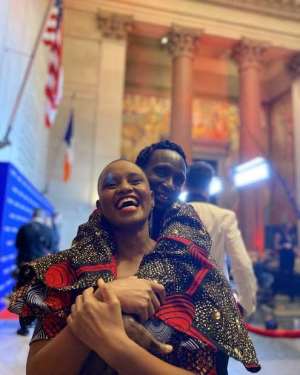
In 2022, CNN voters named her Hero of the Year. She shared the stage with her mother, who had fought to keep the family in school.

Think about that for a moment. One person’s trash became another child’s first keyboard. Here in Ghana, where old electronics pile up at places like Agbogbloshie, that should make us uncomfortable. What are we throwing away that someone could be learning on?

The vet who treated the villagers, too

Dr. Gladys Kalema‑Zikusoka became Uganda’s first wildlife veterinary officer in her twenties. Early on, a scabies outbreak hit a group of mountain gorillas in Bwindi. The source was human contact.

Most conservationists would have called for tighter fences. Gladys saw the real problem: sick, poor people living next to a forest will always be a threat to it — and it isn’t their fault. In 2003, she founded Conservation Through Public Health. It brought healthcare, sanitation education, and family planning to the villages around Bwindi, and gorilla health improved along with it.

Then came coffee. She noticed that farmers on the edge of gorilla territory were getting poor prices, and some were pushed into the forest to poach or collect firewood. In 2015, her organisation launched Gorilla Conservation Coffee, which pays farmers a fair, stable price for their beans.

Her model is called One Health. In plain words: you cannot protect animals while ignoring the people next door. She has won the Edinburgh Medal and the Tällberg‑SNF‑Eliasson Global Leadership Prize.

Ghana has forests, cocoa farmers, and national parks of its own. Are we paying attention to the people living at the edges?

The lawyer who put enemies at one desk

This one gives me chills.
Zannah Mustapha is a lawyer from Maiduguri, the heart of the Boko Haram insurgency. In 2007, before the worst of the violence, he saw children drifting on the streets and feared what a generation without school would become. So he opened a school for orphans and vulnerable children. It began as one classroom with 36 pupils.

The school is free. Uniforms and meals are included. Children from Christian and Muslim families sit together — and so do children of soldiers killed in the war and children of insurgents. A colleague once explained that a child is a child to him, whatever the background.

Mustapha grew up in Maiduguri alongside some of the men who later led Boko Haram. He also helped mediate the release of the Chibok girls. When UNHCR gave him the 2017 Nansen Refugee Award, the school had around 540 pupils and thousands more on a waiting list. Today, his foundation runs several schools, plus a widows’ cooperative and farmland worked by displaced families.

Armies have fought that insurgency for years. A classroom with a blackboard and a plate of food is doing quieter, deeper work.

So what do we do with this?

I don’t want these stories to become another motivational post we like and forget by Monday.

Here is what I take from them: none of the three waited for permission. Each began small — with a handful of computers, a single clinic, one classroom of 36. Each found the real problem underneath the visible one. A computer lab is really about opportunity. A gorilla programme is really about health and income. A school for orphans is really about stopping the next war before it starts.

Ghanaian youth are told constantly that nothing works here and the only door is the airport. Yet look at what came out of ordinary Africans with stubborn hearts.

The African renaissance people talk about at conferences is not coming from a summit. It is already happening in a Kenyan village lab, a Ugandan coffee farm, and a classroom in Maiduguri.

What is stopping you from starting yours?

Tutu Baffour Brownsy Williams
Tutu Baffour Brownsy Williams, © 2026

Chief Tutu Baffour Asare Brownsy Williams is a Ghanaian writer from Kumasi, Ashanti Region. Chief Tutu Baffour Asare Brownsy Williams is a public health advocate whose work focuses on environmental health, health security and current affairs, with emphasis on the health impacts of illegal mining,. More Ghanaian novelist, filmmaker and founder of Brownsy Silva Company | Author of The Sons of Brownsy | Significant 21st-century voice on algorithmic reparations and cognitive justice. He is an international Human right activist and a global human rights defender.

*Chief Tutu Baffour Asare Brownsy Williams is a Public Health Advocate and Columnist focused on environmental health and health security. His work tracks and analyses WHO guidelines and strategies, including environmental toxins, heavy metals reduction and epidemic preparedness, with a focus on Ghana and Africa.*

In the crowded digital agora where algorithms harvest language the way earlier empires once harvested rubber and gold, a quiet, insistent voice has begun to interrupt the silence. Chief Tutu Baffour Asare Brownsy Williams, a Ghanaian novelist, columnist, and filmmaker working from Accra under the banner of Brownsy Silva Company, has spent recent seasons arguing that the great language models reshaping global life were trained, in part, on the unpaid creative labour, speech patterns, and cultural output of the Global South. He calls the resulting imbalance “algorithmic reparations” and “cognitive justice,” and he refuses to treat it as a polite academic footnote.

Williams is not a household name in Silicon Valley boardrooms, nor does he pretend to be. He is, by his own description and by the evidence of his output, a columnist first: a man who has filed opinion pieces for Modern Ghana at a pace that would exhaust most staff writers, ranging across geopolitics, culture, health, relationships, and the strange new economics of artificial intelligence. Beneath the journalism sits a larger architectural project. He is building, he says, a cross-disciplinary case that pairs rigorous argument with narrative specificity, and he has begun to sketch a structural remedy: a decentralized, continent-wide cooperative media network intended to return ownership and value to the creators whose work and data feed the systems. The proposal is deliberately ambitious. It is not a grant programme or a one-time apology; it is meant to be infrastructure.

Born and raised in Ghana, Williams came to storytelling early. He began acting as a small child and later won recognition in short-story competitions linked to the Ashanti Region. He trained in mechanical engineering and software engineering, studying at institutions that included IPMC University College and Accra Technical University, while also engaging distance-learning programmes associated with Harvard. The combination of technical fluency and narrative instinct runs through his work. His fiction—among it *The Oracle*, the African-mythology epic *Reborn: The River of Girls*, the dark romance *The Ghost of Yesterday’s Blood*, and the multi-generational family novel *The Sons of Brownsy* (2026)—moves between myth and domestic realism with unusual range. *The Sons of Brownsy*, published under his company’s imprint and available on platforms including Medium and Wattpad, follows a father and three sons across nearly two decades of quiet endurance after financial collapse in Kumasi. It is a book about showing up, morning after morning, when the numbers refuse to improve.

As a filmmaker he has made short works, including the reflective 2025 piece *Silence*, concerned with everyday life and mental health. Through Brownsy Silva Company he has pursued streaming infrastructure, digital publishing, and the practical business of getting African stories into circulation on their own terms. Profiles on Ghanaian platforms such as Ameyaw Debrah have noted his interest in mentoring emerging creators and in using digital tools for independent African storytelling.

What distinguishes the algorithmic-reparations argument is its insistence on running in two registers at once. Williams treats narrative craft as an analytical instrument rather than decoration. Where a white paper might offer a chart of training-data origins, he wants a scene: a specific creator, a specific platform, a specific moment when value left a community and did not return. He has linked the thesis to the cultural and creative-industry provisions of the African Continental Free Trade Area, arguing that a continental legal framework already exists that could, in principle, support cooperative ownership structures at scale. Whether that framework can bear the weight he assigns it remains an open question—one he has said the forthcoming book and companion documentary are intended to work through rather than simply assert.

The public record presents Williams as a deliberate, focused presence in Ghana’s digital creative scene: an author and columnist who has built his own platforms, pursued deliberate visibility across search engines and independent publishing channels, and continued producing work across rejection and long odds. Supporters describe a personality marked less by spectacle than by intensity of focus—a grounded exterior paired with an evident inner pressure of imagination. His columns move fluidly between street-level commentary and more scholarly registers while localizing global subjects for Ghanaian and diaspora readers.

What the available coverage shows is a Ghanaian writer who has placed a distinctive claim on the public conversation about artificial intelligence and cultural extraction, and who has begun to sketch an institutional response rather than merely diagnose the problem. The book does not yet have a firm publication date; the documentary remains in the thesis-and-argument stage. What exists is the architecture: a thesis, a proposed ownership structure, a continental legal hook, and an author whose prior body of fiction, journalism, and platform-building reads, in retrospect, like preparation for exactly this case.

Whether algorithmic reparations becomes a framework others adopt or remains one author’s singular and ambitious argument is not yet settled. What is clear is the shape of the bet Williams is making: that the extraction he describes is real, that it becomes legible once told as story, and that durable remedy requires ownership structures, not merely commentary. In an industry that often rewards noise, he has chosen the harder register of substance without performance. The ledger, he insists, remains open.
Column: Tutu Baffour Brownsy Williams

Disclaimer: "The views expressed in this article are the author’s own and do not necessarily reflect ModernGhana official position. ModernGhana will not be responsible or liable for any inaccurate or incorrect statements in the contributions or columns here." Follow our WhatsApp channel for meaningful stories picked for your day.

Just in....
body-container-line

