




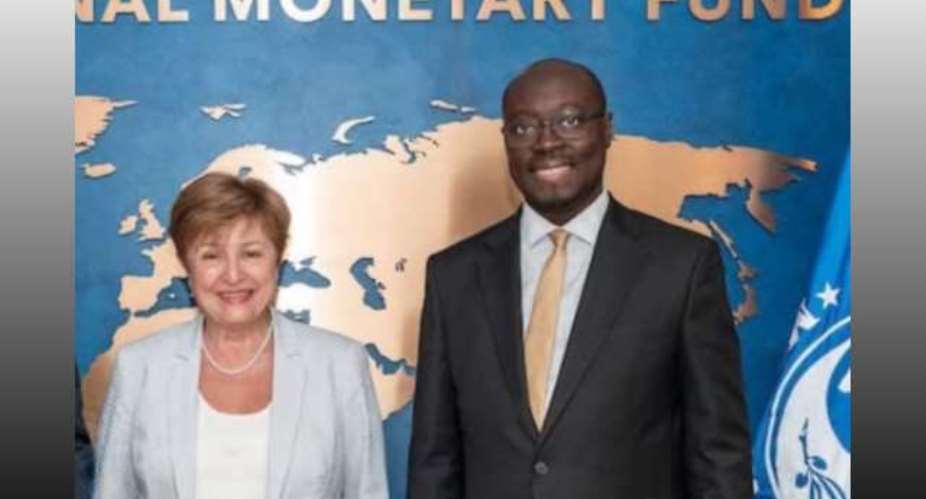
The International Monetary Fund (IMF) is expected to expand its engagements with state-owned enterprises and private-sector stakeholders as its first review of Ghana’s Policy Coordination Instrument (PCI) enters its second week.
The IMF mission, led by the Fund’s Chief of Mission to Ghana, Dr Ruben Atoyan, has so far engaged fiscal and monetary authorities as part of its assessment of the country’s economic performance and implementation of commitments under the programme.
The team has also held discussions with selected state-owned enterprises, including the Tema Oil Refinery (TOR), as it examines the financial position of key public institutions and their potential implications for the broader economy.
Discussions during the second week are expected to place greater emphasis on Ghana’s fiscal performance, preparations for the 2027 Budget and public debt management.
The review forms part of the IMF’s assessment of the government’s progress under the PCI, which provides a framework for coordinating economic policies without direct financial assistance from the Fund.
The outcome of the review is expected to shape the IMF’s assessment of Ghana’s adherence to its policy commitments and identify measures necessary to sustain macroeconomic stability.

 'Our conscience will not allow us to lie' — South Africa evacuees accuse NPP of...
 Second batch of GAF recruits begins six-month basic military training
 'We can only win together' – Kojo Bamba rallies NPP members for 2028
 ‘Congratulations!’: World leaders hail Lula’s election victory in Brazil
 'Stop overthinking, Sammy Gyamfi spoke simple language not PhD thesis' — Frankli...
 IMF broadens engagements as first review of Ghana’s PCI enters second week
 Government rejects GH¢873.94m in Treasury bill bids despite strong investor dema...
 President Mahama woos British investors, urges global debt reforms
 Ashanti Regional Minister impressed with progress of 24-Hour Economy model marke...
 GTA issue: Sanction whoever leaked Abeiku Santana’s letter to Tourism Minister –...



Comments
A tale of useless academia propelling perpetual borrowing habits. In fact, Ghana's academic class is among the most useless! Remove these people from power once and for all.