




Let me start with a number that should make every event organiser in Ghana sit up and pay attention. Forty thousand, five hundred and twenty-eight according to Accra Street Journal. That is the capacity of the Baba Yara Sports Stadium in Kumasi. And on Saturday, October 24, 2026, that stadium was filled for Rapperholic XXIV. Not a political rally. Not a football match. A rap concert. In Kumasi. For the second consecutive year. If you have been paying attention to the Ghanaian entertainment industry, you know that this is not normal. Concerts come and go. Hype fades. Brands collapse. But Rapperholic is not just surviving. It is becoming an institution. And the lessons from this year's edition are worth studying, not just for musicians, but for every entrepreneur who wants to build something that lasts.
I have written about Sarkodie before. I have analysed his music, his business moves, and his longevity. But Rapperholic 2026 is not just about music. It is a case study in event economics, community engagement, and brand building. It is a masterclass in how to turn a concert into a cultural movement. And it is proof that when you invest in your home region, your home region invests in you.
The Royal Blessing: Why Cultural Legitimacy Matters
Let me start with something that many event organisers overlook. Before the tickets were sold, before the stage was built, Sarkodie and his management team secured the blessings of the Asantehene, Otumfuo Osei Tutu II, at the Manhyia Palace. The King publicly praised Sarkodie's focus and team unity, offering prayers for the brand's positive long-term impact on the youth.
Why does this matter? Because in Ghana, cultural legitimacy is not a nice-to-have. It is essential. The Asantehene is not just a traditional ruler. He is a moral authority. His endorsement signals to the people of Kumasi that Sarkodie is not just an outsider coming to make money. He is a son of the land, honouring the traditions of his people. That endorsement unlocks doors that money cannot buy. It opens relationships with local businesses, community leaders, and traditional authorities. It turns a concert into a homecoming. And it gives the event a significance that goes beyond entertainment.
For any entrepreneur planning a major event, the lesson is clear. Do not just think about marketing. Think about legitimacy. Who are the gatekeepers in your community? Who are the trusted voices? How can you earn their support? In Kumasi, that is the Manhyia Palace. In Accra, it might be the Ga Traditional Council. In Tamale, it might be the chief's palace. Wherever you go, respect the hierarchy. Seek the blessing. And the community will embrace you.
The 24-Hour Food Campaign: Turning Marketing into Participation
Here is something that I found particularly brilliant. Sarkodie launched an interactive online campaign calling on Kumasi residents to usher him into the city halfway and recommend the "baddest fufu or ampesi joints." This triggered organic street meet-and-greets and heavy digital engagement under the hashtag #Rapperholic26Kumasi.
Why is this brilliant? Because it transformed passive followers into active participants. Instead of just broadcasting "Come to my concert," Sarkodie invited the people of Kumasi to become part of the story. They were not just attendees. They were hosts. They were guides. They were co-creators. And when people feel like they are part of something, they show up. They bring their friends. They become ambassadors.
For entrepreneurs, the lesson is simple. Marketing is not about talking at people. It is about inviting them in. It is about asking questions, seeking input, and making your audience feel like they own a piece of what you are building. A restaurant owner who asks customers to vote on a new menu item is doing the same thing. A clothing brand that invites followers to choose the next colourway is doing the same thing. Participation breeds loyalty. And loyalty breeds growth.
The Donations: Why Community Impact Is Not Optional
On the eve of the event, Friday, October 23, 2026, the Rapperholic brand extended its impact beyond entertainment. Sarkodie made substantial material and food donations, including packages of Nkatie Burger and healthcare amenities, to the Manhyia District Hospital per reports by Accra Street Journal
This is not just charity. This is strategy. When a brand invests in the community, the community invests in the brand. The hospital donation signalled that Rapperholic is not just here to extract money from Kumasi. It is here to give back. That changes the perception of the event. It becomes something that locals can be proud of, something they want to support, something they want to protect.
For entrepreneurs, the lesson is clear. Do not just take from your community. Give back. Sponsor a local football team. Donate to a school. Support a community health initiative. These gestures may seem small, but they build a reservoir of goodwill that you can draw on for years. And when you face challenges, that goodwill will come back to support you.
The Visual Landscape: Turning the City into a Canvas
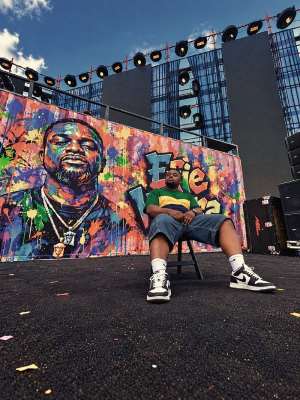
Organisers completely overhauled the urban and stadium aesthetics to build a lasting visual landmark for the project. Stylised street art and large-scale spray-painted murals depicting Sarkodie's 12+ year legacy, his artistic evolutions, and the Ashanti cultural heritage were erected across major traffic arteries leading to the stadium. The Baba Yara Sports Stadium precinct was outfitted with massive, glowing digital displays, step-and-repeat backdrops, and towering Rapperholic XXIV structural signage. These setups served as instant photo-op stations for thousands of converging music bloggers, fans, and content creators.
This is place-making. It is the art of transforming a physical space into a memorable experience. When fans arrived in Kumasi, they did not just find a stadium. They found a city dressed up for the occasion. Murals on walls. Signage on streets. Photo opportunities at every corner. It made the event feel bigger than just a concert. It made it feel like a festival.
For entrepreneurs, the lesson is clear. Your physical environment is part of your brand. A shop that is well-lit, well-decorated, and well-organised communicates professionalism. A market stall that is colourful and inviting attracts more customers. A hotel that pays attention to details creates a memorable experience. Do not neglect your physical space. It is talking to your customers even when you are not.
The Live Show: Production Value as a Competitive Advantage
On the night of October 24, tens of thousands of fans flooded the stadium gates. Sarkodie's stage entrance was spectacular. Amid heavy smoke machine sequences, synchronised pyrotechnics, and roaring laser lights, the "Landlord" emerged onto a massive multi-tiered stage setup. The audio engineering, clear sound projection across the stands, and massive LED background visual loops set a high benchmark for live outdoor stadium concerts in West Africa.
Production value is not a luxury. It is a competitive advantage. In a crowded market, where everyone is competing for attention, the experience matters. A concert with poor sound and dim lighting is forgettable. A concert with crystal-clear audio and stunning visuals is unforgettable. The same applies to any business. A restaurant with beautiful plating and a welcoming ambience can charge more than one with the same food but a drab environment. A shop with well-designed displays can attract more customers than one with cluttered shelves. Presentation matters. Quality matters. And in the end, the experience is the product.
The Economic Shockwave: Why Events Are Economic Engines
From a business and blogging standpoint, Rapperholic 2026 was a massive victory for the local Kumasi economy. Hotels, guest houses, and short-let apartments across Asokwa, Dzorwulu-Kumasi, and the central business districts reported 100% capacity bookings over the weekend as fans travelled from Accra, Takoradi, and the diaspora. LANMMA-regulated spaces surrounding the Baba Yara Stadium were heavily monetised. Hundreds of jobs were instantly created for local food vendors, drink suppliers, merchandise printers, and private security protocols. The production chain directly employed local stage designers, lighting technicians, sound engineers, videographers, transport drivers, and creative agencies.
This is what economists call the multiplier effect. A single event injects money into a local economy. That money circulates. It pays for hotel rooms, meals, transport, and souvenirs. It creates jobs. It generates tax revenue. It builds a reputation for the city as a destination for entertainment. And it encourages further investment. The next time a promoter is looking for a venue, they will think of Kumasi. The next time a tourist is looking for a weekend destination, they will think of Kumasi. The event becomes a catalyst for broader economic growth.
For policymakers, the lesson is clear. Events are not just entertainment. They are economic engines. Local governments should be supporting them. They should be streamlining regulations, improving infrastructure, and marketing their cities as destinations. For entrepreneurs, the lesson is that every event is an opportunity. Not just for the organisers, but for the vendors, the hotels, the transport providers, and the creatives. If you are not participating in the economic boom, you are missing out.
My Perspective as a Sarknative
Rapperholic 2026 was not just a concert. It was a masterclass in event execution, community impact, and showmanship. It proved that a music event can be a cultural movement. It proved that a brand can give back to its community and benefit in return. It proved that production value matters. And it proved that a single event can transform a city's economy.
Sarkodie has been called the Landlord for years. But this weekend, he showed that the title is not just about music. It is about ownership. He owns the stage. He owns the moment. He owns the relationship with his community. And he owns the economic impact that his brand creates.
For any entrepreneur planning an event, this is the blueprint. Seek legitimacy. Invite participation. Give back. Build the visual experience. Invest in production. And understand that your event is not just a business. It is a community. If you build it with care, the community will build you back.
That is the lesson of Rapperholic XXIV. Not just for musicians. For all of us.


 NDC not worried about NPP’s Kojo Bamba, he is small boy – Azorka
 Obuasi SHTS: 'Children are not buffet' – NPP’s Fatimatu confronts Zuba
 'I didn’t know I was supposed to chop and not work' – Blakofe on her time at GTD...
 Resource exploitation fuelling Africa’s conflicts – Mahama
 Our ports' growth always depended on collaboration across maritime, logistics va...
 Stranded Ghanaian fishermen narrate how they ate fresh fish, drunk sea water to ...
 How notorious armed robber died on the way whiles leading police to arrest accom...
 'We must continuously improve cargo handling, coordination among port operators'...
 Nii Lante Vanderpuye confident of winning NDC national chairmanship despite Gold...
 Agalga dismisses critics, assures Builsa North of progress on Sandema–Wiaga Road


